What Dollar General Workers Need to Know About NLRA Rights
Dollar General workers have clear protections under the National Labor Relations Act to organize, discuss pay and working conditions, and to avoid employer retaliation, knowing Sec. 7 and ULP rules matters on the job.
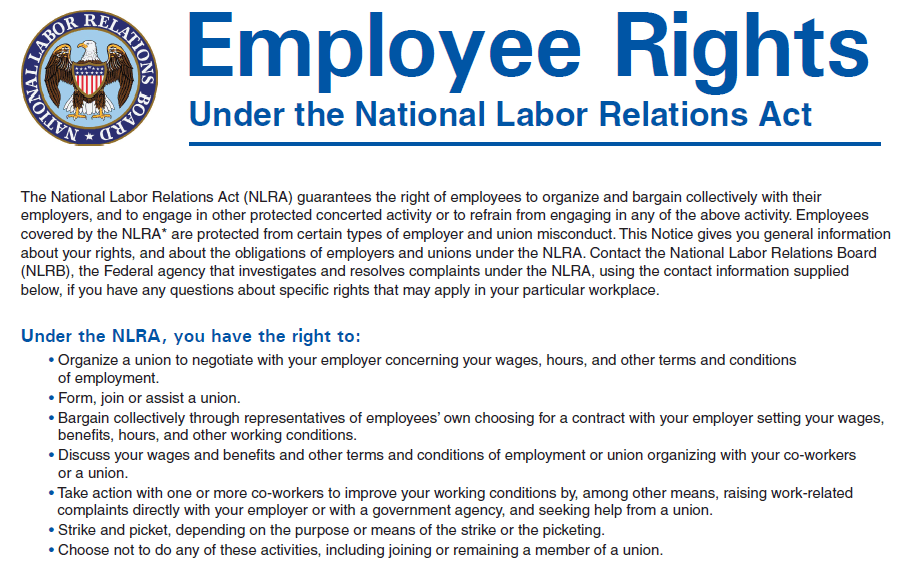
Dollar General store employees operate under the same federal labor protections that cover most private‑sector workers. Those protections include the right to organize or refrain from organizing, to bargain collectively, and to engage in concerted activity such as discussing wages or working conditions. The National Labor Relations Board enforces the law and the Department of Labor publishes related employer posting rules for federal contractors.
Congress framed the law as a national policy to reduce barriers to commerce by encouraging collective bargaining: "It is hereby declared to be the policy of the United States to eliminate the causes of certain substantial obstructions to the free flow of commerce and to mitigate and eliminate these obstructions when they have occurred by encouraging the practice and procedure of collective bargaining...." The statute itself sets out the concrete employee rights in Section 7: "Employees shall have the right to self-organization, to form, join, or assist labor organizations, to bargain collectively through representatives of their own choosing, and to engage in other concerted activities for the purpose of collective bargaining or other mutual aid or protection, and shall also have the right to refrain from any or all such activities except to the extent that such right may be affected by an agreement requiring membership in a labor organization as a condition of employment as authorized in section 8(a)(3)."
Protected concerted activity generally covers two or more employees acting together about wages, benefits or other terms and conditions of employment. Agency guidance describes the scope as broad and notes these activities may occur both inside and outside the workplace. That means conversations on the sales floor about pay, complaints to management about staffing or scheduling, or coordinated attempts to raise safety issues can be protected. At the same time, employers may lawfully maintain certain narrowly tailored confidentiality rules, but overly broad contractual waivers such as wide non‑disclosure, non‑disparagement, or non‑compete clauses can run afoul of the NLRA.
The statute also lists what employers and unions may not do. Section 8 sets out unfair labor practices, including an employer prohibition that is often cited in retaliation claims: it is unlawful "to discharge or otherwise discriminate against an employee because he has filed charges or given testimony under this Act ;" the Department of Labor reiterates that "Section 8(a)(4) of the NLRA makes it an unfair labor practice for an employer 'to discharge or otherwise discriminate against an employee because they have filed charges or given testimony under this Act.'"

Practical rules affect organizing campaigns and elections. The NLRB conducts secret‑ballot representation elections, though the timing and choice of election procedures has been a contested issue between employers and labor groups. Federal contractors and subcontractors must conspicuously post the DOL‑prescribed NLRA notice under 29 CFR Part 471 in physical and customary electronic locations where contract‑related work occurs; that notice explains employee rights and points workers to the NLRB for enforcement and further information.
For Dollar General employees, the immediate takeaway is straightforward: store managers and supervisors cannot lawfully block two or more co‑workers from discussing pay or working conditions, terminate or discipline employees for filing NLRB charges, or enforce blanket contract terms that strip workers of the right to engage in concerted activity. Workers who believe their rights have been violated can pursue remedies through the NLRB and should document incidents, note witnesses and dates, and consult the agency guidance. Enforcement trends and election procedures continue to evolve, so workers and managers alike should watch for updates from the NLRB and the Department of Labor that could change how these protections play out on the sales floor.
This article was produced by Prism’s automated news system from verified source data, official records, and press releases, then run through automated quality and moderation checks before publishing. The system is built and supervised by the people who set the standards it runs under. Read our full AI policy.
Did this article answer your question?