Citi sees tokenized assets surging to $5.5 trillion by 2030
Citi pegs tokenized assets at about $17 billion today, with public-market securities leading a path to $5.5 trillion by 2030.
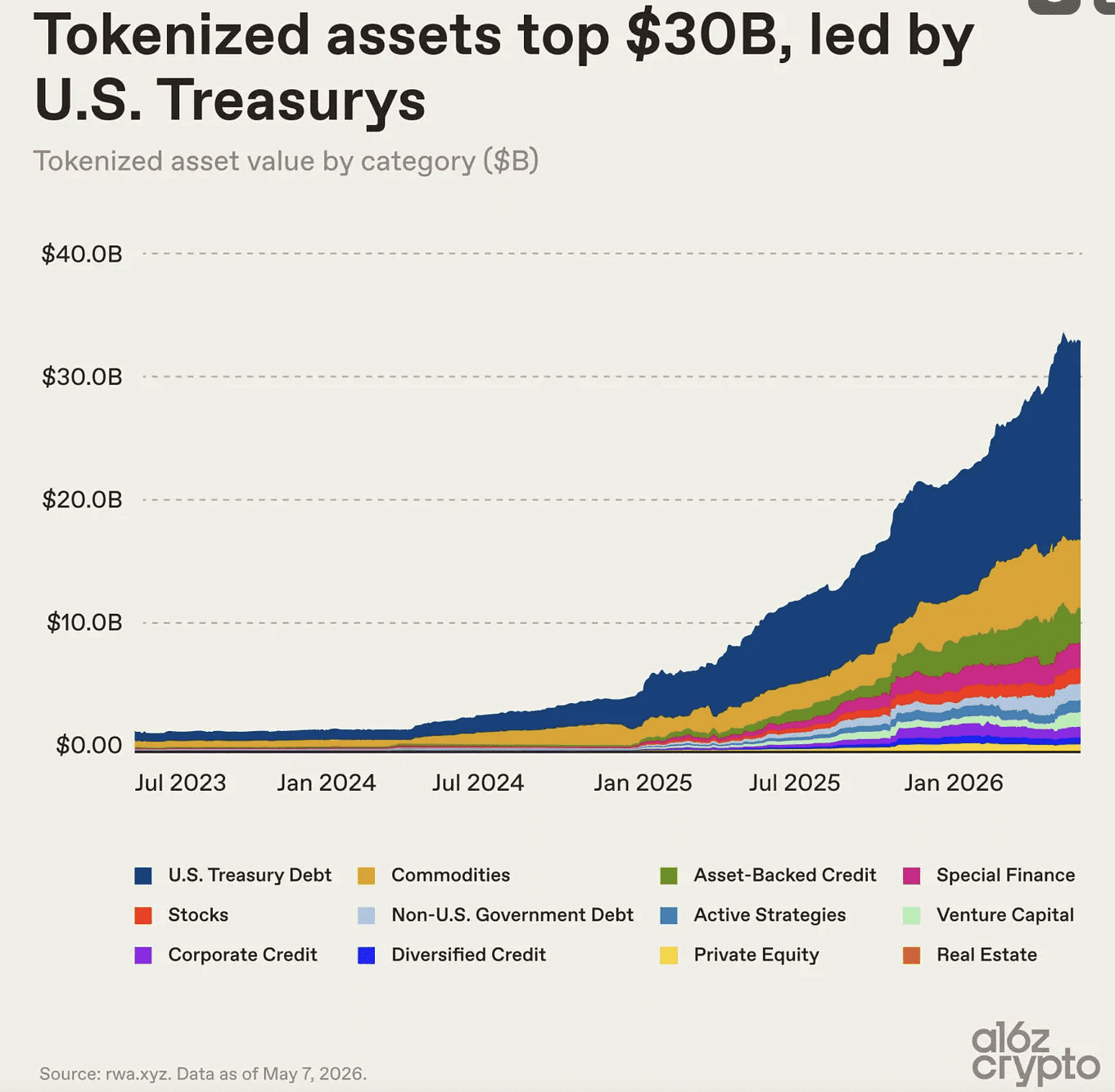
Tokenization is moving from pilot language to market plumbing, and the first real workflow changes are likely to show up in issuance, settlement and collateral management, not in some broad crypto future. Citi Institute now pegs the global tokenized asset market at about $17 billion today and sees a base-case path to $5.5 trillion by 2030, with public-market securities, especially U.S. equities and Treasuries, expected to lead the way.
That scale matters inside Goldman Sachs because it points to where capital markets jobs are most likely to change first. The report’s bear case is $2.7 trillion and its bull case is $8.2 trillion, but the bigger signal is the mechanism: tokenization has been held back by regulatory uncertainty, fragmented infrastructure and the lack of on-chain settlement money, and it is now starting to move into operational deployment. For bankers, traders and product teams, that means the early work is less about speculative tokens and more about legal wrappers, interoperability, custody and how securities can be represented and transferred in a more programmable way.

Goldman already has one of the clearest examples of where that is headed. On July 23, 2025, Goldman Sachs and Bank of New York Mellon launched a tokenized money-market-funds solution that uses Goldman Sachs Digital Assets’ GS DAP blockchain technology to maintain ownership records for select money market funds. BNY said it was the first time in the United States that institutional investors could subscribe to and redeem money-market-fund shares through a blockchain-integrated platform, with BlackRock, Fidelity Investments and Federated Hermes among the fund groups involved. That is the kind of use case that can affect real desks now, especially in treasury, fund distribution and transaction banking, where speed, recordkeeping and transferability matter more than the branding around digital assets.
The market infrastructure side is also getting more concrete. On May 4, 2026, DTCC said it planned initial limited production trades of securities tokenized through DTC’s tokenization service in July 2026, with a full launch slated for October 2026, after feedback from more than 50 financial-industry firms. DTCC says the service is designed to let participants convert supported assets between traditional book-entry and digital tokenized forms while preserving investor protections and ownership rights. That is a notable signal for capital markets teams that tokenization is being built into existing rails, not replacing them overnight.
Regulators are moving too. Hester M. Peirce said in July 2025 that blockchain technology has unlocked novel models for distributing and trading securities in tokenized form, and the SEC’s divisions of Corporation Finance, Investment Management and Trading and Markets issued a joint statement on tokenized securities in January 2026. The Bank for International Settlements and the Committee on Payments and Market Infrastructures have said tokenisation may change the functioning and structure of regulated markets and could affect central banks’ choices around settlement assets. For Goldman employees, the message is blunt: the near-term advantage will go to people who understand both traditional market structure and digital infrastructure, because the next competitive edge in capital markets may come from redesigning the plumbing.
This article was produced by Prism’s automated news system from verified source data, official records, and press releases, then run through automated quality and moderation checks before publishing. The system is built and supervised by the people who set the standards it runs under. Read our full AI policy.
Did this article answer your question?