Goldman Sachs backs MIT-IBM AI report on biodiversity metrics for nature finance
Goldman Sachs is betting AI can turn biodiversity into something investors can price, as MIT-IBM pilots improved species and peatland measurement with hard numbers.
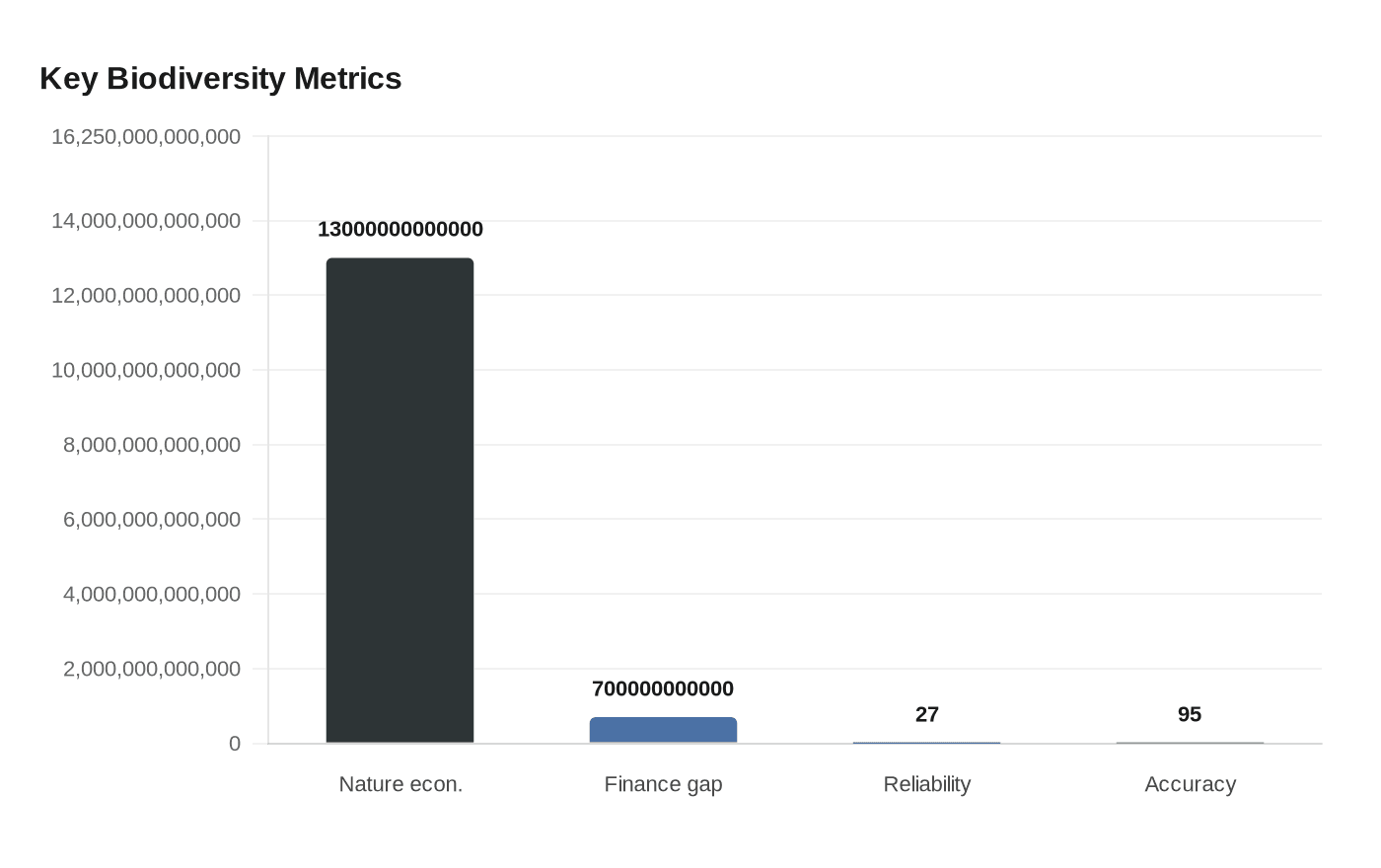
Goldman Sachs is pushing biodiversity out of the ESG gray zone and into the kind of measured data set that risk teams, product desks and sustainability bankers can actually use. The firm backed a new MIT-IBM Watson AI Lab report, AI for Biodiversity Measurement: Advancing Nature Finance, aimed at improving how banks and companies quantify nature exposure as investors eye a $13 trillion nature-based economy.
The report comes with a clear commercial premise: better data could make nature finance less speculative. Goldman Sachs said biodiversity loss ranks among the World Economic Forum’s top three global risks over the next decade, while the Global Biodiversity Framework has estimated a $700 billion annual biodiversity finance gap through 2030. For bankers, that is the kind of scale that can move a topic from corporate responsibility slides into financing conversations, diligence work and portfolio-risk analysis.
Goldman Sachs said the collaboration, announced on Nov. 26, 2024, joined the MIT-IBM Watson AI Lab to advance artificial intelligence for biodiversity measurement. The firm said it was providing financial sponsorship rather than conducting the research itself. The lab ran three research-stage pilots focused on a persistent problem in nature finance: measurement is often too coarse, unreliable or incomplete for corporate and investor decision-making.
Those pilots produced the most concrete signal in the project. Deep Occupancy Modeling improved species occupancy estimate reliability by 27% across 16 species. Distribution Modeling combined sparse field data with expert knowledge and satellite imagery to map biodiversity in places where traditional surveys are difficult or impossible. TerraMind, the foundation model tested in the report, reached 95% accuracy in peatland identification and detected about 12 hectares of peatland loss tied to a 2022 wildfire.
Goldman Sachs Research has already been building the internal architecture for this shift through its GS SUSTAIN Nature Framework, a dataset designed to assess corporate exposure, relevance, transparency and strategy across four drivers of nature outcomes. The new report fits that broader effort: if nature-related metrics become more reliable, they can feed directly into how the firm evaluates clients, structures products and frames risk for investors.
The timing also reflects a wider institutional push. MIT said its first organized biodiversity delegation to COP16, held in Cali, Colombia, ran from Oct. 21 to Nov. 1, 2024, with 10 delegates and more than 15 events. COP16 was the first major UN biodiversity meeting since COP15 in Montreal, where 195 nations adopted the Kunming-Montreal Global Biodiversity Framework and its goal of protecting 30% of land and sea by 2030.
Goldman Sachs has already pointed to biodiversity-linked work, including conservation efforts in Karukinka Natural Park and underwriting conservation-linked bonds. The larger message to employees is hard to miss: as clients ask for nature-related capital, risk and disclosure solutions, biodiversity is becoming a front-office and risk-management issue, not just a sustainability talking point.
This article was produced by Prism’s automated news system from verified source data, official records, and press releases, then run through automated quality and moderation checks before publishing. The system is built and supervised by the people who set the standards it runs under. Read our full AI policy.
Did this article answer your question?