Goldman Sachs highlights how its human capital team shapes the firm
Goldman’s HCM team is not a support desk. It is the machinery behind hiring, promotions, mobility, and culture at a firm with 46,000-plus people and 1 million applicants.

HCM is one of Goldman Sachs’ quiet power centers
At Goldman Sachs, human capital management is where the firm’s biggest asset gets managed at scale. The message on Goldman’s own career pages is blunt: HCM attracts, develops, and manages the firm’s people, and that makes it far more than an administrative back office.
That matters because Goldman is not a small, static organization. The firm said it had 46,000-plus people around the world and more than 1 million external applications for roles in 2024. In a place that large, people decisions are not side work. They shape who gets hired, who gets promoted, who stays, and how the culture survives constant pressure.
What HCM actually does inside the firm
Goldman breaks HCM into practical workstreams, including business partners, change management, diversity and inclusion, employee relations, and engineering. That mix is revealing. It shows the function as part adviser, part operator, part internal systems builder, with enough technical depth to automate and improve how people processes run.
Business partners advise leaders and managers and help deliver people solutions. Change management creates and implements strategies that drive adoption of firmwide transformational initiatives. Employee relations handles complex work situations, which is the kind of support that becomes essential in a firm where reorganizations, new policies, performance debates, and flexibility questions are never far from the surface.
The engineering piece matters too. It signals that people operations are increasingly data-driven and technology-enabled, not just policy-driven. As AI and workflow automation spread across financial services, the teams that shape talent processes will need to understand systems as well as managers.
Why this is a real career path, not just an internal service line
For analysts, associates, and even senior bankers wondering where a career can go inside Goldman, HCM offers a different kind of influence. It is a place for people who want to shape talent strategy, workforce planning, culture, and organizational change rather than spend their whole careers in client coverage.
That can be a meaningful tradeoff. You give up the obvious glamour of the front office, the direct line to deal fees, and the most visible bonus narratives. In return, you get a seat closer to how the institution actually works, with influence over the systems that determine who advances and how the firm adapts.
The people who tend to thrive in a role like this usually combine judgment, discretion, and comfort with ambiguity. They need to be able to advise senior leaders, manage sensitive employee issues, and push adoption of changes that may be unpopular in the moment but necessary for the firm’s long-term functioning.
Goldman’s talent machine runs through HCM
Goldman’s broader career pages frame the firm as a place where “our apprenticeship culture accelerates careers,” and that is not just branding. The firm says its learning and development programs include orientation, digital learning, skills-based offerings, high-potential leadership programs, and senior-leader roundtables.
The numbers make that concrete. Over 15,000 unique users accessed Goldman’s digital learning courses in the past year. That suggests the firm is trying to scale development rather than leaving advancement entirely to informal sponsorship, which is especially important at a bank where access to senior people can shape career trajectory as much as raw performance.

Goldman’s performance framework, Three Conversations at GS, also shows how formalized the people process is. Employees and their managers are expected to have a goal-setting conversation, a mid-year progress discussion, and a year-end feedback conversation that draws on input from peers, managers, and both more senior and more junior colleagues. For anyone used to finance’s reputation for ambiguous feedback, that structure is telling: HCM is part of how the firm tries to make performance legible.
Leadership development and mobility are part of the same system
Pine Street, Goldman’s leadership-development organization, sits alongside HCM as another key part of the firm’s internal talent architecture. It prepares partners and select managing directors to lead the next generation of people and businesses, and Goldman says its coaching and assessment efforts engage leaders at critical points in their development.
That is the bridge between HCM and the rest of the franchise. If HCM helps define how people are recruited, evaluated, and retained, Pine Street helps decide who is ready to carry the firm forward. Goldman also says supporting a diverse pipeline of talent is a core strategic consideration, which makes leadership development part of the firm’s long-term business strategy, not just a workplace program.
The firm’s Employee Inclusion Networks add another layer. They are open to all professionals at Goldman and support career development, education, networking, and client events. For employees, that means inclusion is not treated only as a messaging exercise; it is built into the internal infrastructure that can widen access to relationships and opportunity.
Jacqueline Arthur and the people agenda at the top
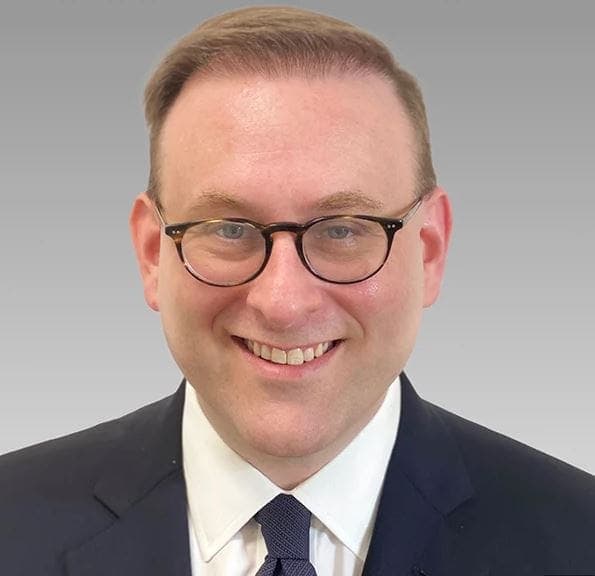
Goldman’s current leadership materials identify Jacqueline Arthur as global head of Human Capital Management and Corporate & Workplace Solutions. She was appointed global head of HCM effective January 2023, after previously serving as chief operating and strategy officer for HCM.
That matters because it shows HCM is not being treated as a narrow HR specialty. Under Arthur’s remit, the function sits close to workplace strategy, talent systems, and the operating choices that affect how the firm runs day to day. In October 2023, she also linked the firm’s approach to attracting and retaining high-performing individuals to the annual Summer Intern Survey, a reminder that Goldman watches intern feedback closely as part of its recruiting strategy.
The numbers behind the culture story
Goldman’s people narrative is also tied to hard metrics. Its pay-equity statement says the median pay for racial and ethnic minorities in the United States is 99% of the median pay for white employees, while also acknowledging that representation at all levels remains a major issue. That combination matters: pay equity may be relatively tight, but pipeline and promotion balance still remain front-line questions for a firm that depends on internal advancement.
The broader corporate picture reinforces why this work matters. Goldman’s 2024 Annual Report said the firm increased net revenues by 16% to $53.5 billion and EPS by 77% to $40.54 in 2024. David Solomon said continued investment in the franchise and its people helped Goldman serve clients and deliver strong shareholder returns. In other words, people strategy is not being treated as a feel-good add-on. It is part of the growth story.
Goldman’s historical People Strategy Reports for 2020, 2021, 2022, and 2023 point to the same conclusion. This is not a one-off campaign or a passing HR theme. It is a sustained attempt to treat workforce design, talent development, and culture as core levers of performance, which is exactly why HCM at Goldman deserves to be read as a strategic career path in its own right.
This article was produced by Prism’s automated news system from verified source data, official records, and press releases, then run through automated quality and moderation checks before publishing. The system is built and supervised by the people who set the standards it runs under. Read our full AI policy.
Did this article answer your question?