Goldman Sachs Joins Citi, JPMorgan to Lead SK Hynix's $13B AI Semiconductor ADR
Goldman, Citi, JPMorgan, and BofA will lead SK Hynix's $13B ADR, the largest U.S. listing in 22 years, with proceeds earmarked for AI chip buildout.

Goldman Sachs has landed a co-lead position on what stands to be the largest American Depositary Receipt offering in 22 years, joining Citi, JPMorgan, and Bank of America as primary underwriters for SK Hynix's planned $13 billion U.S. listing.
The appointment was reported Friday by the Korean Economic Daily, which confirmed that SK Hynix had selected Citigroup, JPMorgan, Goldman Sachs, and Bank of America as underwriters for its planned U.S. listing. The mandate positions all four banks at the center of a deal that cuts directly to the global AI infrastructure race.
SK Hynix confidentially submitted a Form F-1 registration statement to the U.S. Securities and Exchange Commission on March 24, with a goal of completing an ADR listing sometime in 2026. At the company's annual general meeting on March 25, CEO Kwak Noh-jung said financial capacity will be key to sustaining growth in the AI era, adding that the company is targeting approximately $75 billion, equivalent to more than 100 trillion Korean won, in net cash to support long-term investments.
The capital would flow into a buildout of considerable scale. SK Hynix's new M15X fab in Cheongju, South Korea, was completed earlier than planned, while construction of its $15 billion Yongin semiconductor cluster and its advanced packaging facility in Indiana is progressing. SK Hynix approved a series of capital projects, including the M15X front-end fab in Cheongju at 20 trillion won, the P&T7 back-end fab at 19 trillion won, the first-phase fab in the Yongin semiconductor cluster at 31 trillion won, and an ASML EUV equipment contract valued at approximately 12 trillion won.
For Goldman's banking teams, the mandate carries a particular resonance. Goldman Sachs had previously assessed that SK Hynix would maintain its dominant position in HBM3 and HBM3E until at least 2026, sustaining a total HBM market share of over 50 percent. Underwriting the equity raise for that dominant position is a different kind of validation entirely, and the deal will register prominently in Goldman's equity capital markets league table for the year.
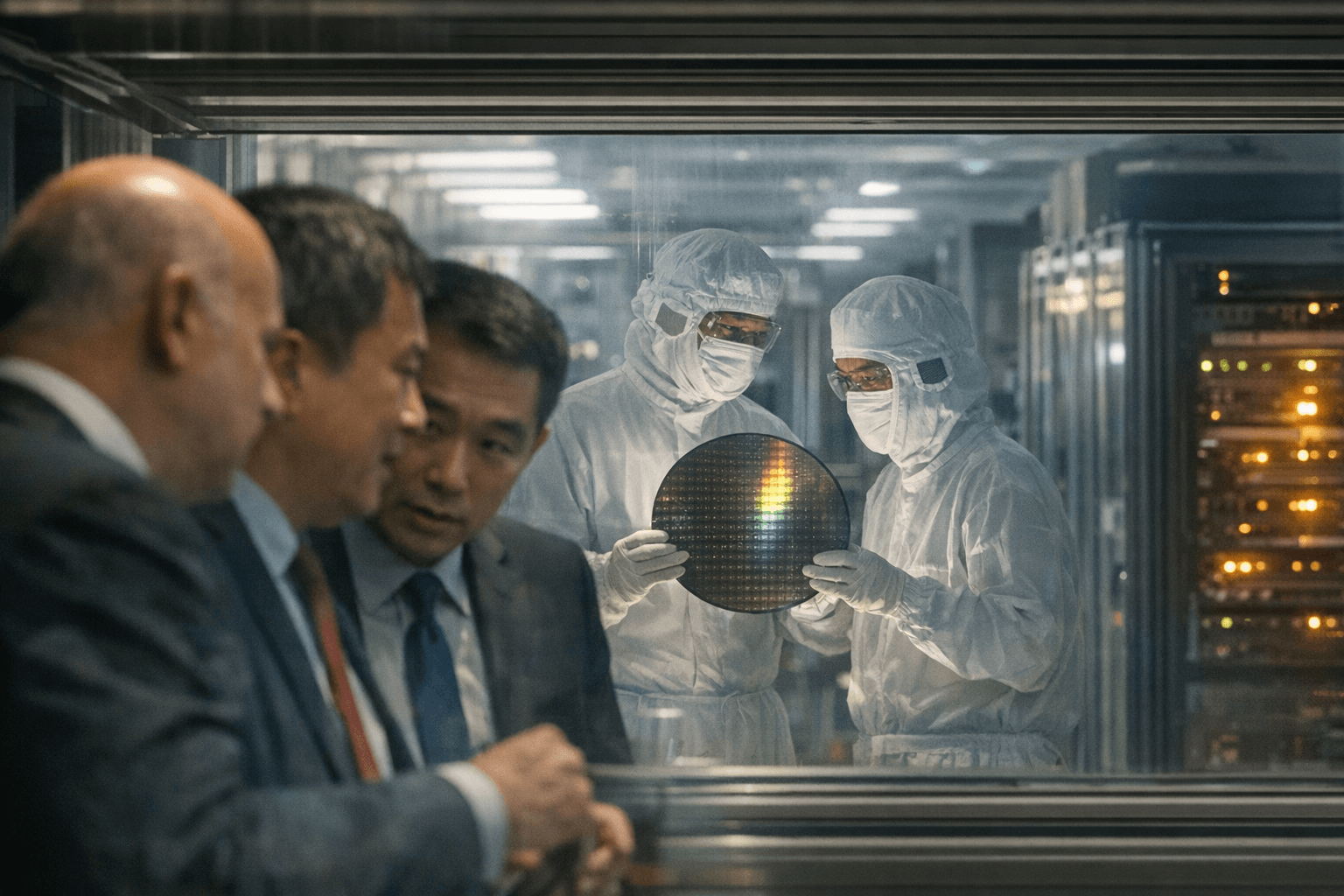
The underlying market numbers justify the ambition. BofA estimates the 2026 HBM market will reach $54.6 billion, a 58 percent increase from the previous year, while Goldman Sachs separately forecast that HBM demand for custom-ordered, ASIC-based AI chips will skyrocket by 82 percent, accounting for one-third of the market. The clients buying those chips, principally Nvidia, are the same companies whose capital expenditure ambitions are driving SK Hynix to Wall Street in the first place.
The structure of the offering has drawn scrutiny. SK Hynix opted to issue new shares for the ADR rather than converting treasury stock, a decision that raised dilution concerns, though the issuance amounts to approximately 2 to 3 percent of the company's total share capital.
The deal also carries a secondary ripple across Korean capital markets. Following SK Hynix's filing, Artisan Partners, a major Samsung Electronics shareholder, said a U.S. ADR listing could help Samsung boost its valuation and give U.S. retail investors a chance to buy its stock. If Samsung moves in that direction, the four banks now leading SK Hynix's offering would be among the first calls the company makes.
This article was produced by Prism’s automated news system from verified source data, official records, and press releases, then run through automated quality and moderation checks before publishing. The system is built and supervised by the people who set the standards it runs under. Read our full AI policy.
Did this article answer your question?