Goldman Sachs sees AI reshaping jobs, displacing workers, creating demand
Goldman says AI could touch 300 million jobs worldwide, but the bigger risk inside banks is task-level displacement, while power and infrastructure work gain.

Goldman Sachs says AI could automate tasks equal to about 25% of all U.S. work hours, and that roughly 300 million jobs worldwide are exposed to automation. For people at Goldman, that is the useful lens: the first danger is not a sudden wipeout of entire careers, but a steady shrinkage of the routine work that fills analyst decks, associate workflows, and support functions.
The bank’s base case assumes firms take about 10 years to adopt AI on a wide scale. During that transition, Goldman estimates 6% to 7% of workers could be displaced, with unemployment rising by about 0.6 percentage points if adoption is spread across the full period. If the rollout happens faster, the macro hit gets bigger. That is why the right question inside the firm is not whether AI changes the job, but which parts of the job get automated first and who is still needed when the model has done the first draft.
What changes first inside the bank
The earliest pressure is on work that is repetitive, document-heavy, and easy to standardize. That means first-pass research, data gathering, draft memos, meeting summaries, pitch material formatting, and other tasks where speed and consistency matter more than original judgment. In a bank where promotion and bonus outcomes often track who can handle more volume with fewer mistakes, AI will reward the people who can turn machine output into client-ready work faster than their peers.
Analysts and associates
Analysts and associates should assume that their work will be judged less on how much manual processing they can absorb and more on how well they can supervise, refine, and challenge AI-assisted output. Financial modeling, presentation building, and internal writeups are not disappearing overnight, but the labor value shifts when the first draft arrives in seconds instead of hours. The human premium moves toward judgment, narrative, commercial awareness, and the ability to spot where the machine has made a subtle but costly mistake.
Support teams and control functions
Support teams face a different version of the same pressure. Routine processing, reconciliation, basic compliance checks, and standardized reporting are all vulnerable to automation, but the need for oversight does not go away. If anything, it grows more valuable, because banks still need people who can handle exceptions, verify outputs, manage risk controls, and redesign workflows so the technology does not create new blind spots.
That is why Goldman’s own framing matters for career planning. The jobs most exposed are the ones tied to tech, knowledge, and creative work, while technical, infrastructure, and implementation-heavy work is more likely to gain. The practical lesson for younger bankers is simple: learn to use AI, but do not let your value get trapped in tasks a model can do faster.
The new demand story is real, and it is big
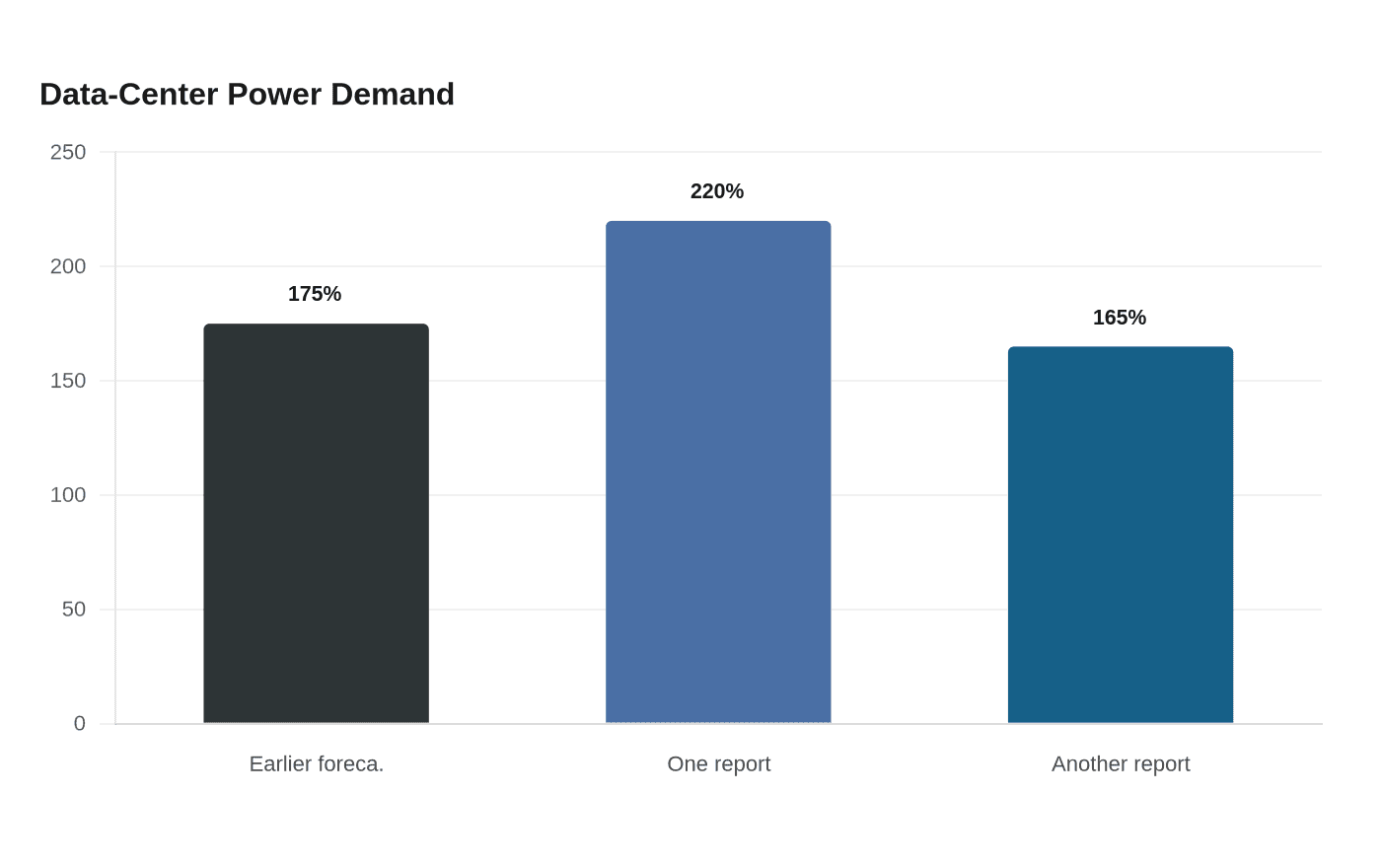
Goldman is equally clear that AI does not only destroy work. It also creates jobs in the buildout around power and data-center infrastructure, and that side of the economy is already becoming impossible to ignore. In one report, Goldman said global data-center power demand could surge 220% by 2030 versus 2023 levels, after an earlier forecast of 175%; another Goldman report put the increase at 165% by 2030. That is not a side note. It is a labor-market engine.
Goldman’s data-center research says six forces shape that buildout: the pervasiveness of AI, productivity of servers and compute, prices of electricity, policy initiatives, parts availability, and people availability. The occupations most likely to benefit include construction workers, engineers, electricians, lineworkers, HVAC contractors, and electrical contractors. Goldman has also said the U.S. alone may need roughly 500,000 net new jobs to meet rising electricity demand by 2030.
For Goldman employees, that matters because the bank does not just cover software clients. It advises the companies financing, building, and supplying the AI economy. That opens work in infrastructure, power, industrials, project financing, and capital markets, while also raising the bar for bankers who have to understand energy constraints, permitting bottlenecks, and supply-chain limits rather than just model earnings growth.
The labor data says the shift has started, but not evenly
Goldman’s newer research suggests the effects are already showing up in the numbers. In a separate March 2026 analysis, the firm estimated that AI reduced monthly payroll growth by about 16,000 jobs in the U.S. over the prior year and raised the unemployment rate by 0.1 percentage point. That is a small macro move, but it is enough to confirm that the labor-market impact is no longer theoretical.
At the same time, Goldman’s earlier work found no significant statistical correlation between AI exposure and job growth, unemployment rates, job-finding rates, layoff rates, weekly hours growth, or average hourly earnings when adoption remained low. That tension is the point. The effect can look muted early on, then become more visible once adoption reaches scale and firms start redesigning workflows instead of merely testing tools.
Goldman’s broader view is that the labor shock should be transitory, because new job opportunities created by the technology eventually put people to work in other capacities. That does not make the transition painless. It does mean the people most likely to stay ahead are the ones who build around the new workflow instead of waiting for the old one to come back.
The safest career strategy at Goldman is not to bet on being untouched by AI. It is to become the person who can use it, supervise it, and translate it into better decisions for clients, managers, and the firm’s bottom line.
This article was produced by Prism’s automated news system from verified source data, official records, and press releases, then run through automated quality and moderation checks before publishing. The system is built and supervised by the people who set the standards it runs under. Read our full AI policy.
Did this article answer your question?