Goldman Sachs sees Brent crude holding in $80-$90 range
Goldman sees Brent boxed into $80-$90 unless US-Iran diplomacy breaks it, a range that could move inflation bets, hedges and energy positioning.

Goldman Sachs said Brent crude is likely to hold in an $80 to $90 a barrel range unless a new U.S.-Iran nuclear deal is confirmed or the conflict escalates sharply. For energy traders, macro desks and corporate clients, that turns a volatile geopolitical story into a practical base case: oil is not being priced as if every headline from the Gulf resets the market.
The timing matters. Oil prices fell on Aug. 3 and Aug. 4 on hopes of a U.S.-Iran deal, while stock indexes hit records even as crude dropped. That combination suggests markets were already treating diplomacy as a risk-asset positive, even before Goldman put a tighter frame around Brent’s likely trading band.
Inside Goldman, the call matters far beyond the commodities desk. A Brent price anchored in the 80s feeds directly into inflation expectations, which means rates strategists care about the same oil move that energy analysts watch. Airlines, shippers and industrial companies can use that range to decide how aggressively to hedge fuel costs. Higher crude also presses on margins in sectors from transportation to chemicals, while energy producers have to think about whether to keep buybacks, capex and balance-sheet plans on hold or lean into cash returns.
Goldman has been moving its oil view as the geopolitical and supply picture changed. On June 5, the bank said global oil demand had taken a big hit and that this created risks to its price forecast. On June 12, it lowered its 2027 Brent forecast to $80. Earlier, on March 6, Goldman warned oil could surge above $100 a barrel if Hormuz flows did not recover. In March, it also raised its 2026 Brent average price forecast by $8 to $85 a barrel, showing how quickly the baseline had shifted as Middle East risk intensified.
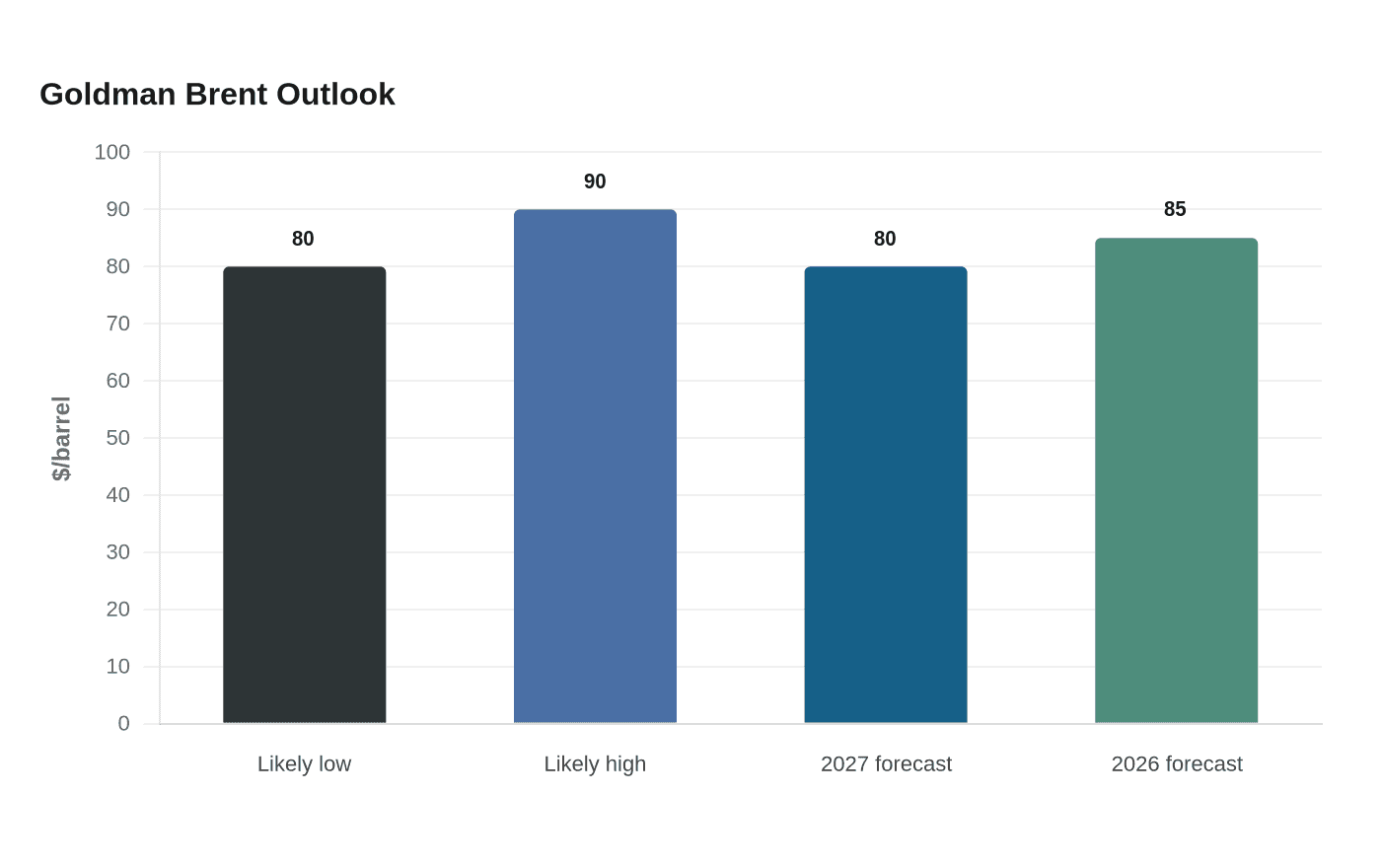
The latest range is useful precisely because it names the breakers. A confirmed U.S.-Iran deal would strip out part of the geopolitical premium and could push hedging, positioning and client conversations toward lower-price scenarios. A major escalation would do the opposite, especially for desks modeling transport costs, inflation prints and sector rotation in equities. Goldman and HSBC had already flagged Brent at $80 to $110 if the Strait of Hormuz were blocked, a reminder that a disruption in a narrow shipping lane can ripple through fuel prices, risk assets and client balance sheets well beyond the energy patch.
Goldman strategist Daan Struyven has said analysts and investors had underappreciated how flexible global oil markets were during the conflict. That is the point of the new call: Brent at $80 to $90 is not just a price view, it is the line where Goldman expects clients to keep trading, hedging and planning until diplomacy or escalation forces a new regime.
This article was produced by Prism’s automated news system from verified source data, official records, and press releases, then run through automated quality and moderation checks before publishing. The system is built and supervised by the people who set the standards it runs under. Read our full AI policy.
Did this article answer your question?