Goldman Sachs sees Spain growing 2.1 percent in 2026
Spain is now Goldman’s clearest Europe outperformer, with 2026 growth seen at 2.1% and labour-market gains still powering the case.

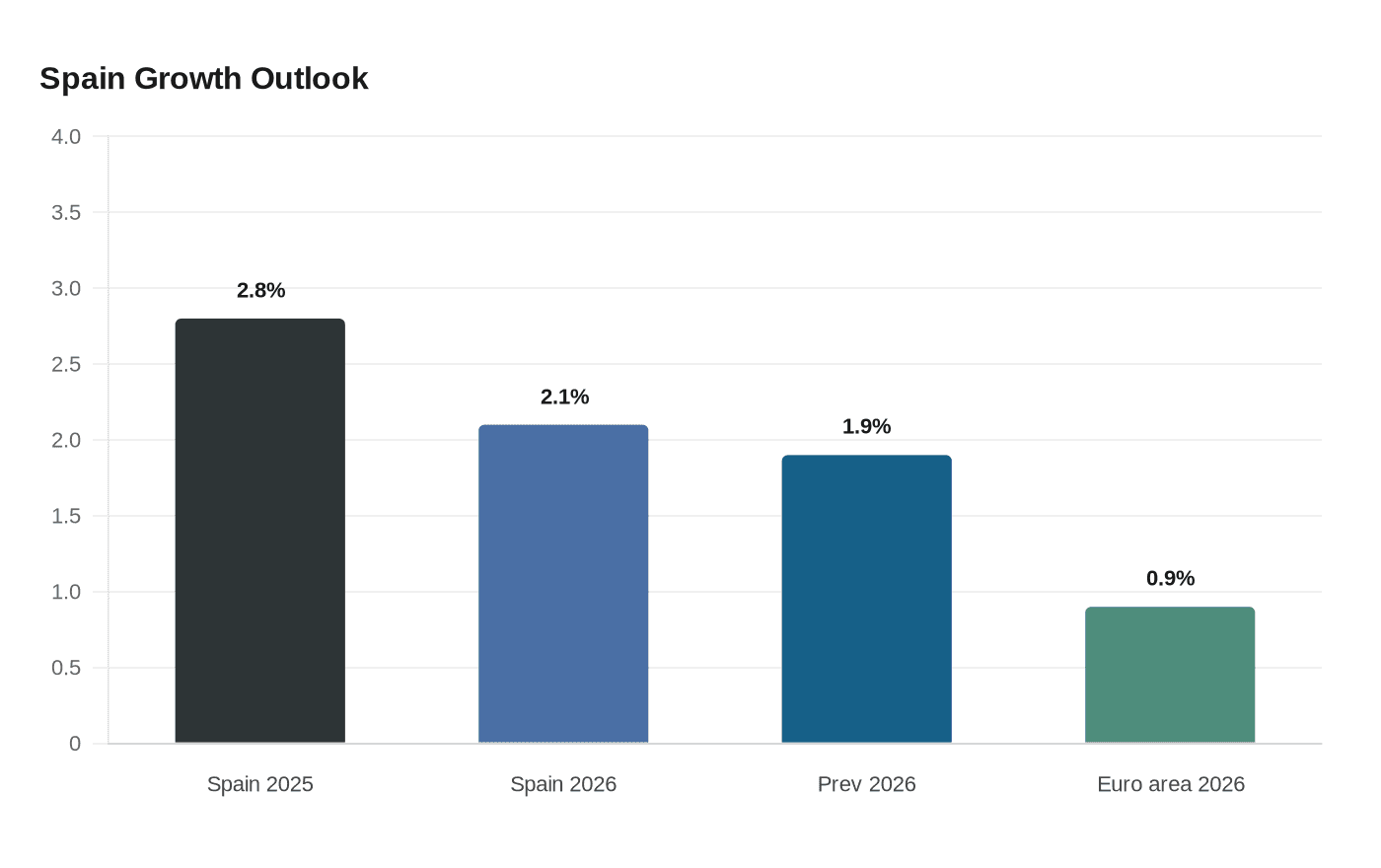
Spain is becoming the cleanest relative-growth story in Goldman Sachs’ Europe coverage, with Goldman Sachs Research forecasting 2.1 percent GDP growth in 2026, about three times the 0.9 percent expected for the wider euro area. The firm had already lifted Spain’s 2026 outlook to 1.9 percent before the June 4 update, but the latest call sharpens the message for bankers, sales teams, and strategists: Spain is not just holding up, it is pulling away from the continent’s slower-growth core.
Goldman’s case rests on more than a single strong quarter. The research says Spain has recorded the highest productivity growth on a per-employee and per-hour basis among the European Union’s four biggest economies since 2021. Unemployment has fallen to its lowest level since 2008, employment is at an all-time high, and Spanish sovereign spreads have stayed relatively stable even with higher energy prices weighing on the region. That matters inside Goldman because it points to a country where financing conditions, credit risk, and equity positioning can move on their own merits, while the broader euro area is still dealing with weaker growth and policy uncertainty.

The labor data back up the story. Spain’s Instituto Nacional de Estadística said first-quarter 2026 employment reached 22,293,000, while unemployment stood at 2,708,600. Employment rose by 527,600 over the previous 12 months, a sizable gain that shows how broad the labor-market improvement has become. The International Monetary Fund said Spain grew 2.8 percent in 2025, supported by domestic demand and investment, while immigration helped enlarge the labor force and productivity improved more than before COVID-19. The Organisation for Economic Co-operation and Development has pointed to strong investment, rising service exports, and an expanding labour force as additional support.
For Goldman teams, the practical takeaway is that Spain should now sit higher in cross-border client conversations, especially when financing, capital allocation, or sector selection depends on relative growth inside Europe. Coverage bankers should expect more questions about Spanish opportunity sets versus the broader euro area, while sales and trading desks should watch sovereign spread behavior and whether rising-yield pressure elsewhere in Europe starts to spill over. Research colleagues will need to keep translating Spain’s outperformance into a clear client narrative, while watching the IMF’s warning that growth could ease as immigration slows and population aging deepens. In a Europe still fighting for momentum, Spain has become the exception worth pitching first.
This article was produced by Prism’s automated news system from verified source data, official records, and press releases, then run through automated quality and moderation checks before publishing. The system is built and supervised by the people who set the standards it runs under. Read our full AI policy.
Know something we missed? Have a correction or additional information?
Submit a Tip