Goldman Sachs Warns Qatar, Kuwait Face 14% GDP Drop if Hormuz Closes
Goldman Sachs projects Qatar and Kuwait could each lose 14% of GDP this year if the Strait of Hormuz stays closed through April.
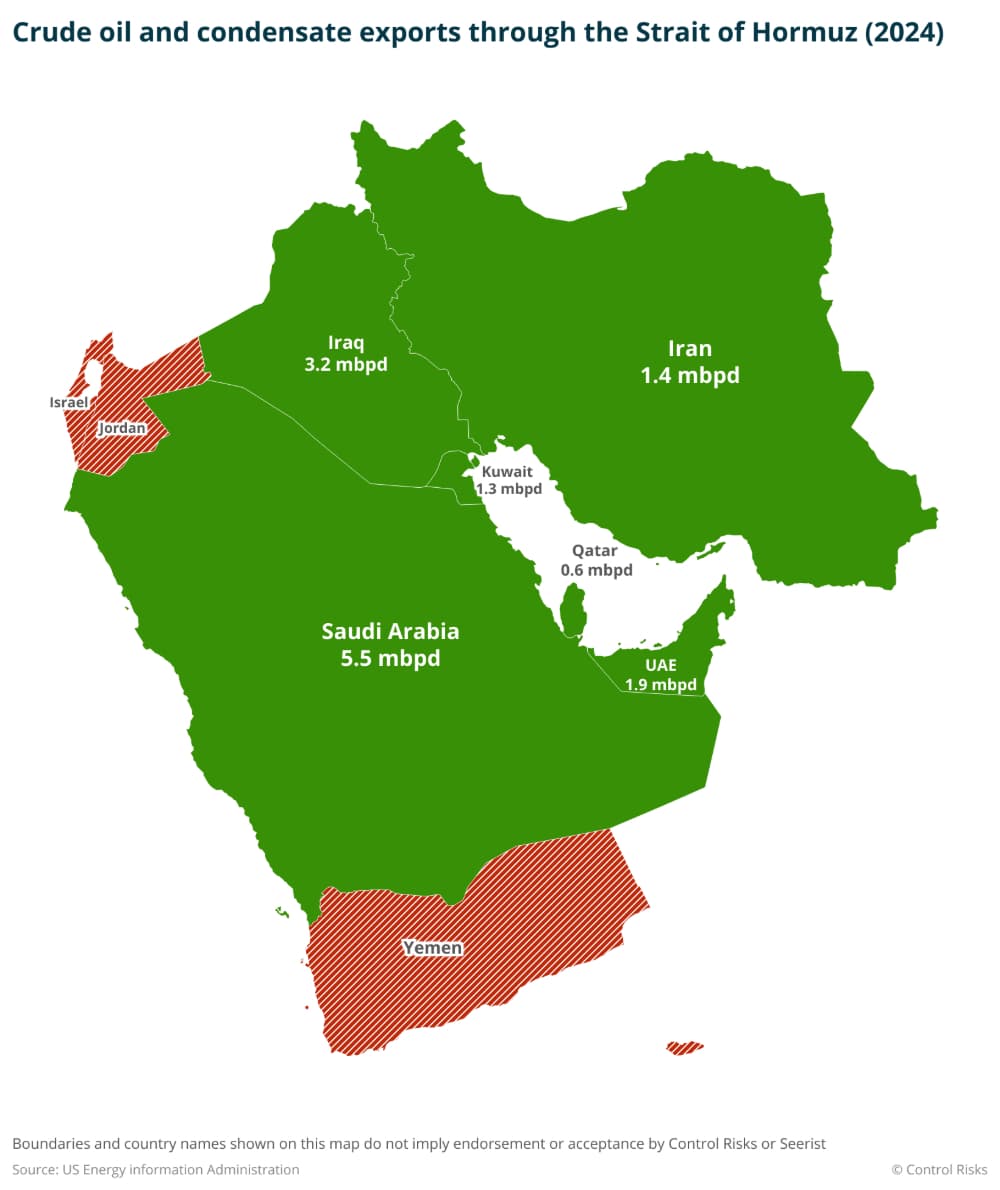
A Goldman Sachs research note circulating this week projects that Qatar and Kuwait could each suffer a 14% GDP contraction this year if the Strait of Hormuz remains closed through the end of April, a severity driven almost entirely by both countries' complete dependence on the waterway for hydrocarbon exports.
The projections place Saudi Arabia and the UAE in a less severe but still damaging range of 3 to 5% GDP decline under the same scenario, with partial rerouting capacity tempering the blow for both. The UAE specifically could see its GDP contract by around 5% if the conflict persists through the end of April, according to reporting from EnterpriseAM, which reviewed the Goldman Sachs research note.
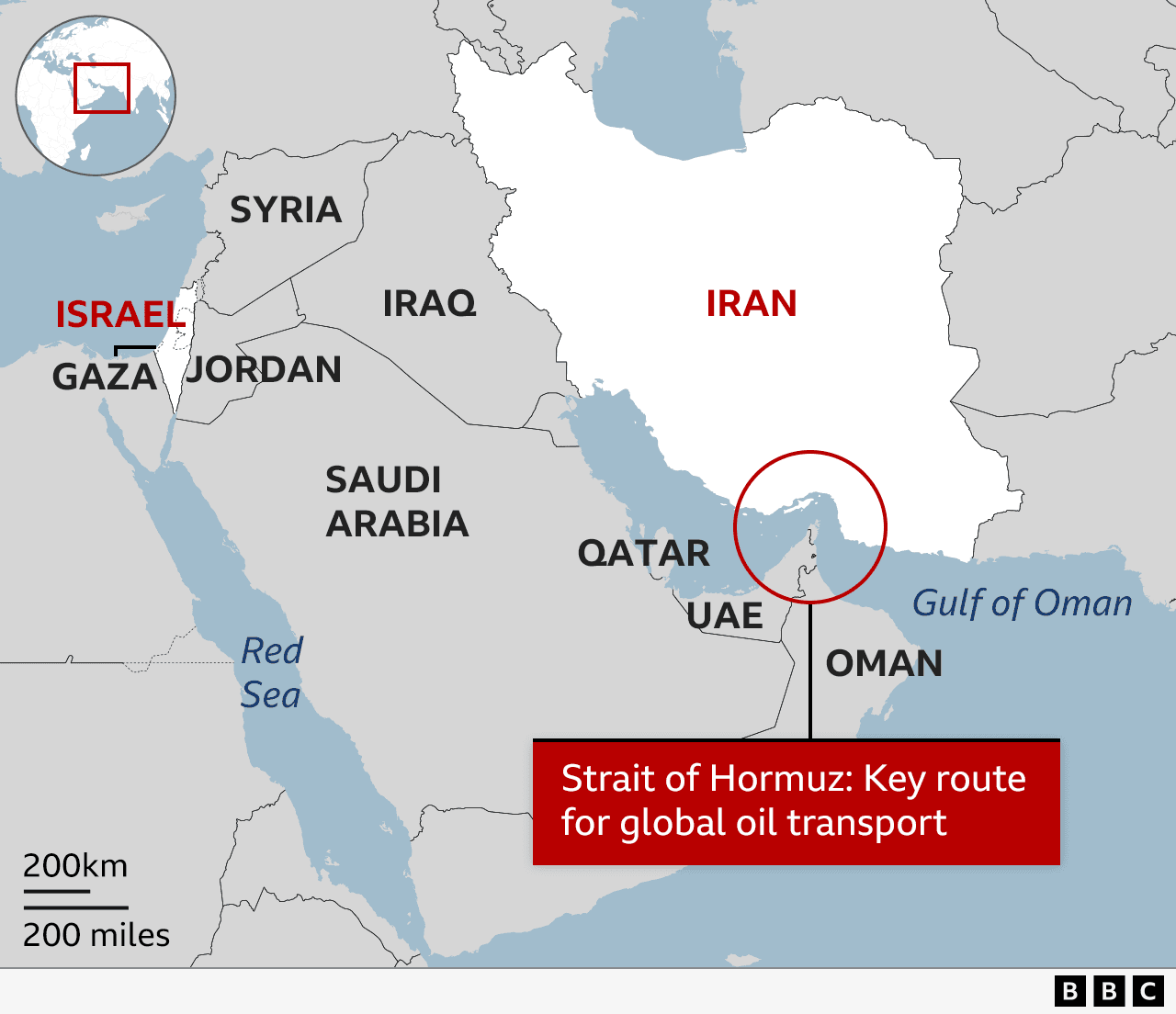
The divergence in projected damage comes down to infrastructure. The UAE has capacity to divert some crude through the Adcop pipeline, also known as the Habshan-Fujairah pipeline, which bypasses the Strait entirely. Qatar, Kuwait, and Bahrain have no equivalent option: all three are entirely dependent on the Strait of Hormuz for their hydrocarbon exports, with no meaningful overland or alternative maritime route for oil and gas shipments.
That dependency shows up in the oil-output projections as well. EnterpriseAM reports that the UAE's oil sector would see a 16% annual decline in output under a prolonged closure scenario. That figure is significant on its own, but it sits well below the 25% or greater output losses projected for Qatar and Kuwait, figures EnterpriseAM cites in direct comparison to the UAE's relative insulation through its pipeline diversion capacity.
The stakes are particularly sharp for the UAE because of where its economy was expected to be this year. Before the current conflict escalated, the UAE held the outlook for the Gulf's strongest growth, with forecasts ranging from 4.8% to 5.6% for the year, led by the non-oil sector. A 5% GDP contraction under a prolonged Hormuz closure would not just halt that momentum; it would represent one of the sharpest economic reversals in the region's recent history.
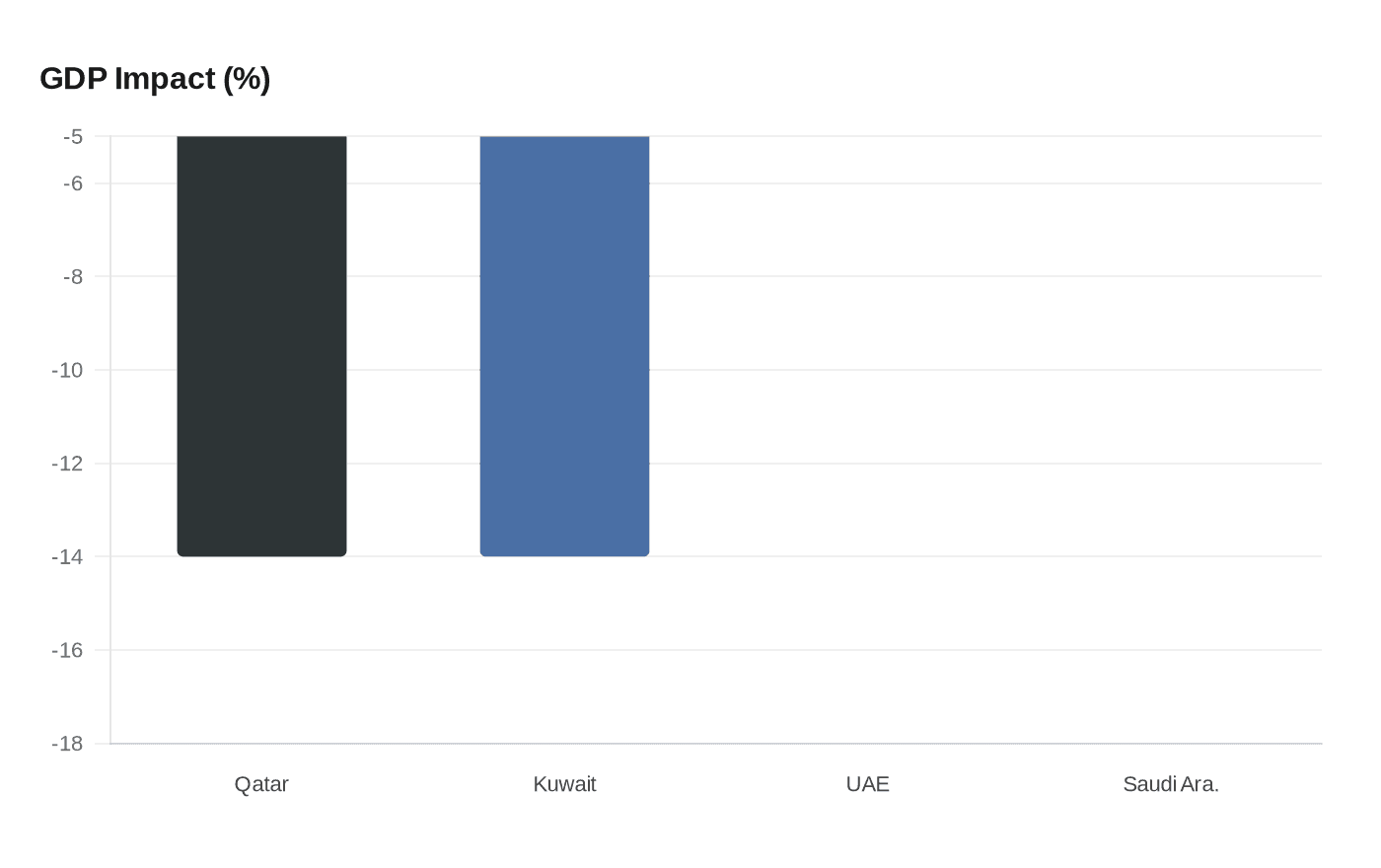
No GDP-specific figures for Bahrain appear in the Goldman Sachs research note as reported, though its complete dependence on the Strait for hydrocarbon exports puts it in the same structural position as Qatar and Kuwait. Saudi Arabia's rerouting options, like the UAE's, limit its exposure relative to those three, though Goldman Sachs still projects a 3 to 5% GDP hit for Riyadh under the same through-April scenario.
The two-month closure window referenced in the Goldman Sachs note reflects a scenario the bank treats as severe but plausible given the current trajectory of the Iran conflict. Whether any Gulf government has formally activated contingency planning around these thresholds has not been publicly disclosed.
Know something we missed? Have a correction or additional information?
Submit a Tip