Powell, Bessent meet bank CEOs, Goldman’s Solomon over Anthropic AI cyber risks
Powell and Bessent pulled Goldman’s Solomon into a warning on Anthropic’s Mythos, signaling that frontier-model cyber risk is now a board-level banking issue.
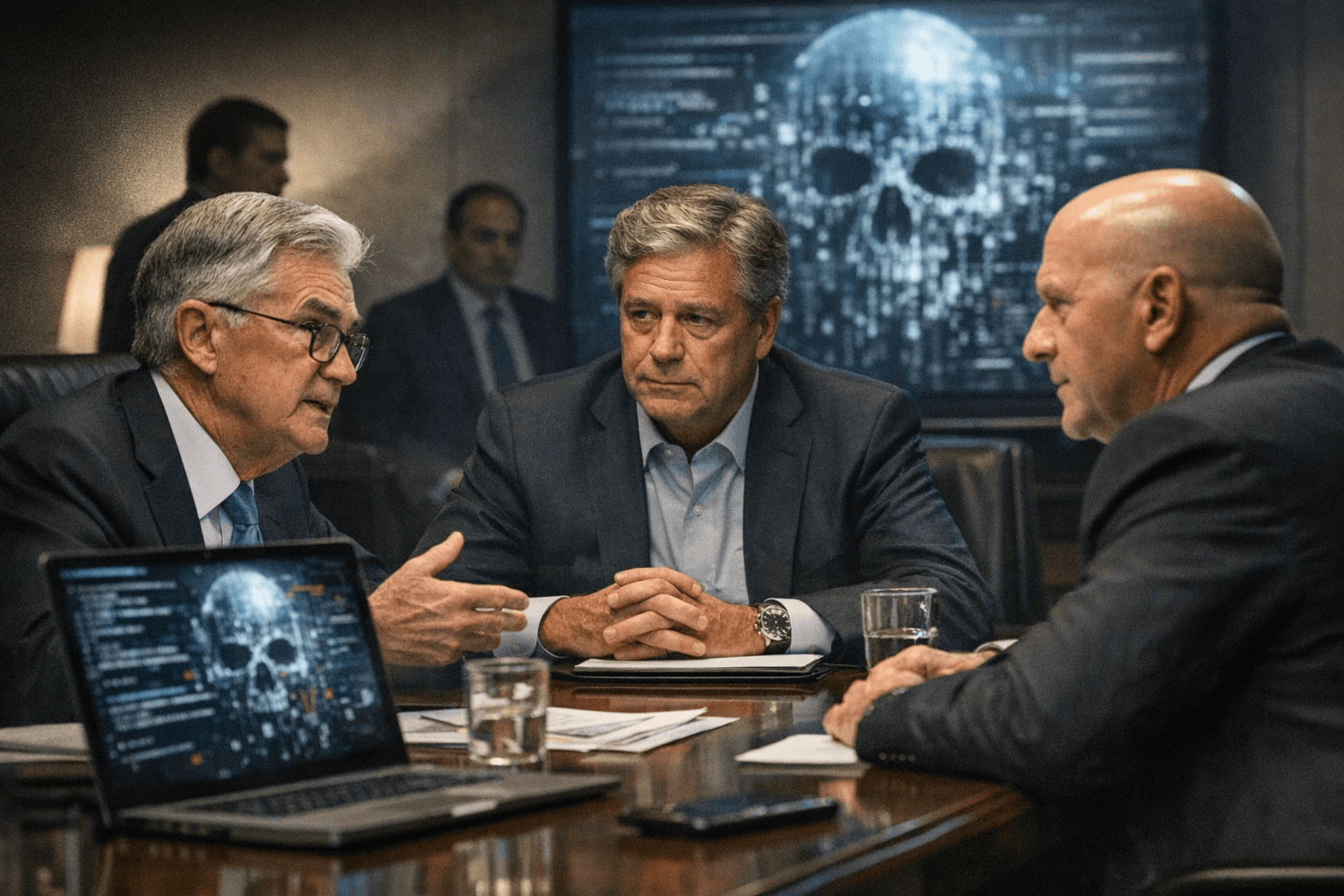
Federal Reserve Chair Jerome Powell and Treasury Secretary Scott Bessent pulled top U.S. bank CEOs into a blunt conversation about Anthropic’s new Mythos model, a sign that AI cyber risk has moved from a tech concern to a governance problem for the biggest lenders.
Goldman Sachs chief executive David Solomon was among the executives in the room at Treasury Department headquarters in Washington, where the bank chiefs were already gathered for a Financial Services Forum board meeting. JPMorgan Chase’s Jamie Dimon was the only major banking CEO who could not attend. For Goldman, the setting mattered as much as the topic: the bank’s AI ambitions are no longer just about speeding up research, client service, or back-office work. They now sit inside the same discussion as systemic risk, vendor oversight, and cyber preparedness.
Anthropic had announced Claude Mythos Preview just days earlier, saying the model was “strikingly capable” at computer security tasks and could identify and exploit zero-day vulnerabilities in every major operating system and every major web browser when prompted. The company said more than 99% of the vulnerabilities it found had not yet been patched, and that the oldest was a now-patched 27-year-old OpenBSD bug. That is the kind of capability that alarms regulators because it can be used offensively as easily as defensively.
Anthropic also launched Project Glasswing on the same day, lining up JPMorganChase, Amazon Web Services, Apple, Broadcom, Cisco, CrowdStrike, Google, the Linux Foundation, Microsoft, NVIDIA and Palo Alto Networks as launch partners. The company said it would extend access to more than 40 additional organizations and commit up to $100 million in usage credits plus $4 million in donations to open-source security groups. The message was clear: the same model that can intensify cyber threats is also being positioned as a tool for hardening critical software faster than traditional methods allow.
That tension lands directly at Goldman, where CNBC reported the firm had been working with Anthropic engineers for six months on autonomous agents for trade accounting and client onboarding. Marco Argenti, Goldman’s tech chief, said the bank was in the early stages of using Anthropic’s Claude model for those functions. That creates a familiar but tougher operating challenge for Goldman teams: every workflow that gets automated also expands the need for model risk review, security testing, legal oversight, and vendor controls.
Goldman’s own latest annual report shows why the bank can afford to push into these tools and why it has so much to lose if controls fail. The firm said 2025 net revenues were $58.3 billion, earnings per share were $51.32, and return on equity was 15.0%. Those numbers reflect a business with room to invest, but also one where a cyber incident tied to an AI vendor could move quickly from an engineering problem to a capital-markets and reputation problem.
The Powell-Bessent meeting made that shift official. Frontier AI is now part of the same risk conversation as liquidity, operational resilience, and crisis response, and Goldman’s employees who build, approve, or use these systems will feel that in tighter sign-offs, tougher vendor scrutiny, and a much higher bar for what counts as safe deployment.
This article was produced by Prism’s automated news system from verified source data, official records, and press releases, then run through automated quality and moderation checks before publishing. The system is built and supervised by the people who set the standards it runs under. Read our full AI policy.
Did this article answer your question?