BLS data show productivity gap for Home Depot's building materials stores
Retail trade got more productive in 2025, but building material dealers fell 3.4%, sharpening the pressure on Home Depot stores to run tighter freight, staffing and inventory routines.
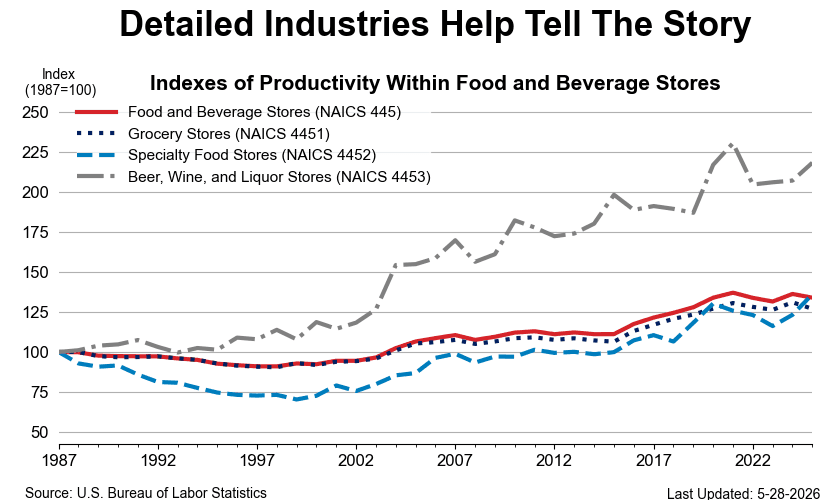
Home Depot’s building materials stores are running against a tougher productivity current than the broader retail trade, and that puts more weight on the basics store leaders control every day: freight flow, inventory accuracy, task ownership and associate training. The Bureau of Labor Statistics said retail trade output rose 2.5% in 2025 even as hours worked slipped 0.4% and unit labor costs fell 0.7%, but building material and supplies dealers, one of the ten largest retail industries by employment, saw productivity fall 3.4%.
That gap matters inside a Home Depot aisle because this is not a simple transactional format. Customers are buying heavy, project-driven products, often with questions about quantities, loading, delivery, installation or Pro support. When shelves are wrong, backstock is messy or departments are short-handed at the wrong hour, the cost shows up fast in lost time and delayed projects. BLS said the ten largest four-digit NAICS industries by employment account for 58.8% of workers in wholesale and retail trade, which makes the retail productivity trend especially relevant for the managers who schedule those hours.
The comparison with 2024 shows how sharply the retail backdrop shifted. In the prior year’s release, retail trade productivity rose 4.6%, output increased 3.3%, hours worked fell 1.2% and unit labor costs declined 1.8%. In 2025, clothing stores posted the strongest productivity growth among the ten largest retail industries, at 11.2%, while building materials moved the other way. For store operations, that is a warning that process discipline cannot be treated as a side issue in the aisles where labor is tied to cutting lumber, staging freight and helping contractors move quickly.

Home Depot has been making the same point in its own filings. In fiscal 2025, the company said knowledgeable associates and on-shelf availability are critical to the store experience, and it said it is empowering associates by enhancing training and product knowledge, optimizing processes, simplifying tasks and leveraging technology to improve the customer experience. It also reported fiscal 2025 total sales of $164.7 billion, up 3.2%, with comparable sales up 0.3% companywide.
The supply chain and store network give the strategy real consequences on the floor. Home Depot said in fiscal 2024 that it operated 19 direct fulfillment centers and more than 2,000 stores, with technology improvements across the chain helping speed delivery and expand same-day and next-day service. It also said 37 new stores built over the past three years are outperforming expectations and that it expects to keep opening 15 to 20 stores a year after its roughly 80-store plan ends in 2027. For store leaders, the message is plain: in building materials, productivity is not an abstract metric. It is the difference between a smooth project customer experience and a day spent fighting the floor.
This article was produced by Prism’s automated news system from verified source data, official records, and press releases, then run through automated quality and moderation checks before publishing. The system is built and supervised by the people who set the standards it runs under. Read our full AI policy.
Know something we missed? Have a correction or additional information?
Submit a Tip

