Century-old hardware rival closes as Home Depot reshapes retail market
A 110-year-old Montreal hardware store is shutting after failing to find a buyer, a sign of how Home Depot and e-commerce have shifted the jobs and advice customers now expect.
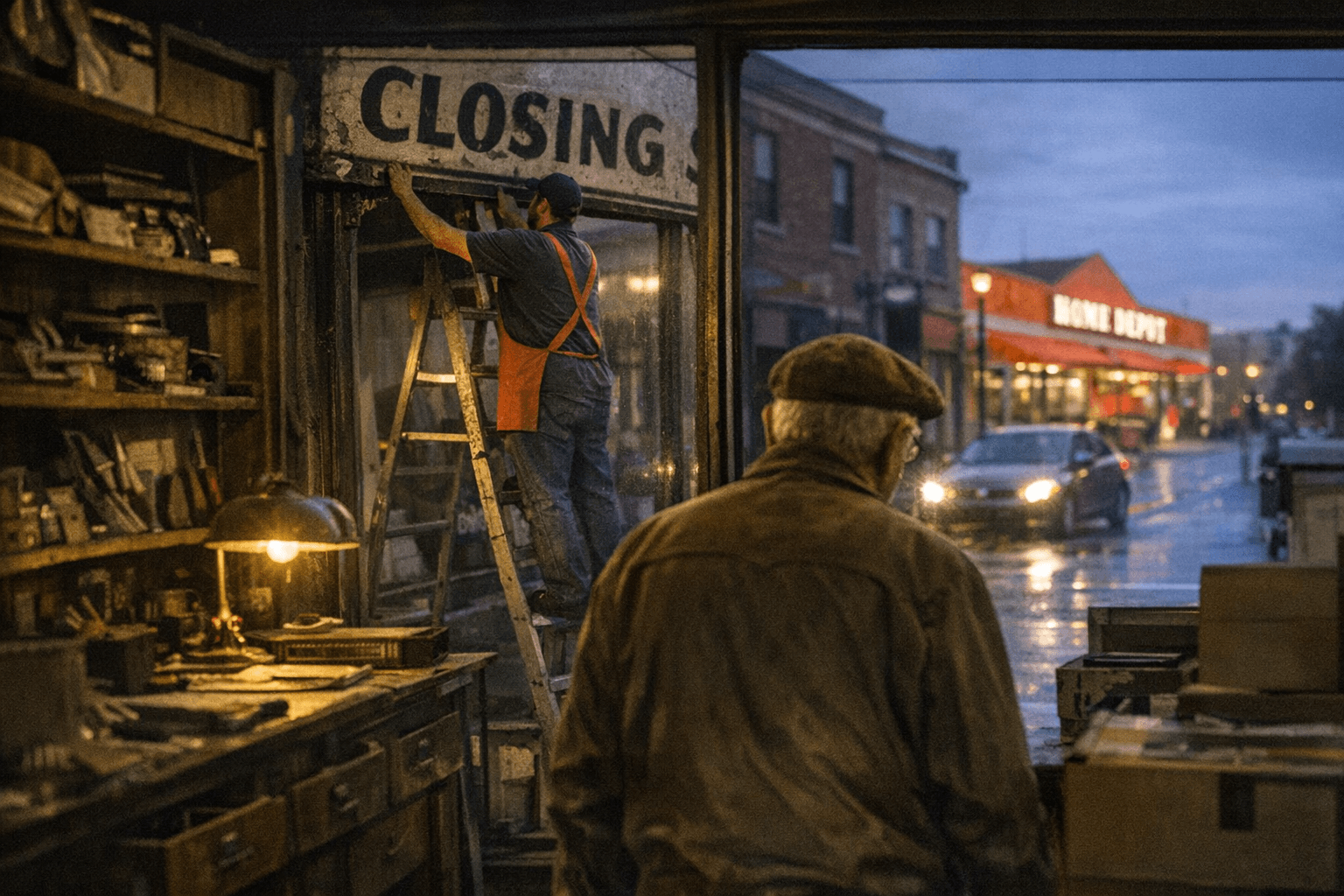
A 110-year-old hardware store in Montreal is closing because its owners could not find a buyer, a reminder that succession problems are now deciding which neighborhood retailers survive and which ones disappear.
BMR Quincaillerie Notre-Dame de St-Henri had served Montreal’s St-Henri neighborhood for generations, selling building supplies, hardware, grills and the kind of everyday project items that once made independents the first stop for home repair. Its shutdown lands at a moment when customers are splitting their shopping between local stores for small purchases and big chains like Home Depot for larger projects, a shift that has steadily narrowed the role of the independent hardware store.
The pressure is visible in the numbers. The share of truly independent hardware stores fell from 47% in 1992 to 42% by 2018, according to The Handbuilt City. The North American Retail Hardware Association says the average independent owner is now about 60, and Scott Wright has called the lack of succession planning a “huge issue” for the industry. When owners age out and no family member or buyer steps in, the store’s history does not guarantee a future.
For Home Depot workers, the lesson is not just that a rival closed. It is that the market is concentrating around stores that can handle more complicated work, more expensive carts and more demanding customers. Neil Saunders of GlobalData said Home Depot does best on large-scale improvement tasks and major DIY jobs. He also said the number of projects fell 1.5% in the final quarter, driven largely by a sharp drop in bigger-ticket work such as full remodels. That mix matters on the sales floor, where associates are expected to turn broad project traffic into actual purchases and keep complex jobs moving.
The market share picture shows how dominant the biggest players have become. Home Depot held 28% of home-improvement sales in 2025, Lowe’s held 17% and Amazon 11%, for a combined 56% share for the three leaders, according to Numerator’s Home Improvement Tracker. Independents still win on proximity and expertise for small jobs, but scale now decides much of the market. For the big-box floor, that means more pressure on staffing, training and product knowledge, especially when customers walk in expecting store-level advice on projects that used to be handled by a specialist down the street.
Know something we missed? Have a correction or additional information?
Submit a Tip