Deloitte warns consumers are cautious, but still spending on essentials
Home Depot is still seeing shoppers spend, but Deloitte says they are arriving more cautious, more selective and far more sensitive to price.

Deloitte’s latest consumer read suggests the Home Depot customer is still buying, just with a tighter hand on the wallet. The firm said its financial well-being index slipped to 101.1 in March 2026, while 82% of respondents expected higher gas prices, the highest share in three years, and 74% expected grocery prices to rise. Discretionary spending intentions recovered a bit in April after a sharp March drop, but nondiscretionary spending eased for a third straight month, signaling a shopper who is anxious, selective and still in the market for necessities.
That is the floor-level reality Home Depot associates are already navigating. The Atlanta retailer depends on customers who will still pay for maintenance, repair and upgrade work even when they hesitate on bigger, more optional projects. On the sales floor, that means the conversation matters as much as the product. Associates who can explain why one part, tool or material avoids a second trip, cuts labor or prevents a future replacement cost will have an edge over a simple lower-price pitch. The hard part is separating a short-term patch from a durable fix and making the value case fast enough for a customer who is comparing every ticket.

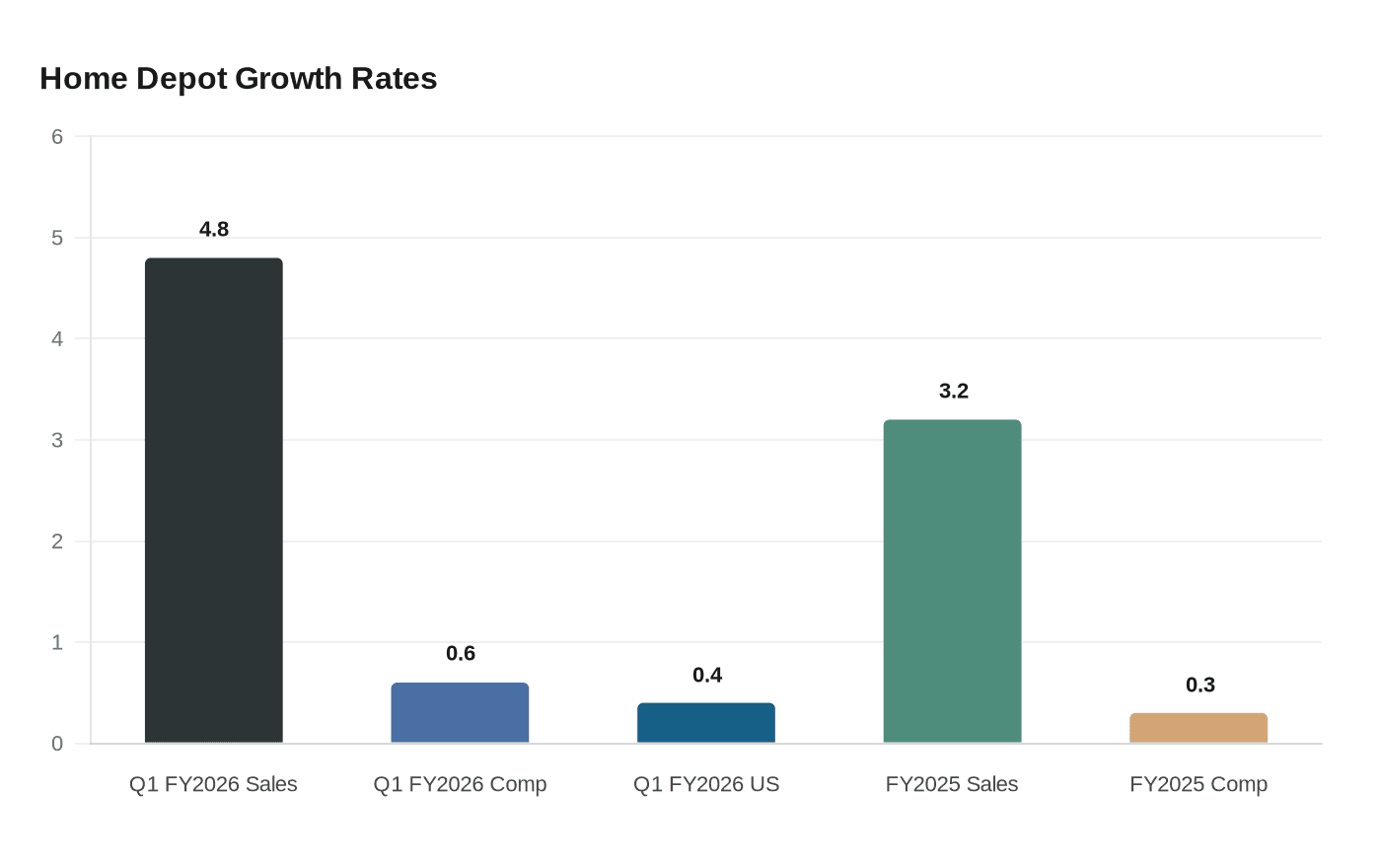
Home Depot’s own numbers show that the caution has not stopped spending. In first-quarter fiscal 2026, the company reported sales of $41.8 billion, up 4.8% from a year earlier. Comparable sales rose 0.6%, and U.S. comparable sales increased 0.4%. Ted Decker said underlying demand was relatively similar to fiscal 2025 despite greater consumer uncertainty and housing affordability pressure. Home Depot also reaffirmed fiscal 2026 guidance for total sales growth of roughly 2.5% to 4.5% and comparable sales growth of about flat to 2.0%, along with plans for about 15 new stores.

The company has been making the same point for months. In February, it reported fiscal 2025 sales of $164.7 billion, up 3.2%, with comparable sales up 0.3%. Management said demand, adjusted for storms, stayed relatively stable through the year even as consumer uncertainty and housing pressure weighed on the broader market. In December, Home Depot’s preliminary fiscal 2026 outlook assumed a home-improvement market ranging from minus 1% to plus 1%, while the company said it was positioned to gain share in an approximately $1.1 trillion market.
For associates and department leads, the message is less about doom than about discipline. The shopper is still walking in, but the trip is more selective and more price-sensitive. That should keep essential maintenance items, repair materials and practical upgrades in the mix, while making bigger discretionary buys harder to close without a clear explanation of durability, convenience and total cost. In this kind of market, the best-selling skill on the floor is not hype. It is making the case that the right fix today can save money, time and frustration later.
Know something we missed? Have a correction or additional information?
Submit a Tip