Home Depot Staff Treated TikToker Differently Based on Her Outfit, Viral Video Shows
A TikToker visited the same Home Depot twice in two different outfits and says staff treated her noticeably differently each time.
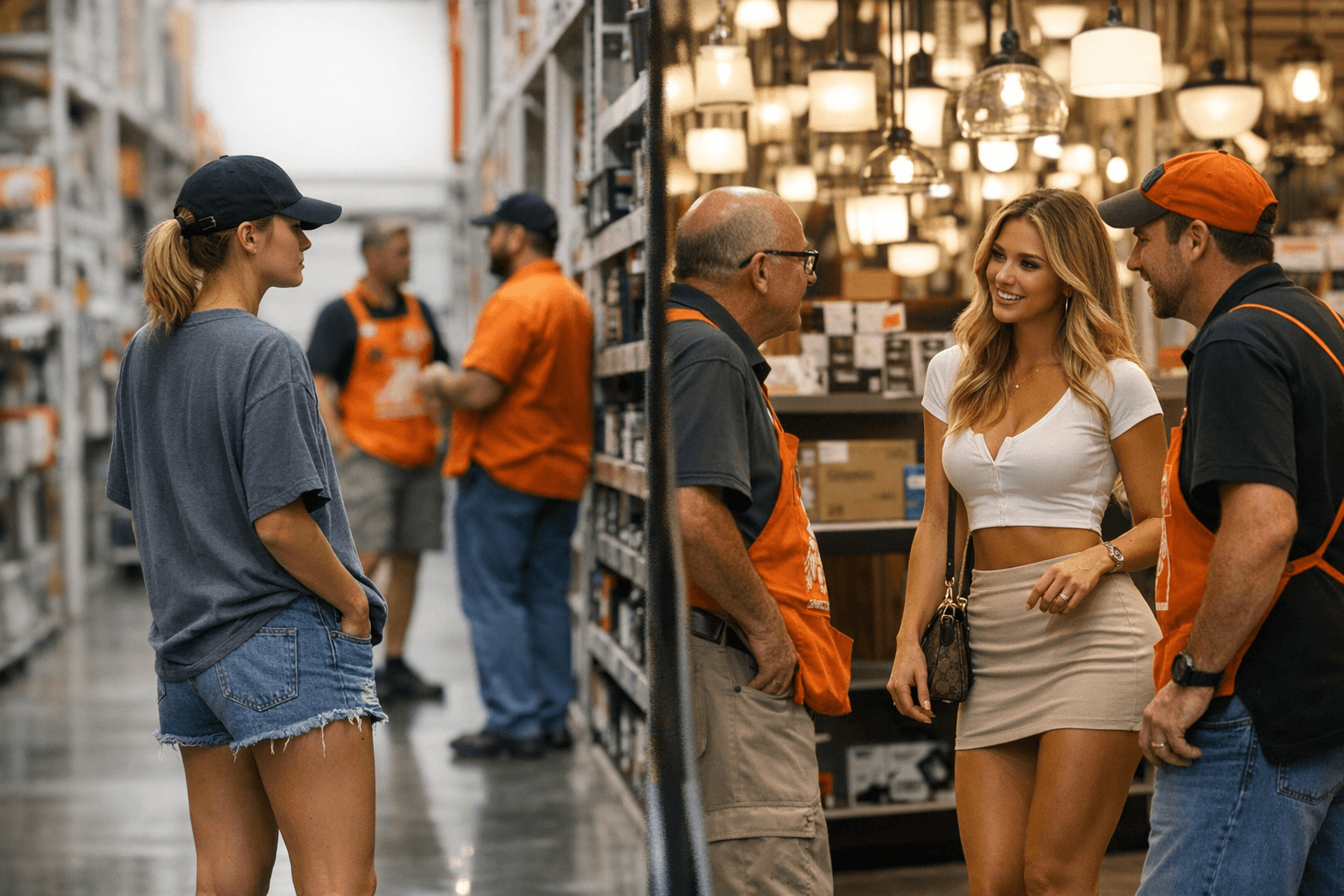
Caroline Ricke had a theory about retail customer service, and she decided to test it inside a Home Depot. The TikTok creator, who posts under @richcaroline, visited the same store on two separate occasions: once styled as an "off-duty model" and once in athletic shorts and a sweatshirt. The result, captured on video and posted March 12, went viral.
The premise was straightforward. Ricke wanted to know whether the way she dressed would change how Home Depot staff interacted with her. It did. The video documents noticeably different treatment between her two visits, with staff engagement varying based on which version of Ricke walked through the door.
The experiment taps into something many retail workers and customers already suspect but rarely document: that appearance shapes the service experience in ways that have nothing to do with a customer's actual needs or spending power. Home Depot, which positions itself as a store for everyone from professional contractors to first-time DIYers, is a particular setting for that question. The customer base is unusually diverse, and the help-seeking dynamic, where customers often need staff to locate items or explain products, makes the quality of that interaction matter more than in a standard retail setting.
Ricke's video does not appear to single out specific employees or identify which store location she visited. The format follows a pattern that has become common on TikTok, where creators document perceived bias in service environments to test whether appearance, race, or gender changes how businesses treat people.
Home Depot has not publicly responded to the video. The company's customer service standards, like those of most major retailers, do not publicly distinguish between customers based on appearance. Whether the behavior Ricke documented reflects individual employee choices, store culture, or something more systemic is a question the video raises without answering. What it does do is put the gap between policy and practice back in front of the nearly 500,000 employees who work for the company and the millions of customers who shop there.
Know something we missed? Have a correction or additional information?
Submit a Tip