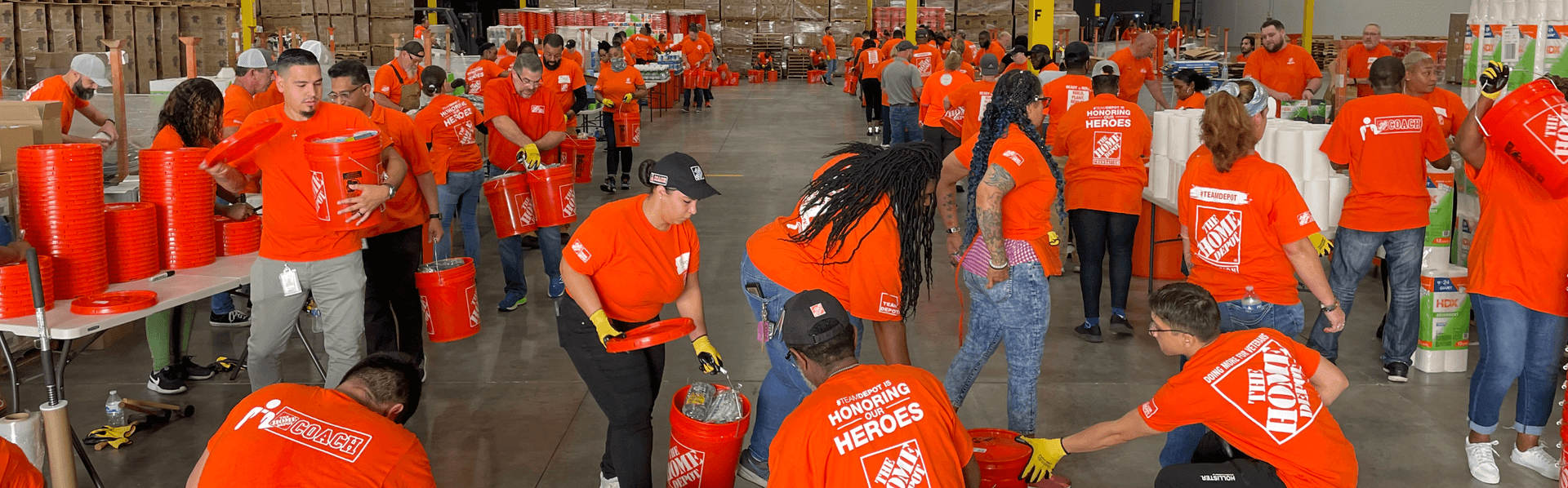
Home Depot ties associate experience to customer service and business success
Home Depot says associate experience is a business strategy, not a perk. The real test is whether that promise shows up in training, staffing, and faster answers on the sales floor.

What Home Depot is really promising
Home Depot is making a blunt case that the way it treats associates is inseparable from how it serves customers and grows the business. The company’s own culture messaging says associates can be themselves and still be part of something bigger, in an environment where they feel valued and respected. That is not just a feel-good line for the wall; it is the operating theory Home Depot wants store leaders to use when they coach, staff, and solve problems under pressure.
The company goes further on its WeAreTHD page, describing culture and associates as hard-to-replicate advantages. In practical terms, it says those advantages come from competitive wages and benefits, plus the tools, training, and development opportunities that make work at Home Depot rewarding. For associates and department leads, that means the company is tying service quality to whether people feel prepared, respected, and supported enough to answer customers with confidence.
The founding idea still drives the playbook
That message has deep roots in the company’s origin story. Bernie Marcus and Arthur Blank dreamed up The Home Depot in 1978 from a coffee shop in Los Angeles, with a superstore vision that paired huge selection and low prices with a highly trained staff. The founders wanted people who could walk customers at every skill level through home repair and improvement, and that idea still sits at the center of the brand.
Home Depot now frames that approach through its “Inverted Pyramid” philosophy: put customers and associates first, and the rest will take care of itself. The point is more than a slogan. It tells store managers that leadership is supposed to start on the floor, not in the back office, and that the quality of the customer experience depends on whether associates have the knowledge and support to solve problems in real time.
Why the annual report matters to the sales floor
Home Depot’s FY2025 annual report turns the culture message into a growth strategy. The company says it is focused on driving core and culture, delivering a frictionless interconnected experience, and winning with the Pro. It also says it is leveraging competitive advantages including knowledgeable associates and culture, while empowering associates through better training, stronger product knowledge, simpler processes, and technology.
That matters because the company is not presenting associate development as a side benefit. It is linking it directly to market share and shareholder value. If a store can move a contractor through a purchase faster, help a DIY customer avoid a costly mistake, or cut friction in a busy seasonal rush, Home Depot sees that as part of the same business system as sales and margin.
The strategic backdrop makes that even clearer. Home Depot says its growth plan remains unchanged despite elevated interest rates, pressured housing affordability, and broader economic uncertainty. In that environment, the company is betting that better-trained associates and smoother store operations help protect traffic and win bigger jobs, especially with the Pro customer.
What the company says it is investing in people
Home Depot has also put numbers around its labor strategy. In a February 21, 2023 message to U.S. associates, CEO Ted Decker said the company was investing an additional $1 billion in wage increases for frontline hourly associates. He also said every U.S. market had a starting wage at or above $15 an hour.
Those figures matter because they show how Home Depot wants to compete for labor in a tight retail market: by pairing pay with internal advancement. Decker said 90 percent of store leadership started as hourly associates, and more than 65,000 associates were promoted into positions of increased responsibility in 2022 alone. For a department lead or cashier looking at the long game, that is a signal that the company wants promotion paths to be visible, not hidden.

There is also a management lesson in those numbers. If most store leaders started on the hourly side, then the company is saying that floor experience is not just acceptable background, it is the expected pipeline. That puts pressure on store managers to treat training as a business task, not an afterthought.
What this looks like inside a store
Home Depot’s messaging only matters if it shows up in the daily grind. For a store, that means the culture has to appear in how shifts are staffed, how associates are coached, and how mistakes are handled when customers are waiting in aisles, at the service desk, or on the Pro side of the business.
A good day at Home Depot should not be measured only by sales numbers. It should also show up in smaller, harder-to-measure things:
- New hires getting real product training instead of being left to absorb the department by osmosis.
- Department leads having enough coverage to answer questions without juggling three other fires.
- Associates feeling comfortable saying they do not know an answer yet, then getting the support to find it fast.
- Store teams being able to solve customer problems without turning every issue into an escalation.
That is where the company’s talk about respect and teamwork becomes operational. If a store is short-staffed, if product knowledge is thin, or if leadership is only chasing speed, the “Inverted Pyramid” can collapse into a very ordinary retail problem: the people closest to customers are the least equipped to help them.
The scale of the test
Home Depot’s own footprint shows how much is riding on whether this model works. In fiscal 2024, the company said its retail footprint totaled 2,340 stores. Its reporting also says it operates across all 50 states, Washington, D.C., Puerto Rico, the U.S. Virgin Islands, Guam, 10 Canadian provinces, and Mexico.
At that scale, culture is not just an HR theme. It is a coordination problem. A promise made in Atlanta has to hold up in a crowded suburban store during spring project season, in a pro-heavy location where speed matters, and in every market where staffing, training, and local customer expectations differ. The company’s argument is that better associate experience makes that network more reliable, not less.
Why workers should pay attention to the language
The most important thing about Home Depot’s messaging is that it blends pride and pressure. The company wants associates to see themselves as part of something bigger, but it also wants them to carry more product knowledge, more customer responsibility, and more operational flexibility as the business shifts toward interconnected retail and Pro growth.
For store managers, the takeaway is straightforward: the company is telling you that culture is part of execution. For associates and department leads, the signal is just as clear: training, growth, and respect are not being framed as extras. They are part of the bargain Home Depot says it needs to win.
This article was produced by Prism’s automated news system from verified source data, official records, and press releases, then run through automated quality and moderation checks before publishing. The system is built and supervised by the people who set the standards it runs under. Read our full AI policy.
Did this article answer your question?