Home Depot ties workplace values to daily actions and millions in savings
Home Depot’s values are meant to shape stock fixes, customer exceptions and coaching on the floor. One reverse-logistics change has already saved millions yearly.
Values that show up before a customer asks
A clean aisle, a fast answer and a teammate who knows when to escalate are not separate from Home Depot’s culture. The company’s message is that its eight core values are meant to live in daily work, not on a wall, and that distinction matters in a store where a missed stock issue or a slow handoff can turn into a lost sale.
That is why Home Depot says its culture and success are built on “an unwavering loyalty” to eight guiding principles. In practice, those principles become a floor-level decision-making system: fix the inventory problem before the customer notices, hand off an exception when it needs manager approval, and give a teammate room to own a task instead of taking it away too soon. Respect, entrepreneurship and strong relationships are not soft language in that setting. They are how the store keeps moving.
What the values look like in the aisle, the stockroom and the pro desk
For associates, the clearest test of a value is whether it helps you solve the day’s actual problem. If a bay is off, the value is not “be customer focused” in the abstract. It is checking the counts, finding the misplaced product, correcting the shelf and keeping the customer from hitting a dead end. If a Pro customer needs a quick answer on product fit, the value is not just service pride. It is speed, accuracy and enough product knowledge to keep the job moving.
That is also why relationship-building shows up as an operating skill. A department lead who knows how to work with a vendor, a district partner or a service team is doing more than being friendly. They are building the handoffs that keep orders, replenishment and special requests from stalling. In a business built around tradespeople, contractors and homeowners with urgent timelines, those handoffs are often the difference between a smooth visit and a blown delivery window.
Managers have a role here too. The strongest coaching conversations are not about repeating values language. They are about making the expectation concrete: when to stop and correct a safety or accuracy issue, when to loop in a supervisor, and when to let a teammate solve the problem so the team can learn from it. That is where entrepreneurship becomes real in retail. It is not taking random risks. It is giving people ownership within clear standards.
Process changes can be values in action, not just back-end cleanup
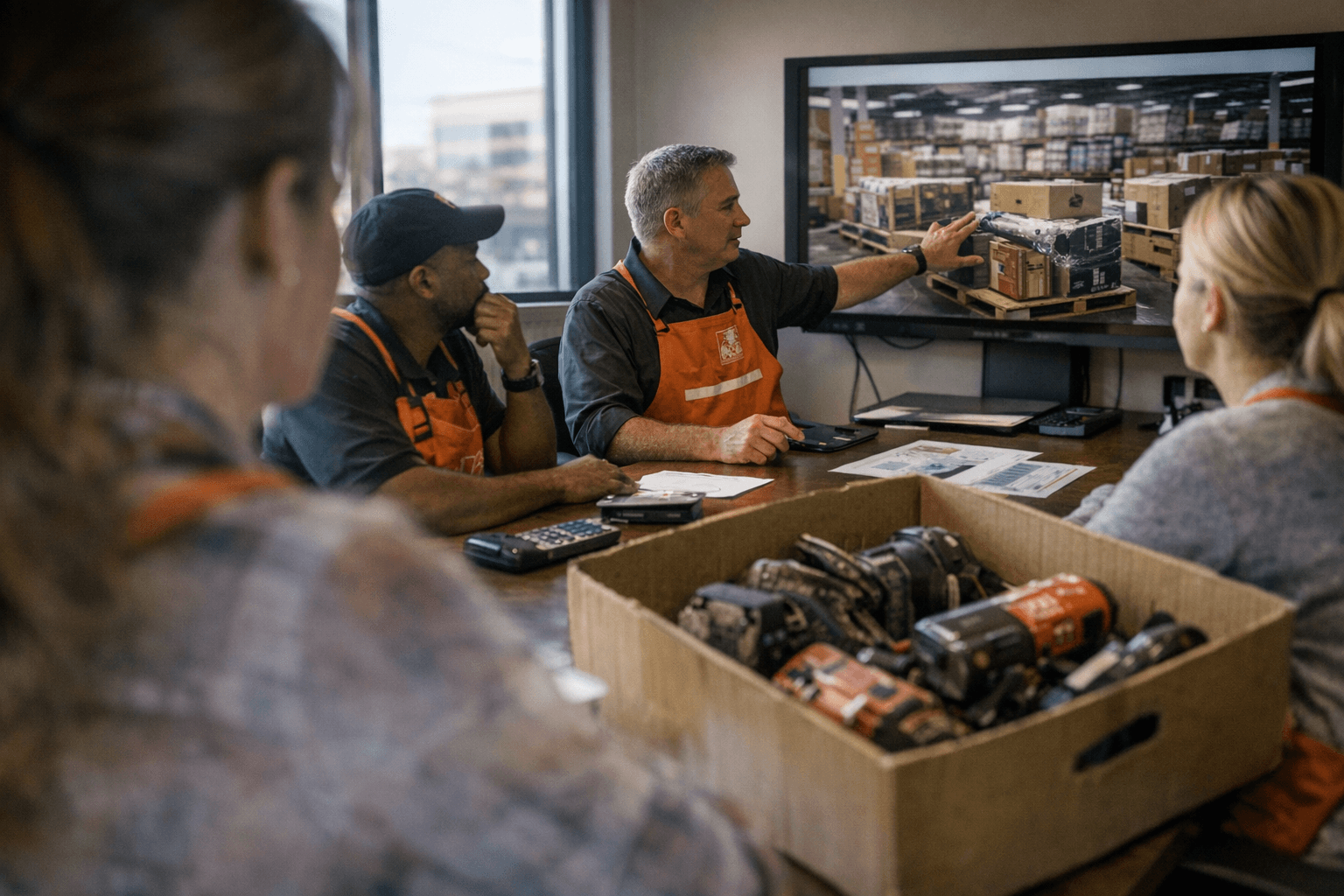
One of the clearest examples in Home Depot’s own materials comes from Rick Cox, who manages the store inventory reverse logistics system. The company points to his work centralizing return-to-vendor and out-for-repair programs as a change that saved millions annually. That is a useful example because it shows values and process improvement working together instead of competing with one another.
At store level, a system like that matters in plain terms. Less confusion in reverse logistics means fewer items lost in limbo, less wasted time chasing returns and a cleaner path for associates who need to know where a product stands. It also reinforces a broader message: ownership is not only about the sales floor. It extends into the unglamorous work that keeps the floor stocked, the backroom organized and the customer from waiting on a fix that should have been simple.
The same logic applies to the company’s push to simplify processes and use technology better. When a task becomes easier to understand, associates spend less time decoding procedure and more time serving customers. That is especially important in a store that moves from spring project rushes to contractor-heavy traffic to seasonal resets, all while keeping the basics tight.
Why the culture message matters at Home Depot’s size
Home Depot says it is the world’s largest home improvement specialty retailer, with more than 2,300 stores in the United States, including Puerto Rico and the U.S. Virgin Islands. The company also reported fiscal 2025 net sales of $164.7 billion and earnings of $14.2 billion. At that scale, a culture statement is not window dressing. It is part of how the business tries to stay consistent across thousands of aisles, teams and customer interactions.
The company says its culture and associates provide intangible, hard-to-replicate competitive advantages. That claim fits the way Home Depot describes its growth strategy: drive the core and culture, deliver a frictionless interconnected experience and win with Pro customers. Put simply, the company wants the store experience, the digital experience and the jobsite experience to feel like one system, not three disconnected ones.
That strategy also explains the company’s focus on training, product knowledge, process simplification and technology. Associates are being asked to know more, move faster and solve problems with fewer handoffs. For leaders, that means culture is not an afterthought to operations. It is the operating system that helps the business keep up with demand, particularly when customers arrive with a deadline and a half-finished project.
How Home Depot reinforces the message beyond the store
Home Depot does not rely only on policy language to push the values down through the organization. Its associate storytelling, including Behind the Apron profiles, is meant to reinforce perseverance, personal growth and community service. That matters because workers tend to remember real examples more than brand phrases. A story about a teammate who leads volunteer efforts or helps coworkers grow makes the values easier to recognize on the next shift.
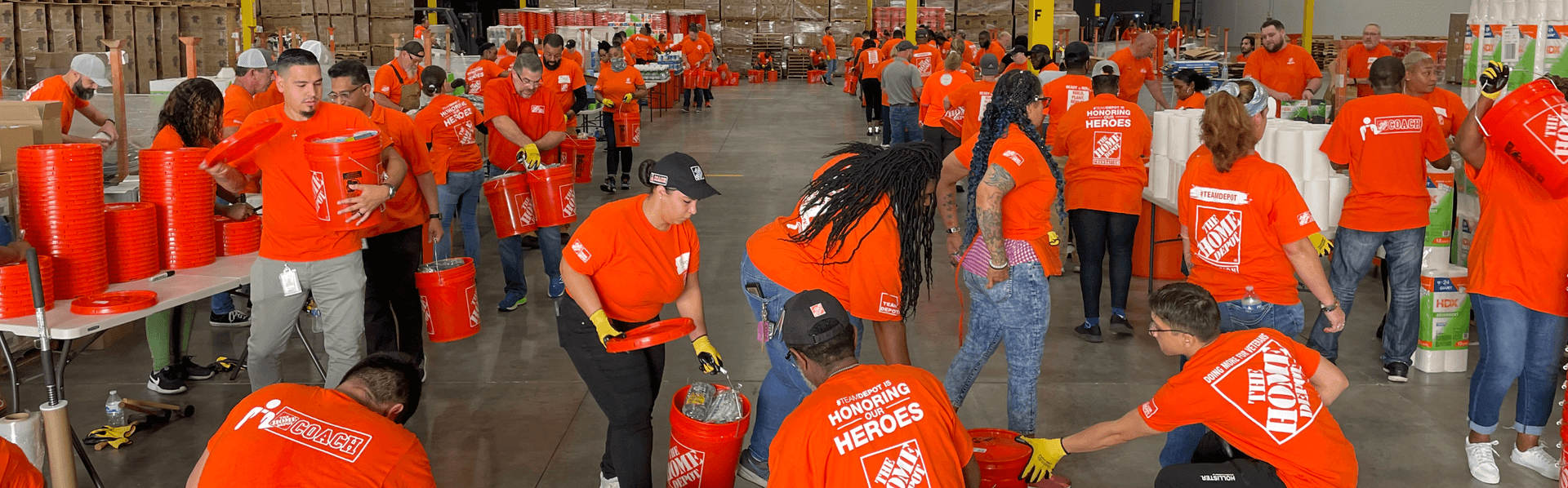
Team Depot carries that same idea into the community. Home Depot says the volunteer force has worked with nearly 15,000 nonprofits since 2011 and averages five projects a day in local communities. That is a large footprint, and it links the company’s internal message to visible work outside the store. It also gives associates a concrete picture of what Strengthening Our Communities looks like when it is not just written in a handbook.
Home Depot’s Living Our Values framework organizes that broader message into three pillars: Focus on Our People, Operate Sustainably and Strengthen Our Communities. The company says those pillars are embedded in how it runs the business and support value creation for shareholders. For workers, the practical takeaway is simple: the company is trying to make values measurable in how teams work, how problems get solved and how leaders coach. When that happens, the culture is no longer a slogan. It becomes part of how the store runs every day.
This article was produced by Prism’s automated news system from verified source data, official records, and press releases, then run through automated quality and moderation checks before publishing. The system is built and supervised by the people who set the standards it runs under. Read our full AI policy.
Did this article answer your question?