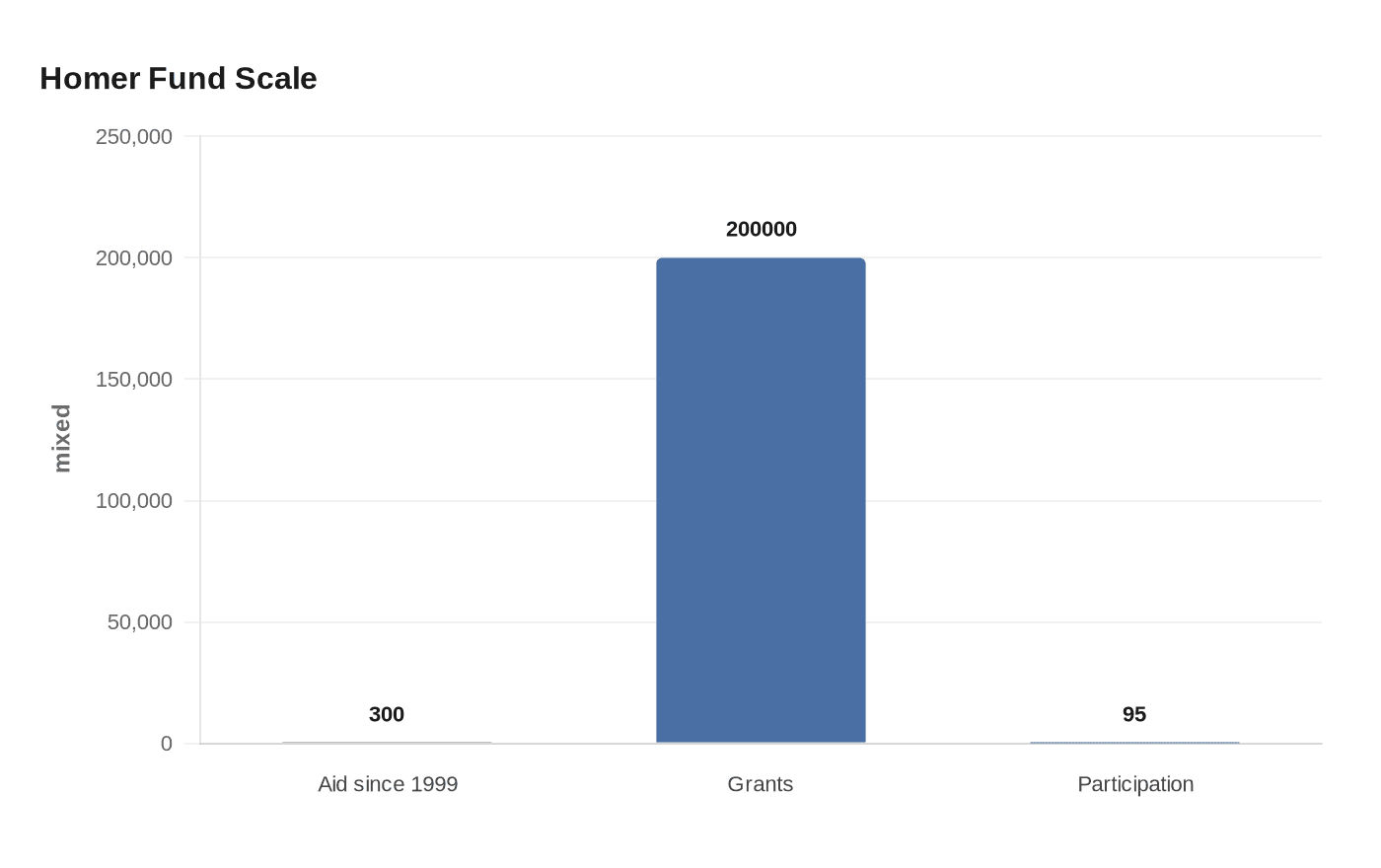
Home Depot's Homer Fund has delivered $300 million in associate aid since 1999
Since 1999, The Homer Fund has delivered nearly $300 million in aid. For associates hit by a fire, funeral or illness, it is a built-in safety net.

Nearly $300 million in associate aid is what The Homer Fund has delivered since 1999, through more than 200,000 grants. For Home Depot workers, that number matters because it shows the company built a real emergency backstop for the moments when a paycheck, a savings account or a careful budget still is not enough.
When The Homer Fund becomes relevant
The fund exists for sudden, life-disrupting hardship. Home Depot says it can help with basic living expenses when an associate faces an unforeseen crisis, including natural disasters, house fires, illnesses, funeral expenses and car repairs. That makes it relevant in the exact kinds of situations that throw a retail household off balance fast, especially for hourly workers and families with little cushion.
It is also more than a one-time rescue tool. Home Depot says The Homer Fund provides financial assistance, scholarships for associates’ children based on financial need and academic performance, and financial information meant to help people prepare for emergencies. In other words, it is designed to cover the shock of today and help with the planning that keeps tomorrow from becoming another crisis.
What the fund can cover
The fund is built around practical, everyday emergencies, not abstract hardship. A house fire can wipe out shelter and belongings in a single night. A funeral can create urgent costs at the worst possible time. A car repair can threaten the commute, the paycheck and the ability to keep working. The Homer Fund is meant to respond when those kinds of expenses land all at once.
- Shelter needs after a natural disaster
- Costs tied to a house fire
- Illness-related hardship
- Funeral expenses
- Car repairs
- Other basic living expenses after unforeseen hardship
That list is important because it mirrors the kinds of disruptions that hit working families hardest. In a store environment where schedules are tight and dependability matters, even a short-term financial shock can cascade into missed shifts, transportation problems or a full exit from the workforce.
How the program is structured
The Homer Fund was founded in 1999 as a 501(c)(3) nonprofit for Home Depot associates and their families. It was created by Home Depot co-founders Bernie Marcus, Arthur Blank and Ken Langone, which gives the program a place in the company’s original culture rather than as a later add-on. Home Depot marked 2024 as the fund’s 25th anniversary, a milestone that underscores how long the company has treated associate hardship as a workplace issue, not just a private problem.
The company says the fund offers two grant types: Direct Grants and Matching Grants. For associates, that matters because the program is not a vague promise of help. It is a formal internal system with named pathways for qualifying people in need. Home Depot also says the fund is primarily supported by associates and the company, and that every dollar an associate donates goes right back to an associate in need.
That structure is part of why the fund carries weight on the store floor. In a high-pressure retail culture built around teamwork, load planning, customer service and seasonal volume, it sends a clear message that the company expects people to look out for one another when the unexpected hits.
What the culture data says about participation
The broadest sign of that culture may be how many people have engaged with the fund. Home Depot said 95 percent of associates participated and/or donated to The Homer Fund in 2018. That is a striking level of involvement for any internal support program, and it suggests the fund is not a niche benefit known only to managers or long-tenured associates.
For store leaders, that level of participation should change how you think about support conversations. When a teammate is dealing with a house fire, medical emergency or death in the family, you are not just offering sympathy. You are pointing them toward a company safety net that many colleagues have already helped sustain.
Orange Scholars extends the support to families
The Homer Fund also reaches beyond the associate alone. Home Depot’s 2025 materials say the Orange Scholars Scholarship Program is for qualified children or dependents of hourly associates. The program considers financial need, academic performance, community involvement and leadership.
That matters in a workforce where many associates are balancing work, family obligations and school costs at the same time. A scholarship program tied to hourly workers recognizes that the pressure point is often not just rent or repairs, but the long-term cost of helping a child or dependent move forward. For many families, that can be the difference between keeping education on track and dropping plans entirely.
What to do when life suddenly goes sideways
The most important move is not to wait until you are in full crisis mode before learning the basics. Know that The Homer Fund exists, know the types of hardship it covers, and know whether your situation fits a grant path or a scholarship path.
1. Start by identifying the need. Is this a basic living expense emergency after an unforeseen hardship, or is it an education-related need for a child or dependent?
2. Match the situation to the right program. Home Depot says qualifying associates may receive Direct Grants or Matching Grants, while Orange Scholars is for children or dependents of hourly associates.
3. If the issue is emergency relief, focus on the hardship category. Natural disasters, house fires, illnesses, funeral expenses and car repairs are all part of the fund’s stated scope.
4. If you are planning ahead, use the financial information the fund offers to prepare for emergencies before they happen.
For associates, the point is simple: asking for help is part of the system, not a personal failure. For managers, knowing that system exists gives you a concrete way to support a teammate through the worst week of their life and, sometimes, keep that person attached to the workforce instead of losing them to a crisis that should have been survivable.
This article was produced by Prism’s automated news system from verified source data, official records, and press releases, then run through automated quality and moderation checks before publishing. The system is built and supervised by the people who set the standards it runs under. Read our full AI policy.
Did this article answer your question?