Maersk says North America logistics stabilize, but pressure shifts inland
Maersk says the network is calming, but Home Depot still has to manage inland bottlenecks, customs delays, and shelf gaps. The big risk is now uneven timing, not total shortage.

Maersk says the squeeze is easing, but it has not gone away
Maersk’s latest North America update sends a message Home Depot store teams know well: a supply chain can look calmer on paper and still create real problems at the shelf. The pressure is no longer concentrated in one obvious choke point. It is shifting across inland transport, customs and compliance, air freight, landside operations, and warehouse activity, which means the next disruption may show up as a late trailer, a missed replenishment window, or a product that is available somewhere in the network but not where a customer wants it.
That matters because Home Depot lives and dies on timing. A contractor looking for a truckload of decking lumber, a homeowner chasing mulch on a Saturday morning, and a store manager planning seasonal floor sets all feel the same problem differently, but they all feel it fast when inventory arrives unevenly. The network may be stabilizing, but for stores, stability only matters if it translates into on-time, in-full product on the sales floor.
The pressure has shifted inland, which changes the playbook
Maersk says North America market conditions are stabilizing, yet global pressure is still moving around the logistics system rather than disappearing. It also says North American container import growth remained slightly negative, even as global container demand in the first quarter of 2026 was estimated to have grown 3% to 5% year over year. In plain terms, the world is not short of freight demand, but the mix of where pressure is showing up keeps changing.
For Home Depot, that kind of shift usually creates a more complicated version of the same old problem. Ocean capacity might be less volatile than it was during the worst of the supply crunch, but inland drayage, rail handoffs, compliance reviews, and warehouse throughput can still slow the flow. The result is not necessarily empty pipelines. It is more often uneven timing, where some regions receive product on schedule and others get it late enough to scramble the workweek.
That is why store-level consequences matter more than broad market language. Customers do not see a logistics network. They see whether the shelf is stocked, whether the app says an item is available, and whether a promised delivery actually lands when the customer expects it. When the bottleneck moves inland, the impact often shows up as a delay between inventory being somewhere in the system and inventory actually being ready to sell.
What this means for store shelves and delivery promises
Home Depot’s own operating model is built around forecasting and replenishment, and that makes these shifting pressures especially important. The company says it centrally forecasts and replenishes the vast majority of store products through sophisticated inventory management systems and a broad distribution network. That network includes rapid deployment centers, stocking distribution centers, bulk distribution centers, flatbed distribution centers, and direct fulfillment centers.
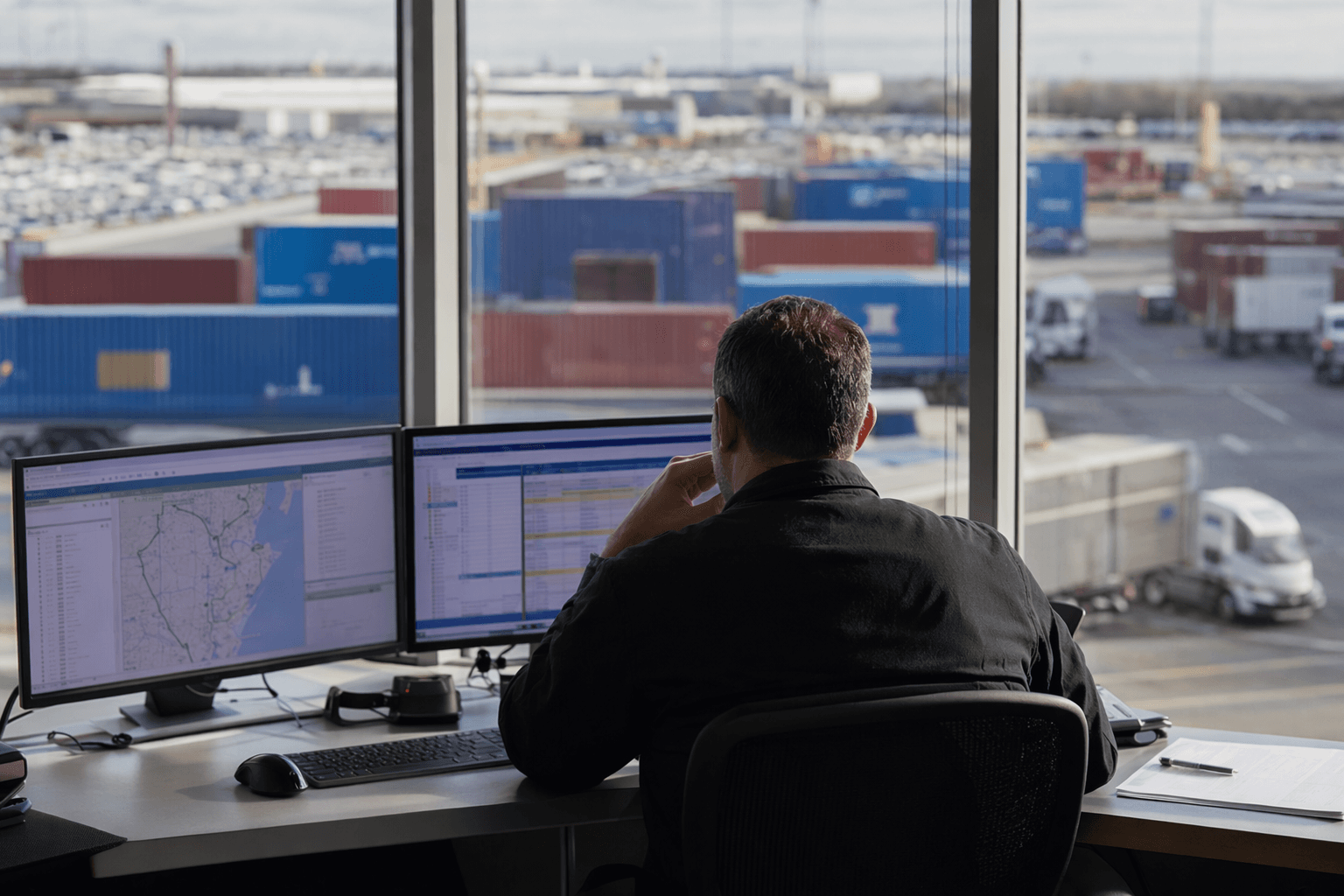
Those layers are a strength, but they also mean a disruption can ripple in different directions. A delay in a bulk or flatbed lane can affect the lumber yard and the pro customer before it affects the general merchandise aisle. A slowdown at a rapid deployment center can create a different kind of problem: the product may be in the network, but not in the right place fast enough to support a weekend promotion or a weather-driven surge.
Home Depot’s scale makes these timing issues especially visible. The company reported fiscal 2025 net sales of $164.7 billion and net earnings of $14.2 billion, and it operates more than 2,300 stores across the United States, Canada, and Mexico. With that kind of footprint, even a modest shift in transit timing can turn into dozens of local headaches if one region’s replenishment slips while another runs ahead of plan.
Seasonal demand raises the stakes
Spring and summer are when this kind of movement becomes operationally expensive. The selling season is crowded with outdoor projects, storm cleanup, lawn and garden demand, and pro jobs that cannot wait for the next truck. If customs slows one import stream, or if inland lanes back up in one corridor, stores can feel it as a shortage of the exact items customers need right now, not as an abstract network issue.
That is where the story becomes a workload issue as much as a supply issue. Merchandising teams have to recheck allocations. Transportation teams have to rework routing and arrival estimates. Store leaders have to manage customer expectations when the product is on order but not yet on hand. Associates on the floor are left explaining why one size, color, or bundle is available online but not in the store down the road.
The practical response is not panic. It is tighter coordination. More attention to in-transit visibility, faster escalation when one lane goes soft, and a sharper eye on alternates can prevent a manageable delay from becoming a lost sale. When the market is merely stabilizing instead of fully normal, the store that communicates early usually absorbs less pain later.
Tariffs, compliance, and cash flow still sit in the background
One of the most concrete reasons this matters now is policy. Maersk says a February 20, 2026 U.S. Supreme Court ruling invalidating specific tariffs under IEEPA led U.S. Customs and Border Protection to open a refund-claims portal on April 20, with processing expected to take 60 to 90 days.
That may sound far from the sales floor, but import policy can affect cash flow, planning, and the timing of replenishment decisions. If refunds take 60 to 90 days to process, importers have to work with a lag between relief on paper and money back in hand. For a retailer with a large seasonal calendar, that can matter when teams are deciding how aggressively to bring in inventory, which lanes to prioritize, and how much cushion to hold in the system.
The bigger point is that customs and compliance are no longer background noise. They are part of the operating rhythm. When the pressure shifts away from the ocean and into paperwork, clearance, and inland movement, the cost of a small delay can be a missed sales week rather than a missed vessel.
Home Depot has already been building for a more complex network
This is not a company sitting still while the logistics world changes. Home Depot says it plans to complete about 80 new stores in 2027 and then keep opening 15 to 20 stores a year for the foreseeable future. That expansion is tied to population growth and to relieving pressure on high-volume stores, which tells you management expects the network to keep absorbing more demand, not less.
The company has also spent the last few years adding more ways to move product faster. Supply Chain Dive reported in February 2024 that Home Depot had three flatbed distribution centers under construction, with more in the pipeline. In 2024, it expanded same-day delivery options through DoorDash, Uber Eats, and Instacart, another sign that fulfillment is no longer just a backroom problem. It is part of the customer promise.
That matters for associates because every extra layer in the fulfillment model raises the value of execution on the floor. Faster delivery only works if the product is in the right place to pick, pack, stage, or load it. More stores only work if replenishment keeps up. And a steadier network only helps if the last mile between the distribution center and the aisle is managed with enough precision to avoid surprises.
What store and distribution teams should expect next
The message from Maersk is not that the supply chain is healed. It is that the pressure is moving around the system, which makes it harder to spot and easier to underestimate. For Home Depot, that means delivery promises will stay sensitive to inland flow, seasonal stock levels will depend on how quickly bottlenecks clear, and distribution teams will need to keep tightening communication with stores.
The best-managed stores will not assume stabilization means comfort. They will treat it as a chance to reduce noise, keep a closer watch on inbound timing, and protect the seasonal sales floor from preventable gaps. In a business built on availability, the difference between calm and reliable is still measured one pallet, one truck, and one shelf at a time.
This article was produced by Prism’s automated news system from verified source data, official records, and press releases, then run through automated quality and moderation checks before publishing. The system is built and supervised by the people who set the standards it runs under. Read our full AI policy.
Did this article answer your question?