Capgemini bets on AI consulting growth, widening KPMG's market
Capgemini's new AI targets show consulting is shifting to implementation, a change that is reshaping KPMG's talent mix, delivery model and client pitch.

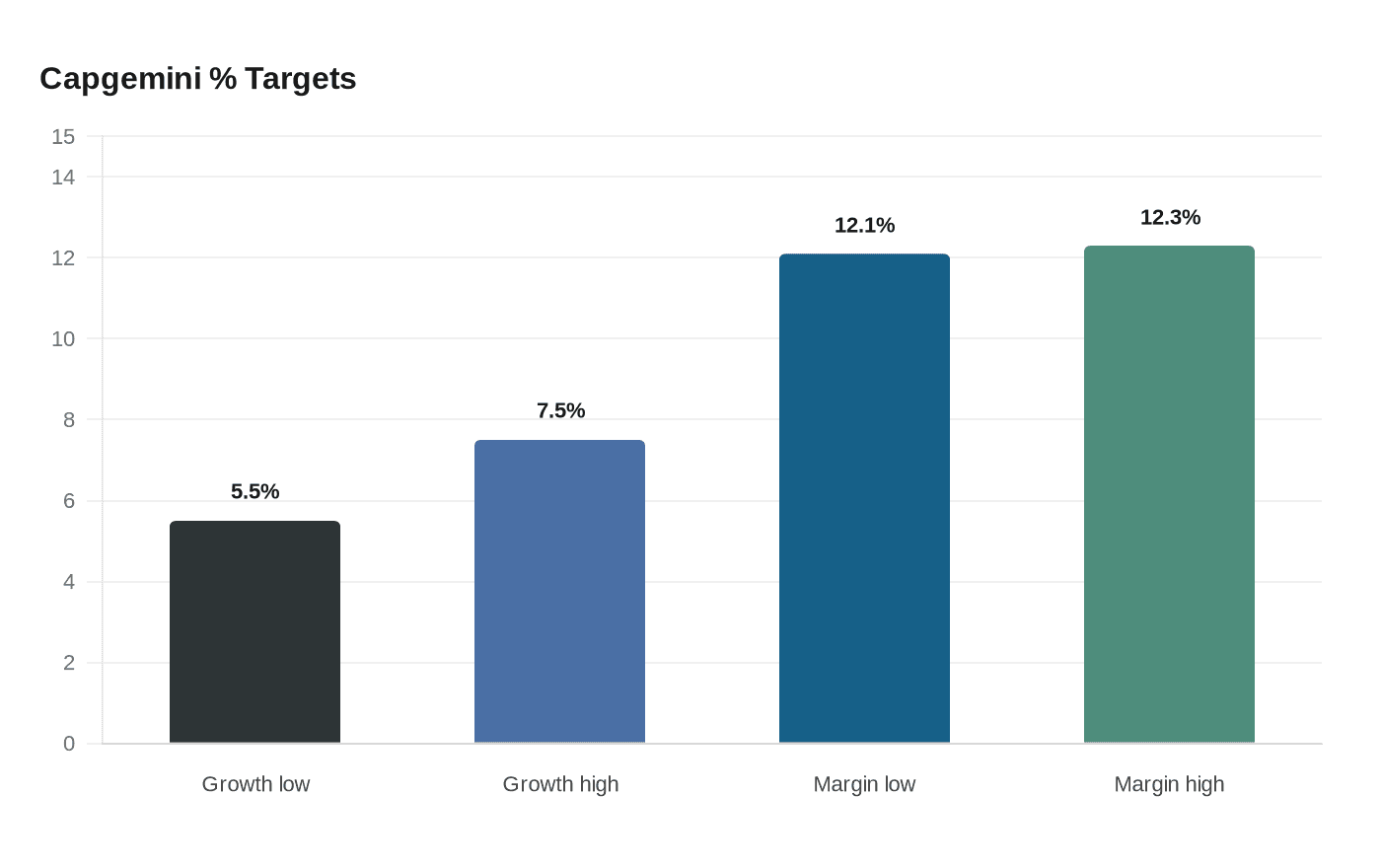
Capgemini’s new revenue targets made one thing plain for KPMG consultants: the AI race in professional services is no longer about strategy decks. It is about whether firms can turn AI demand into repeatable delivery, and Capgemini is tying that bet to 2025-2028 revenue growth of 5.5% to 7.5%, more than €6 billion in cumulative organic free cash flow and a 2028 operating margin target of 12.1% to 12.3%.
The market did not cheer. Capgemini shares fell about 4% on the day of the announcement, making the stock the worst performer on France’s CAC 40 at the time. That reaction matters inside KPMG because it shows investors are still testing how much of the AI consulting story is already baked into valuations, even as clients keep spending. Capgemini said artificial intelligence is opening access to client budgets beyond traditional IT lines, a sign that AI has become an enterprise spending category that now reaches finance, operations, tax and industry-specific work.

Aiman Ezzat put the shift in blunt terms, saying, “Agentic AI represents a step change in terms of value creation for global corporations and creates a significant growth opportunity for Capgemini while structurally expanding our addressable market.” For KPMG, that is less a competitor quote than a market signal. The work that will carry more weight in promotion cases and partner discussions is the work that can be delivered again and again: implementation plans, controls, governance, cybersecurity and operating-model change, not just one-off assessments.
KPMG has already been moving in that direction. On May 19, 2026, KPMG and Anthropic announced a global alliance that gave KPMG’s 276,000-plus employees access to Claude, with an initial focus on tax clients and private equity firms. The move suggests KPMG is trying to embed AI into delivery rather than leave it in a lab or a slide deck, and it raises the bar for staff who can work across client service, data handling and risk management.
That same pressure shows up in KPMG’s Global AI Pulse, which found that more than half of organizations are actively deploying AI agents. Based on 2,110 C-suite and business leaders across 20 countries, territories and jurisdictions, the research points to a market moving past experimentation and toward large-scale deployment. For KPMG people, that means the valuable skill set is shifting toward implementation-heavy work that can prove speed, controls and measurable results while the market narrows the gap between AI ambition and billable delivery.
This article was produced by Prism’s automated news system from verified source data, official records, and press releases, then run through automated quality and moderation checks before publishing. The system is built and supervised by the people who set the standards it runs under. Read our full AI policy.
Did this article answer your question?


.pdf%2F_jcr_content%2Frenditions%2Fcq5dam.thumbnail.319.319.png&w=1920&q=75)