House bill cuts IRS enforcement funding, deepens tax policy divide
The House bill would cut IRS enforcement to $3.6 billion, shrinking exam firepower while leaving KPMG teams to help clients sort planning, controversy, and audit risk.

The House Appropriations Committee’s latest budget move could change where tax work lands inside KPMG. By cutting IRS enforcement funding to $3.6 billion, down from nearly $5 billion the year before, the bill points to fewer resources for examinations even as clients still face policy shifts, filing delays, and disclosure questions.
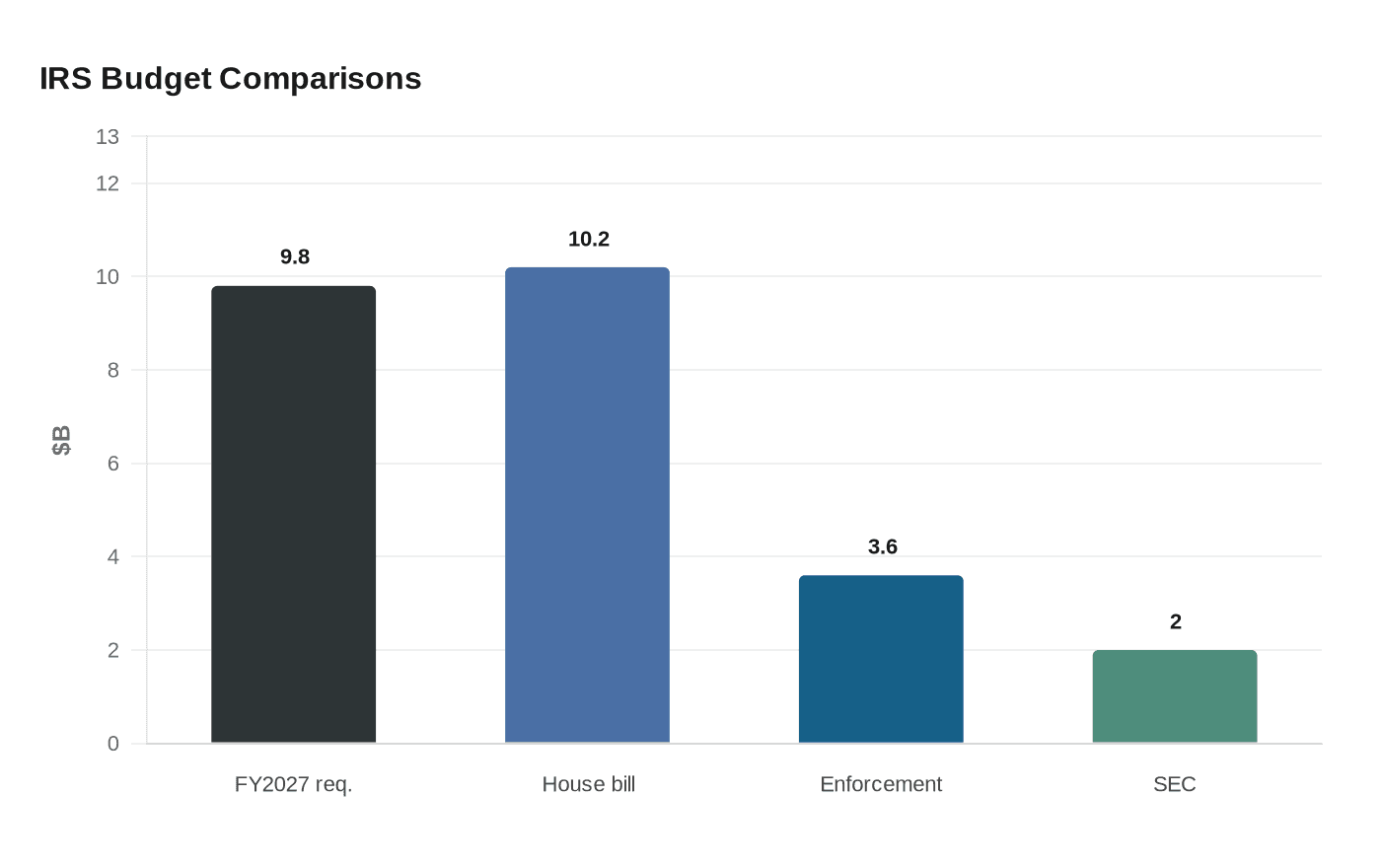
The committee advanced the fiscal year 2027 Financial Services and General Government bill on April 24, 2026. The measure would give the Internal Revenue Service $10.2 billion and the Securities and Exchange Commission $2 billion, but it would also trim enforcement dollars by nearly $1.4 billion. For tax professionals, that combination matters because it suggests a government that still expects oversight, just with less firepower behind it.
The bill also adds a rider that would block IRS spending on a free, public electronic return-filing service such as Direct File unless Congress gives more approval. The Senate draft does not include that restriction, which leaves the two chambers split not only on enforcement levels but on how much the IRS should be allowed to modernize taxpayer services. That divide matters to public-company tax teams and to KPMG’s audit and advisory practices, where filing systems, data access, and disclosure risk often overlap.
For KPMG’s tax controversy and dispute resolution group inside Washington National Tax, the shift could translate into more client demand for plain-English assessments of enforcement risk, documentation quality, and the odds of an exam turning into a broader fight. The practice covers federal tax, transfer pricing, state and local tax, and tax authority practice and procedure. As the IRS has less room to push aggressive exam activity at scale, clients are likely to press harder on return positions, entity classification, credits, deductions, and the timing of controversial issues.
The debate is not happening in a vacuum. The IRS says its fiscal 2027 budget request was $9.8 billion, down $1.4 billion, or 12.2%, from the fiscal 2026 enacted level of $11.2 billion. It also says the request would modernize enforcement through artificial intelligence, advanced analytics, and improved data integration. The agency has long argued that Inflation Reduction Act funding offered a chance to reverse years of underinvestment that hurt taxpayer service and tax enforcement.
That argument is now colliding with a more skeptical Congress. A February 11, 2025 House Ways and Means hearing centered on IRS return on investment and modernization, and in the April budget debate Senate Democrats pointed to the IRS’s own estimate that every dollar spent on enforcement yields an $11 return. For KPMG people, that is the practical backdrop: if enforcement dollars weaken again, controversy and planning work rises, but so does the need to tell clients what the IRS can still do with less.
This article was produced by Prism’s automated news system from verified source data, official records, and press releases, then run through automated quality and moderation checks before publishing. The system is built and supervised by the people who set the standards it runs under. Read our full AI policy.
Did this article answer your question?


.pdf%2F_jcr_content%2Frenditions%2Fcq5dam.thumbnail.319.319.png&w=1920&q=75)