KPMG Canada says leaders are planning for human-AI workforce teams
KPMG Canada found 66 per cent of executives are moving toward AI-human teams, while 77 per cent already use agents for knowledge sharing. The shift is already changing hiring, reviews and promotion criteria.
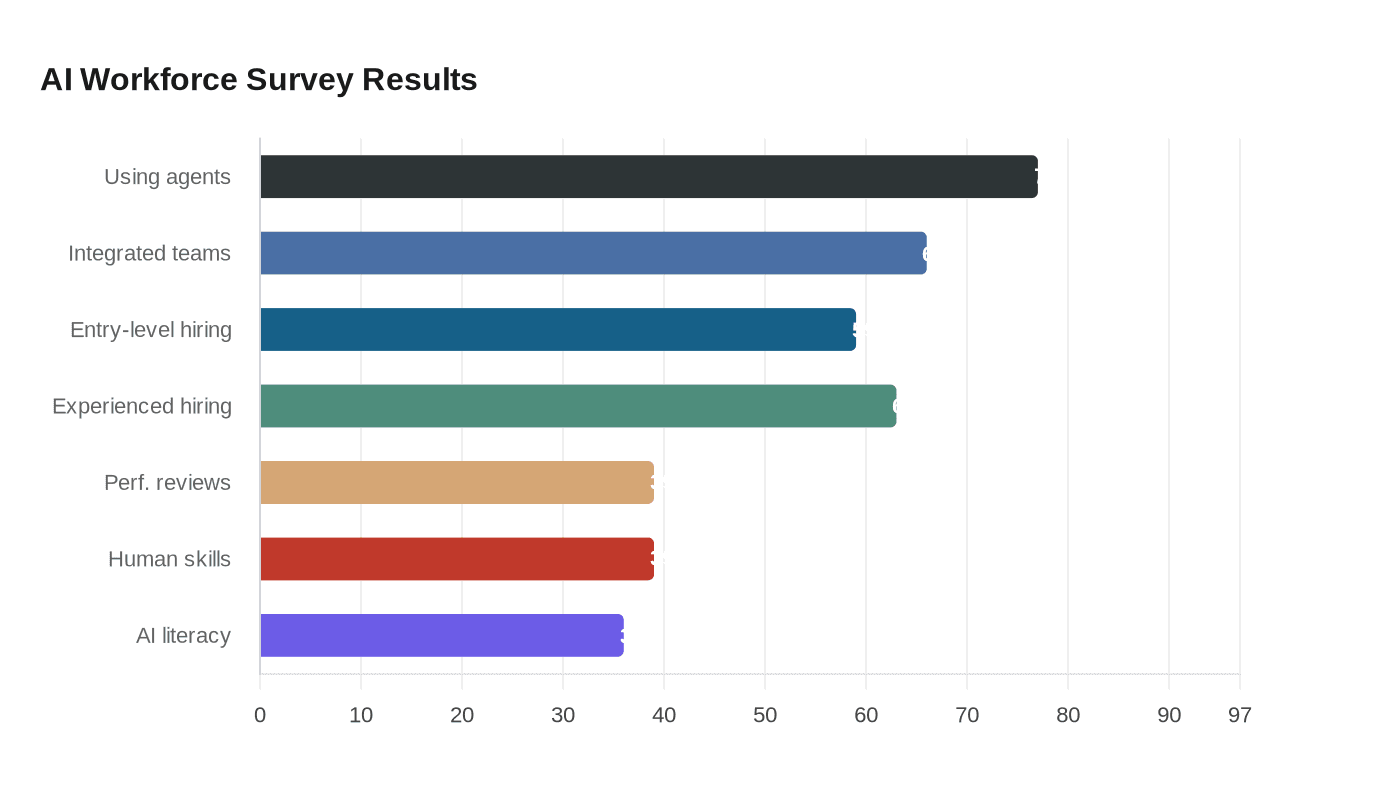
KPMG Canada’s latest survey suggests the biggest change from agentic AI is not the software itself, but how companies will staff, supervise and promote people. Among 306 Canadian executives polled, 77 per cent said they are already using agents for tasks such as knowledge sharing between departments, and 66 per cent said they are moving toward a fully integrated AI-human workforce.
That matters inside KPMG and across Big Four firms because it points to a different division of labor. Stephanie Terrill, KPMG Canada’s managing partner of digital and transformation, said leaders are starting to design roles, teams and workflows on the assumption that humans and agents will work together, with agents handling research and coordination while people focus on judgment, decision-making and accountability. In audit, tax and advisory, that means the repetitive handoffs and status-chasing work that junior staff often inherit are the most likely to be automated first.
The survey also hints at a change in the talent pipeline. Fifty-nine per cent of respondents said AI agents have already changed the way their organizations hire entry-level workers, and 63 per cent said the same for experienced talent. That suggests firms are no longer only asking whether a candidate can work long hours through a process map. They are also asking whether that person can validate AI output, spot exceptions and manage the work of digital agents without losing control of the assignment.
Performance management is set to shift too. Thirty-nine per cent of executives expected AI collaboration competencies to be built into performance reviews. Another 39 per cent said they expect more emphasis on human capabilities such as critical thinking and contextual awareness, while 36 per cent said promotion criteria will prioritize AI literacy and effective agent delegation. For employees, that could reshape how managers coach staff through busy season and how quickly younger professionals are trusted with higher-value client work.
KPMG has been building this message for more than a year. In April 2025, the firm said 27 per cent of 252 Canadian business leaders had already deployed agentic AI, while 57 per cent planned to invest or adopt it within six months and 34 per cent within 12 months. By November 2025, KPMG said 93 per cent of Canadian business leaders were using or piloting AI, up from 61 per cent the year before, but only 2 per cent were seeing a return on those investments.
The firm has since moved from experimentation to infrastructure. On April 29, 2026, KPMG expanded its Canadian agentic AI capabilities with four AI Labs set to open first in Toronto, Vancouver and Calgary, with Montreal to follow. The company also launched its Agentic AI Engine in May 2025 to support digital agents, research and development, and deployment across KPMG platforms, services and solutions. The message to workers is clear: AI is no longer a side project. It is becoming part of how the firm is organized.
This article was produced by Prism’s automated news system from verified source data, official records, and press releases, then run through automated quality and moderation checks before publishing. The system is built and supervised by the people who set the standards it runs under. Read our full AI policy.
Did this article answer your question?


.pdf%2F_jcr_content%2Frenditions%2Fcq5dam.thumbnail.319.319.png&w=1920&q=75)