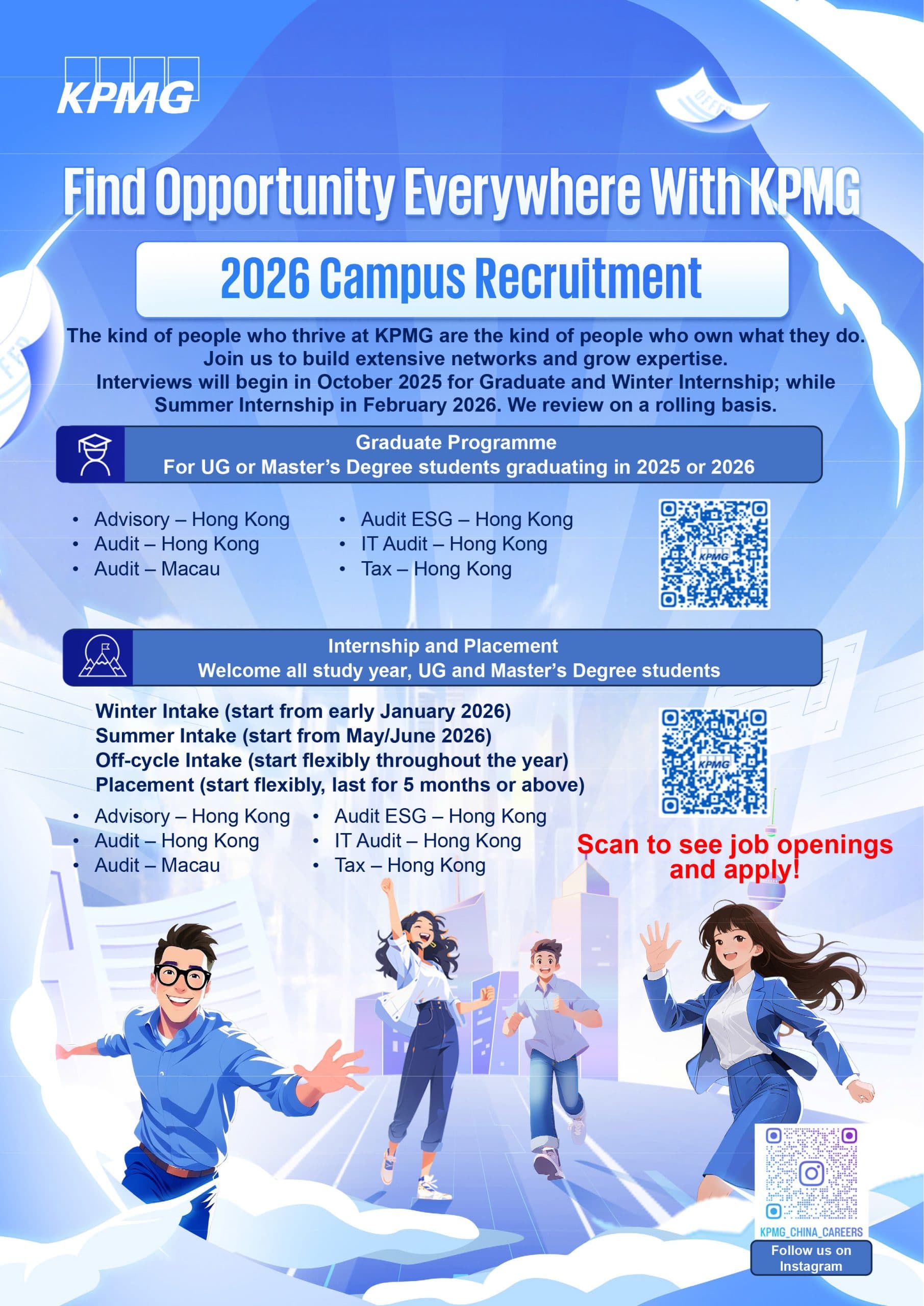
KPMG expands early-career access with programs for students from freshman year
KPMG is building a freshman-year pipeline from campus tools to client teams, using pre-internships, internships and AI-era training to improve readiness and retention.

KPMG is trying to solve an old professional-services problem in a newer way: how to turn students into useful client-facing staff before they even reach graduation. The firm’s early-career setup starts with tools like Career Navigator and Degree Matcher, then moves students through pre-internships, internships and full-time roles in one connected path. That pipeline matters because it is not just about filling seats. It is about making the analysts and associates who arrive on your team less of a blank slate and more ready for audit, tax, advisory and technology work.
The pipeline starts before internship season
KPMG’s message to students is that the first decision does not have to be a full-time commitment. The firm says pre-internship opportunities are available as early as freshman year, which is a strong signal that it wants to shape talent long before recruiting season becomes a sprint. The menu is broad enough to catch students at different points of certainty: Global Advantage, HBCU Talent+, Ace the Case, Branding U and the KPMG Advisory Talent Program all sit ahead of the standard internship track.
That design matters for the people already inside the firm. In a business where staffing changes quickly and junior teams often absorb the most repetitive work, the quality of those first-year hires affects everything from turnaround time to how much coaching senior staff need to do during busy season. KPMG is essentially saying that readiness is built, not assumed, and that students need exposure to the firm’s language and expectations before they are asked to perform under client pressure.
Freshman-year access is the real differentiator
The firm’s early-career pages are not just a job board in disguise. They are built around orientation, helping students figure out where they fit, what they are eligible for and what the work actually looks like once they are inside the machine. KPMG says these opportunities help students build resumes, network with professionals and develop leadership skills, which is a more practical promise than the usual campus recruiting pitch.
HBCU Talent+ shows how KPMG is trying to widen the funnel rather than merely speed it up. The program is described as a leadership program at KPMG Lakehouse, where participants hear from KPMG professionals about the firm’s culture and career paths. That kind of early exposure is not just branding. For students from campuses that may have fewer direct pipelines into Big Four firms, it lowers the odds that KPMG feels like a closed system and raises the chances that candidates understand the path before they enter it.
What the firm is actually training for
KPMG’s early-career pages make clear that the goal is not passive learning. Early hires are described as getting hands-on, real-world experience, client exposure and learning and development built into the job. The work is framed across audit, tax, advisory and technology, which matters because it mirrors how the firm now sells itself internally and externally: as a platform where the early years are meant to build fluency in how the firm serves clients, not just how one function works.
That has a direct effect on team dynamics. A first-year analyst who has already heard about client etiquette, leadership skills and the basics of professional presence will usually arrive with less friction than someone who is learning those norms on the fly during a deadline. KPMG’s own intern survey language reinforces that point, saying the next generation expects a positive working environment, advancement opportunities and training in AI and softer skills such as client etiquette and executive presence.

Scale explains the structure
KPMG is not running this as a boutique experiment. In its 2024 Intern Pulse Survey release, the firm said it offers paid internships to more than 3,000 college students and graduates annually. At that scale, an informal campus recruiting model would not hold up for long. The early-career system has to be standardized if it is going to move a large volume of students from interest to readiness without creating a wildly uneven experience.
That is also why the firm draws a clear line around who counts as early career. Its U.S. job-search page defines Early Career as people currently pursuing college coursework or who completed a bachelor’s degree or higher in the past 12 months. That definition matters inside a large firm because it makes the campus-to-client transition feel like a managed stage of employment, not a fuzzy category that gets treated differently by every recruiter, practice and office.
AI is reshaping what junior talent needs to know
The timing here is not accidental. KPMG’s 2024 Intern Pulse Survey was conducted between February 29 and March 18, and it captured a generation that is already thinking about how work will change. The firm said younger entrants want employers to offer advancement alongside training in AI and soft skills, which suggests the classic junior role is changing faster than many firms would like to admit. The job is no longer just about learning the technical grind. It is also about learning how to work around and with automation.
KPMG’s later 2025 Intern Pulse Survey sharpened that point. Half of Gen Z interns expected 20% of their future full-time jobs to be automated by AI, and 92% said they were confident they could adapt to AI advancements in their field. That is a useful reality check for a firm built on apprenticeship. If a meaningful slice of early-career work is going to be automated, the value of early programs shifts toward judgment, client communication, issue spotting and adaptability. Those are harder to outsource and harder to teach under time pressure unless they are built into the pipeline from the start.
What this means for managers and new hires
For managers, the real message is that internships are not cheap labor dressed up as development. They are the first stage of a talent pipeline that needs coaching, mentorship and deliberate conversion into long-term capability. If KPMG wants students to become reliable client-facing staff, then the burden does not end when the offer letter goes out. The firm has to make the transition from campus tools to real assignments feel coherent enough that people stay.
For students and early hires, the upside is simpler: there is now a clearer map into the firm, and it starts earlier than it used to. Career Navigator, Degree Matcher, pre-internship programs, internships and full-time hiring are being presented as a single path, not separate episodes. In a profession where the first two years can determine whether someone sees a future in the partner track or starts looking elsewhere, that kind of structure is not cosmetic. It is one of the few levers a firm has to improve both readiness and retention at the same time.
This article was produced by Prism’s automated news system from verified source data, official records, and press releases, then run through automated quality and moderation checks before publishing. The system is built and supervised by the people who set the standards it runs under. Read our full AI policy.
Know something we missed? Have a correction or additional information?
Submit a Tip