KPMG frames HR as a strategic driver of business results
KPMG is recasting HR as an operating discipline, where workforce planning, analytics, and change management shape cost, speed, and execution.
HR is becoming a control tower, not a service desk
KPMG’s human capital messaging draws a clear line: people work is no longer just about policy, payroll, or employee support. It is about how the firm and its clients organize work, move faster on transformation, and tie workforce decisions to business results. The shift matters because it changes what gets measured, what gets funded, and what managers are expected to do with the data in front of them.

That is the logic behind KPMG’s Human Capital Real Insights program, which is designed to give enterprises research, analysis, and events that sharpen strategic insight and competitive advantage. The point is not simply to improve HR operations. It is to treat workforce design, talent, and change as part of the business model itself, which is exactly how many consulting and advisory teams already approach client operating-model work.
The four levers KPMG keeps elevating
KPMG’s framing is built around a handful of concrete levers that show up again and again across its human capital pages. First is workforce planning, especially using AI-powered analytics to connect HR programs to business results. Second is organization design, which means building an agile structure that can respond to market changes instead of waiting for annual planning cycles. Third is change management, the part most firms underinvest in even when they have the right system or strategy on paper. Fourth is employee data, which KPMG treats as a management asset rather than a reporting afterthought.
The firm also emphasizes technology as an enabler, not just a systems upgrade. On its Human Capital Advisory page, KPMG says it helps organizations with enterprise organization transformation, talent strategies, HR, payroll, learning function optimization, and the implementation of enabling technologies. That combination is telling: payroll, learning, and service delivery are no longer small administrative tasks. They are now part of how a company controls cost, improves trust, and gets more productivity out of the same workforce.
What this means for managers on the ground
For KPMG employees, this is more than branding. If the firm sees human capital as a strategic driver of business results, then managers are expected to make decisions with a different level of discipline. They need to know which roles are critical, which skills are missing, where work should shift to technology, and how organizational changes affect delivery and morale.
That has direct implications for client work too. Consultants, auditors, and advisory professionals are already being asked to help clients redesign operating models, roll out new systems, and manage transformation fatigue. KPMG’s message suggests that workforce analytics, change management, and AI-enabled process design are not side skills anymore. They are becoming core competencies for anyone working on growth, efficiency, or restructuring mandates.
Why the data layer matters more than ever
KPMG’s people analytics research makes the case that most organizations are still underprepared for this shift. The firm says many HR teams still do not have a dedicated workforce data program, and that people information is often trapped in disconnected systems. That matters because when data is fragmented, leaders cannot see enough to make good decisions about retention, mobility, performance, or cost.
KPMG’s answer is a robust people analytics function that combines data science, HR, AI, and technology. The goal is more than prettier dashboards. It is to give leaders real-time access to structured and unstructured people data so they can improve talent decisions, increase engagement, cut costs, strengthen retention, and create business value. In practice, that means the role of HR is shifting from reporting the facts to helping set the direction.
Boards are raising the stakes
KPMG’s workforce and people materials are blunt about why this shift is accelerating. Boards are now demanding an HR function that is connected, digitally enabled, analytics-led, and cost-effective. The firm also says HR has become the gatekeeper of ESG commitments across the organization, which raises the stakes beyond hiring and performance management.
That is where the internal tension becomes obvious. HR is being asked to do more strategic work, but it is also being judged on hard operational outcomes: lower friction, better service, faster decisions, stronger compliance, and clearer reporting. For professionals inside KPMG, that means people teams are not just supporting the firm’s transformation agenda. They are part of the execution machinery that makes it possible.
The CEO Outlook shows why this is happening now
KPMG’s 2024 CEO Outlook gives this strategy a broader market context. The survey has run for 10 years and includes more than 1,300 global business leaders at companies with at least US$500 million in revenue. In that research, 92 percent of CEOs said they expected to increase overall headcount, even as they face pressure to future-proof skills and strengthen employee value propositions.
That combination is important. It shows that leaders are not simply trying to shrink workforces. They are trying to reshape them. Hybrid work, upskilling, inflation, and geopolitics have made adaptability a strategic requirement, not a nice-to-have. For a professional-services firm like KPMG, that means the conversation is less about whether there will be enough people and more about whether the firm can assemble the right skills quickly enough to serve clients well.
Workforce planning is moving from annual exercise to continuous discipline
A strategic workforce plan is increasingly the difference between reacting to change and steering through it. A 2026 Australian Human Resources Institute case study said 34 percent of employers still do not have one, which shows how far many organizations have to go. The same case study said KPMG Australia used its proprietary Workforce.ai tool to map skills, tasks, and roles, and that Dorothy Hisgrove described workforce planning as having shifted from a standalone operational exercise into a coordinated strategic discipline.
That is the real operational change. Instead of counting heads once a year, firms are trying to understand how work is actually done, where skills sit, what tasks can be automated, and how roles should evolve. For managers, this affects promotion planning, staffing decisions, and workload design. For employees, it shapes whether development paths feel intentional or random.
AI is changing the workforce conversation, not replacing it
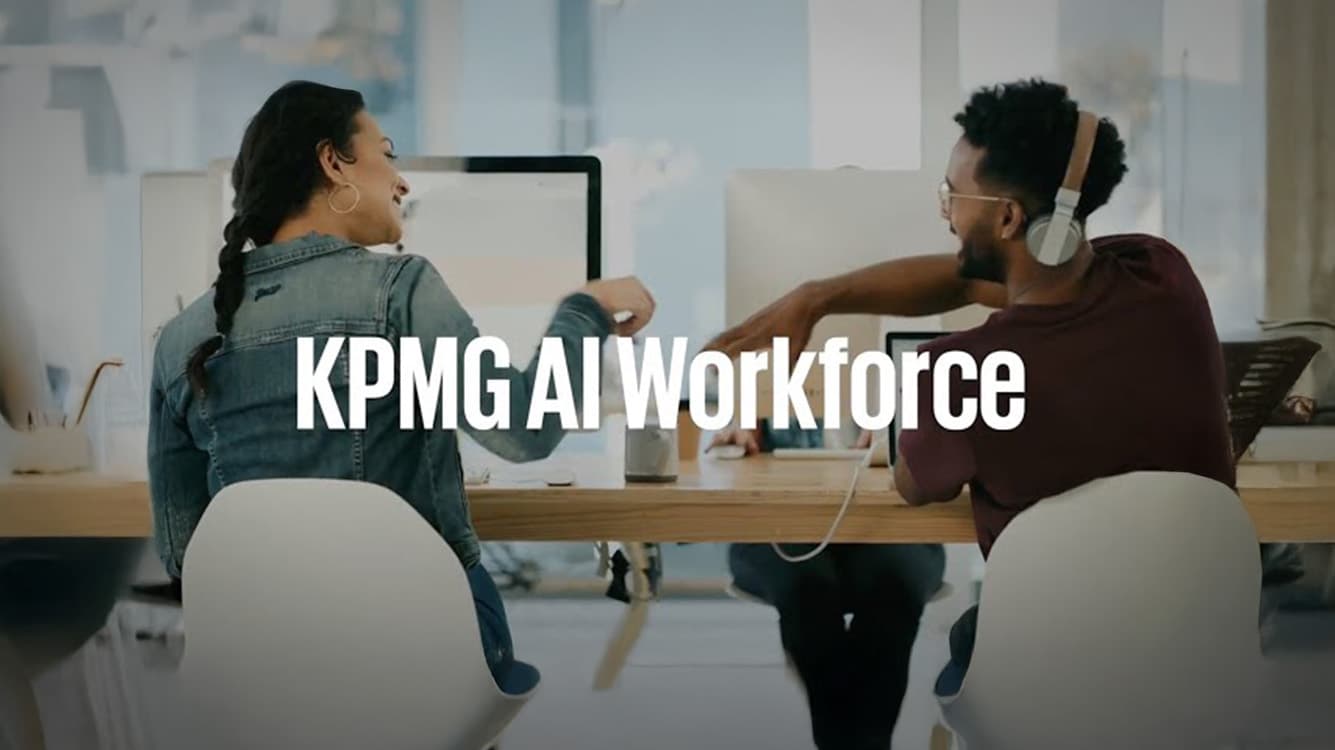
KPMG’s AI workforce materials push the argument one step further. The firm says the future workforce includes both human and digital elements, and that transformation should be human-centered. That is a useful correction to the louder automation narrative, because it recognizes that AI changes how work is designed even when it does not fully replace jobs.
In practical terms, that means leaders need to manage a mixed workforce of people and digital workers. It also means they have to think differently about learning, role design, and accountability. For KPMG’s consulting and audit professionals, the message is clear: the firms and clients that win will be the ones that can redesign work around AI without losing sight of trust, judgment, and the employee experience.
The bottom line for KPMG
KPMG is not treating HR as a back-office function anymore. It is positioning human capital as an operating-system question, where analytics, organization design, payroll, learning, and technology all feed execution. That is a more demanding model for managers and a more interesting one for employees, because it raises the value of skills in workforce analytics, change management, and AI-enabled process design.
The firms that can connect those dots will move faster on transformation and make better use of talent. The ones that cannot will keep treating workforce decisions as administrative until they become strategic emergencies.
Know something we missed? Have a correction or additional information?
Submit a Tip