KPMG professionals face AI workflow shift as adoption accelerates
KPMG's AI shift is moving from pilots to operating strategy, with workflow redesign, ROI tracking and team-level accountability now taking center stage.
The AI conversation inside professional services has crossed a line. Thomson Reuters says generative AI use has nearly doubled to 40 percent, more than 80 percent of current users are working with it weekly, and more than 90 percent expect it to become central to their workflow within five years. For KPMG professionals, that means the real question is no longer whether AI shows up in the job. It is who owns the workflow, how the work is measured, and whether the firm can turn usage into value.
From pilots to operating strategy
The 2026 AI in Professional Services Report is the fourth annual edition from Thomson Reuters Institute, based on a survey of more than 1,500 respondents across 27 countries and spanning legal, tax and accounting, corporate risk and fraud, and government professionals. Its central message is blunt: “the era of early AI adoption has come and gone.” What comes next is a strategic phase, where firms stop treating AI as a side experiment and start building it into the operating model.
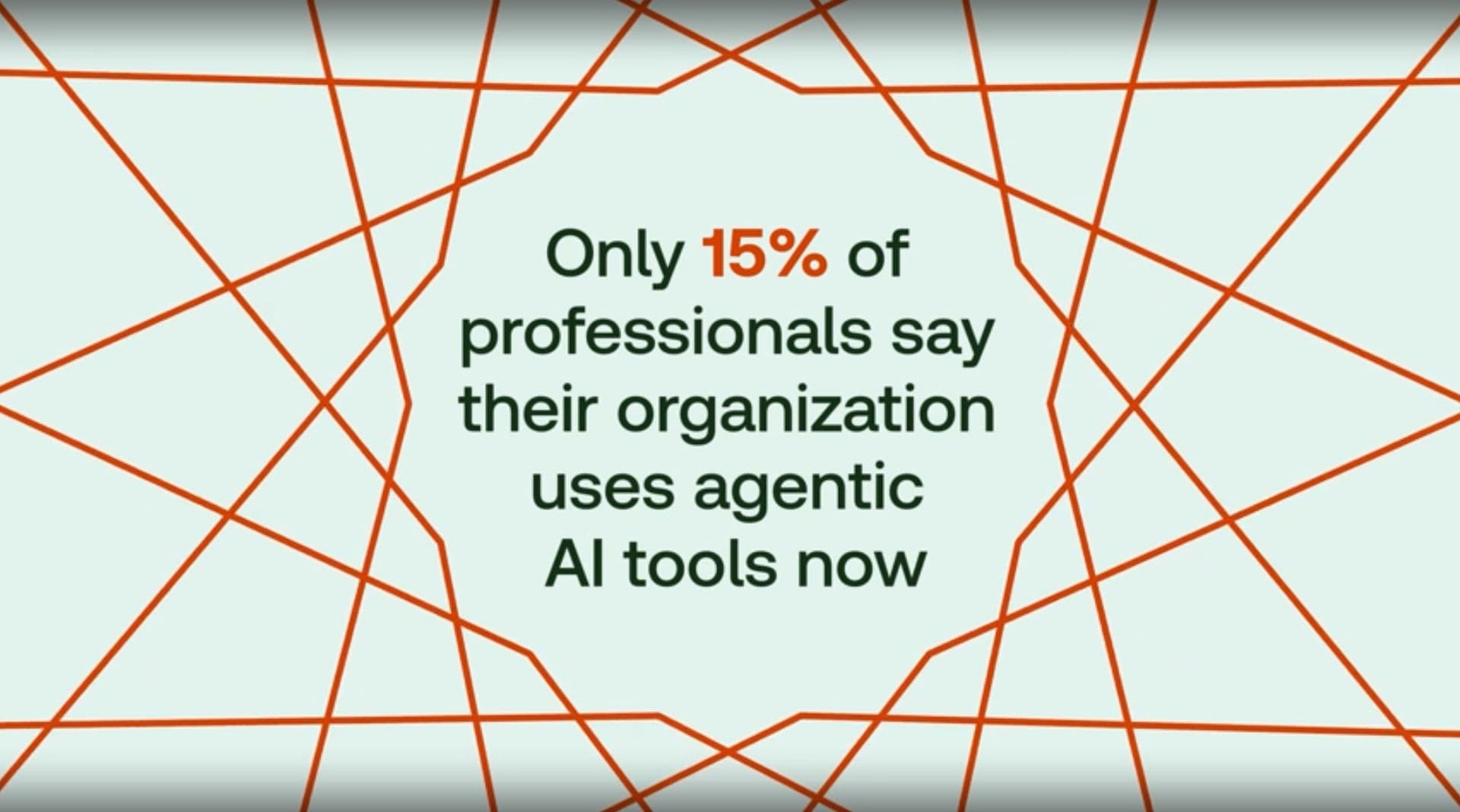
That matters because the report also shows how uneven the next stage still is. Only 15 percent of respondents say their organizations already use agentic AI, but another 53 percent are planning or considering it. In other words, many firms are standing at the edge of the same shift KPMG has already begun to make, moving from isolated tools to AI that can help run work, not just assist it.
For KPMG teams, this is the difference between “try the tool” and “redesign the job.” A pilot culture can produce demos, enthusiasm and a few efficiency wins. An operating strategy forces harder decisions about which tasks AI can take on, where human review is mandatory, and how much of an engagement should be structured around machine-assisted delivery.
Why the ROI question is now the real issue
The most important caution in the Thomson Reuters data is not adoption. It is measurement. Only 18 percent of professionals say their organizations track AI ROI, and many are not even sure whether it is measured at all. That gap is where a lot of professional-services AI efforts can quietly stall. If a team can’t show whether it saved time, improved quality, reduced rework or changed margins, the whole exercise risks becoming a productivity story without becoming a business-value story.
KPMG’s own research points in the same direction. In its Global AI Pulse survey, 64 percent of companies reported meaningful AI business outcomes, but only 11 percent were deploying and scaling agents across workflows. KPMG also found that 74 percent of global leaders say AI will remain a top investment priority even if a recession occurs. That suggests the money is not the issue. The harder question is whether the spend is being translated into repeatable operating gains.
The firm’s March 2025 GenAI opportunity paper put a number on the potential upside: the addressable GenAI opportunity could equal 4 to 18 percent of EBITDA annually in labor productivity alone, depending on the sector. That range is large because the outcome depends on execution. If AI stays trapped in individual productivity tricks, the value is thin. If it changes how engagements are staffed, reviewed, and delivered, the economics become much more serious.
For consultants, auditors and tax professionals, this is where the conversation shifts from novelty to accountability. Expect more pressure on engagement leaders to explain not just what AI is used for, but how it changes cycle time, billability, staffing mix and quality control. In a firm like KPMG, that also means the people who can connect workflow redesign to actual margins will matter more than the people who simply know the newest prompt.
What KPMG's platform stack says about the next phase
KPMG’s own AI announcements show how quickly the firm has moved from testing ideas to wiring AI into delivery. On June 17, 2025, KPMG launched KPMG Workbench, an open, interoperable multi-agent AI platform built with Microsoft. At the time, KPMG said the network already included 50 AI assistants, with nearly 1,000 more in development. Workbench underpins KPMG Digital Gateway, KPMG Velocity and KPMG Clara, which is a sign that the firm is building one AI layer across tax, advisory and audit rather than scattering point solutions everywhere.
That architecture matters inside the firm because it suggests standardization is becoming more important than experimentation. A platform with shared assistants and common controls is easier to govern, train and scale than a pile of disconnected tools that each team uses differently. It also tells employees that AI is no longer a local innovation project run by a handful of enthusiasts. It is becoming part of the core delivery stack.
Then, on May 19, 2026, KPMG and Anthropic announced a global alliance and launched Digital Gateway Powered by Claude. KPMG said its 276,000-plus global workforce was being given access to Claude through the alliance, with the initial focus on tax and legal work and private equity. KPMG also said Digital Gateway is built on Microsoft Azure and combines KPMG tax insights, proprietary tools and client data in one environment.
That combination is the clearest sign yet that the firm is trying to operationalize AI, not just experiment with it. Workbench, Digital Gateway, Velocity and Clara are starting to look less like separate products and more like a delivery system that is meant to shape how work actually moves through the firm.
What changes for employees
The practical workplace shift is not just that more people can use AI. It is that expectations around training, workflow design and proof of value will change at the team level.
- Budget ownership is likely to move closer to service-line leaders and engagement partners. If AI is now part of delivery, it cannot live forever in an innovation corner with someone else paying for it.
- Training expectations will become more concrete. Basic familiarity is no longer enough when 40 percent of professionals are already using generative AI and more than 80 percent of current users are doing so weekly. Teams will need to know where AI fits in the process, where it does not, and when to escalate to a human.
- Workflow redesign will matter more than tool access. The report says firms need clearer conversations about client expectations, billing, staffing and professional judgment. That means the real work is mapping which tasks can be drafted, summarized, triaged or checked by AI, and which decisions still need experienced review.
- Success will be measured less by individual experimentation and more by team outcomes. If AI is embedded in the workflow, leaders will want to see faster turnaround, fewer corrections, stronger quality control and better margin discipline, not just higher usage counts.
For KPMG professionals, that also raises the stakes around career development. The people who can translate AI into better engagement design, cleaner review processes and more consistent client delivery will build leverage quickly. The people who treat AI as a personal productivity trick may still save time, but they will miss where the organizational value is moving.
The bigger story is that KPMG, and the rest of professional services, are leaving the pilot era behind. The next debate is not whether AI can help. It is whether firms can prove that it changes how work is done, how teams are staffed and how value is measured. That is the point where AI stops being a novelty and starts becoming the business.
This article was produced by Prism’s automated news system from verified source data, official records, and press releases, then run through automated quality and moderation checks before publishing. The system is built and supervised by the people who set the standards it runs under. Read our full AI policy.
Know something we missed? Have a correction or additional information?
Submit a Tip