KPMG says audit quality investments could cut inspection deficiencies to 20%
KPMG is betting that deeper quality controls and Trusted AI can push inspection deficiencies to 20%, a signal auditors should read as both pressure and opportunity.
Quality is now the metric that matters
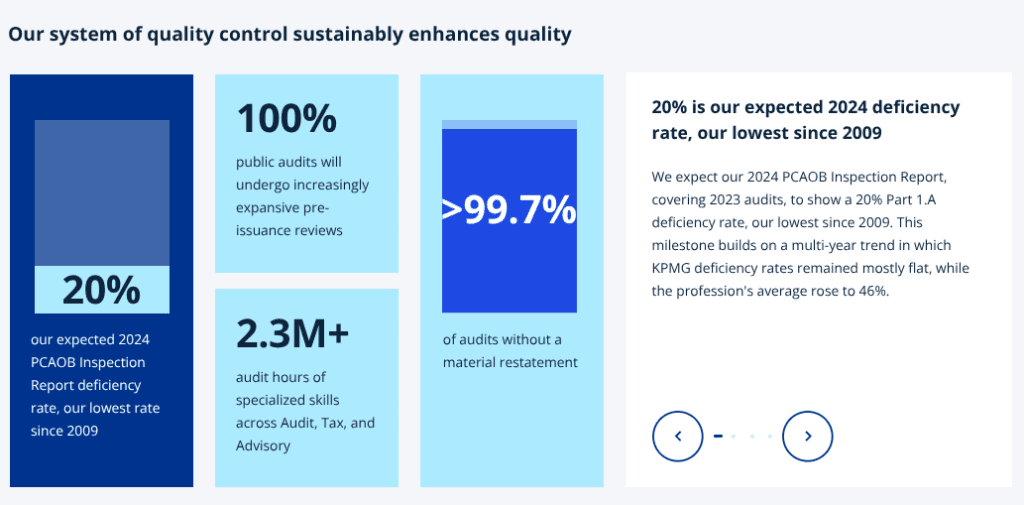
KPMG is not treating audit quality as a box to check. The firm says it is making multi-year investments in its audit approach, its system of quality control, its people, and its technology, and it expects its 2024 PCAOB inspection results to show a Part 1.A deficiency rate of 20%. If that holds, KPMG says it would be its lowest deficiency rate since 2009.
That matters inside the firm because inspection results are more than a regulatory scorecard. They shape how partners talk about risk, how managers coach teams, and how much breathing room audit staff have when deadlines stack up. A target like 20% tells employees that quality is being measured, tracked, and pushed lower year after year, not left to good intentions or last-minute review scrambles.
What the 20% target really signals
A 20% deficiency rate is not presented as a victory lap. It is a marker of how hard it is to run a high-stakes audit practice while staying within regulator expectations. For KPMG auditors, that means the quality conversation is likely to follow them from planning meetings through final sign-off, with more attention paid to evidence, review notes, and whether conclusions are supported cleanly in the file.
The practical effect is that inspection risk becomes part of the daily workflow. Teams that once might have focused mainly on getting through busy season now have to think about whether the audit can withstand a PCAOB review months later. That changes how managers supervise, how seniors document judgment calls, and how associates are trained to see risk before it becomes a finding.
The people investment behind the message
KPMG’s report ties quality to workforce development, which is a notable choice in a profession where retention, promotion cycles, and burnout are always in the background. The firm says it is investing in reforms intended to attract more talent to the profession, which suggests it sees the audit pipeline as part of the quality problem, not separate from it.
That connection matters for staff at every level. If the firm wants fewer deficiencies, it needs auditors who are better trained, better coached, and better prepared to apply judgment under pressure. For employees, that can mean stronger technical development and clearer standards, but it can also mean more scrutiny on who is ready for the next step on the partner track and who needs more time before taking on tougher work.
Trusted AI is becoming part of the audit job
The other major signal in the report is KPMG’s “Trusted AI” push. The firm says it is rapidly and responsibly advancing on that journey to bring AI into the audit, and it frames that effort as part of making the profession more modern while still preserving accountability. The message is straightforward: AI should improve the audit experience for clients and staff, not replace the core human responsibilities of the role.
For auditors, that means the job is shifting in two directions at once. On one side, there is more technology fluency to develop, especially around data, tools, and how automated systems support audit evidence. On the other, the firm is explicitly keeping professional skepticism and judgment at the center, which means AI may change how work gets done, but it does not change who owns the conclusion.
What this means for day-to-day review standards
The report’s quality-and-tech combination points to a more disciplined audit workflow. If KPMG is serious about lowering deficiencies, then review standards are likely to tighten around documentation, analysis, and sign-off. That is especially important in an environment where teams are trying to move faster, handle more data, and use technology more aggressively.
For staff, the test will be whether AI and process reforms genuinely reduce friction or simply raise expectations. A tool that makes testing faster can also raise the bar for what good work looks like, because faster execution does not excuse weak judgment or thin support. In that sense, the report suggests the firm is trying to modernize the audit without relaxing the controls that keep it defensible.
The client impact is part of the story too
KPMG’s framing is not only about internal control. The firm says the goal is to improve the audit experience for clients as well as staff, which implies that quality investments are supposed to show up in smoother delivery, better communication, and less rework. If that happens, clients should see a more consistent audit process and fewer surprises late in the cycle.
But there is a second-order effect for clients as well: a tighter quality regime can make audits more demanding in the short run. More rigor often means more documentation requests, more review points, and less tolerance for loose explanations. In practice, that can sharpen trust if it is done well, but it can also expose weak controls faster when a client is not well prepared.
The real benchmark for employees
The most useful way to read the report is to treat it as a set of working indicators, not a static annual document. The number to watch is the inspection deficiency rate, especially whether KPMG actually gets down to 20% and whether it can keep moving lower after that. Just as important are the firm’s signals on how it trains people, how it standardizes review, and how quickly Trusted AI becomes part of real audit work rather than a branding phrase.
That combination tells a clear story about the future of audit at KPMG. The firm wants a practice that is more technically controlled, more digitally enabled, and less vulnerable to inspection criticism. For auditors trying to build a career there, the takeaway is blunt: the firm is raising the stakes on quality while changing the tools, and the people who thrive will be the ones who can do both.
This article was produced by Prism’s automated news system from verified source data, official records, and press releases, then run through automated quality and moderation checks before publishing. The system is built and supervised by the people who set the standards it runs under. Read our full AI policy.
Did this article answer your question?


.pdf%2F_jcr_content%2Frenditions%2Fcq5dam.thumbnail.319.319.png&w=1920&q=75)