KPMG says career progression can mean mastery, mobility, or partner track
KPMG’s career framework treats promotion as one path, not the only one, with mastery, mobility, international moves and alumni exits all built in.
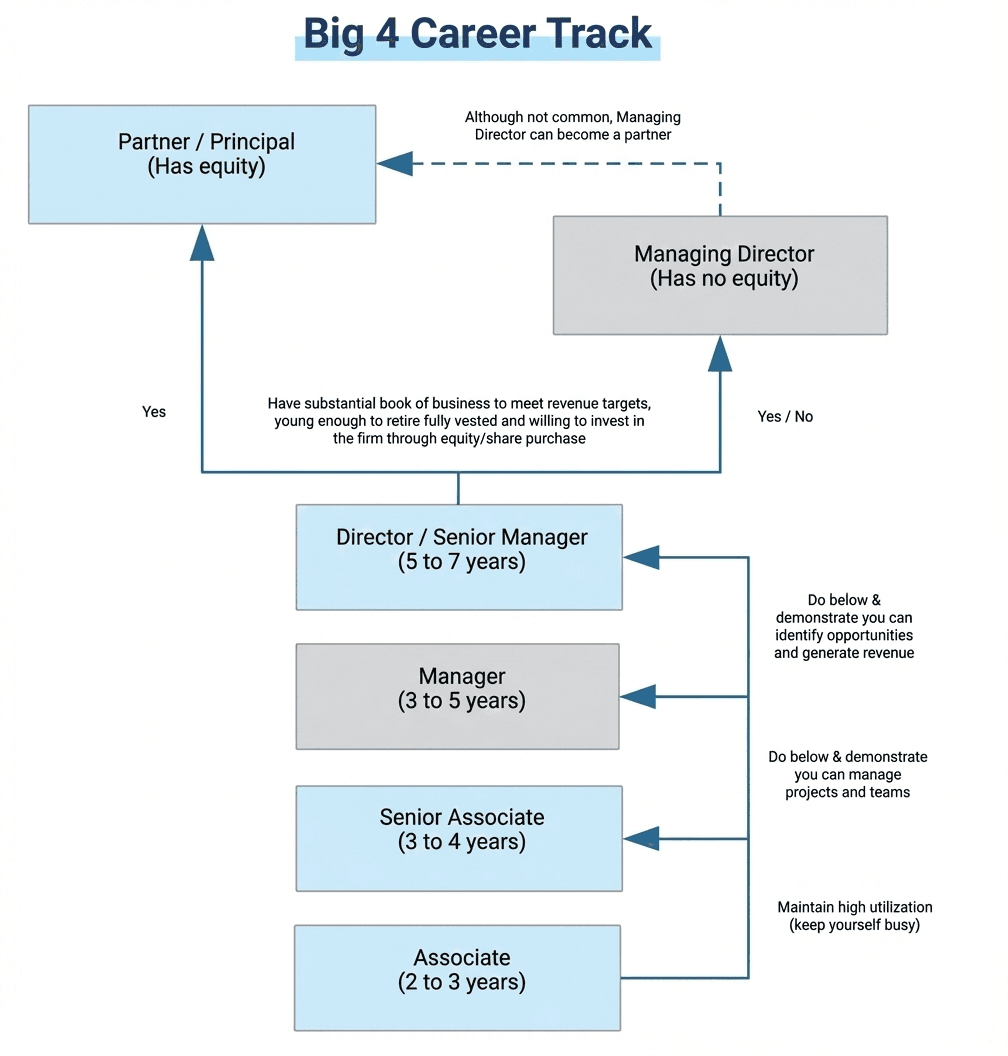
KPMG is making a clear argument to its own people: a good career does not have to end at partner, and it does not have to move in a straight line. The firm’s progression model leaves room for technical depth, moves across sectors, overseas assignments, and exits into industry, which is a different message from the narrow ladder many consultants, auditors, and advisers assume they are climbing.
Progression is broader than the partner track
The core idea on KPMG’s career progression pages is that the firm will support people in reaching their goals and fulfilling their potential, whether that means making partner, becoming a deep technical expert, moving into industry, or taking a long-term assignment abroad. That matters in a Big Four culture where title changes can feel like the only visible marker of success. KPMG is telling employees that mastery and mobility count too, not just the next line on a promotion chart.
That framing gives current staff a more realistic way to talk about career planning. A senior associate in audit, a manager in tax, or a consultant in advisory does not need to treat partner as the only serious destination. The progression model makes room for specialists who want to stay close to technical work, professionals who want client-side experience later, and people who want to build a career with international exposure before deciding whether to stay or move on.
The firm is formalizing mobility, not just talking about it
KPMG’s Global Opportunities program gives the mobility message concrete shape. The program is open to professionals in 152 markets, with short-term assignments that can last from 3 months to a year and long-term assignments that can run from 1 to 5 years. That turns the page’s mention of a long-term assignment abroad into a practical option rather than a vague benefit.
For employees weighing their next move, that kind of mobility changes the career calculation. A secondment can help someone broaden a resume without leaving the firm, build relationships in another market, or gain exposure to different client issues and regulatory environments. In a profession where cross-border work often matters in audit, tax, and advisory, a structured mobility path can be just as valuable as a promotion because it expands both judgment and network.
Career conversations are supposed to be individualized
KPMG’s career materials in multiple countries say employees can talk about ambitions with a mentor, a career coach, or a performance manager. That is an important detail because it shows the firm expects progression to be shaped through conversation, not handed down as a one-size-fits-all template. A staffer thinking about a move into industry, for example, can raise that goal alongside someone who wants a technical specialist path or a posting abroad.
That also gives employees a way to manage the realities of firm life. Busy season, client deadlines, and team staffing can make it easy to delay career planning until the next review cycle. KPMG’s model says those discussions should happen earlier and more often, so people can line up training, stretch assignments, and staffing choices with the path they actually want.
- If you want partner track, ask which client experiences and leadership roles matter most.
- If you want technical mastery, ask how to build depth in a specialty rather than breadth alone.
- If you want mobility, ask how the Global Opportunities program fits with your performance goals.
- If you are considering a client-side move, ask how to frame your KPMG experience so it travels well.
A useful way to approach those conversations is to be specific:
Leaving the firm is still part of the story
KPMG’s alumni materials make another point that many firms treat more quietly: departure is not the end of the relationship. The firm says many people build long and successful careers inside KPMG, while others use the skills and business knowledge they gain there to do impressive things outside the organization. Its alumni network is built around that reality, not around pretending everyone stays forever.
The KPMGConnect network lets former employees reconnect with current and former colleagues, use networking tools, attend events and webcasts, and browse opportunities that range from associate to C-level. Country alumni pages also say KPMG supports alumni in their careers and helps them reconnect with current and former colleagues. For auditors and advisers who later move into finance leadership, internal audit, accounting policy, or client-side roles, that can be a meaningful professional bridge rather than a severed tie.
That alumni model also tells current employees something useful about the firm’s culture. KPMG appears to value the network people carry with them after they leave, which can make an exit feel less like a rejection of the firm and more like a different phase of professional development. In an industry where people often boomerang back or move into client organizations, that is a pragmatic way to manage talent.
Why the message lands inside a large professional-services firm
KPMG International said globally aggregated revenue for the year ended 30 September 2025 was $39.8 billion, up 5.1% year over year. In a business that large, career progression is not just a human resources slogan. The firm depends on a steady flow of people who are learning, moving, specializing, and sometimes leaving for roles that extend KPMG’s reach into client companies and industry leadership.
The scale also helps explain why the values language sits alongside the career framework. KPMG ties progression to Integrity, Excellence, Courage, Together, and For Better, which makes the model sound less like a pure ladder and more like a culture statement. Employees are not only being told that there are multiple routes forward; they are being told those routes should still reflect the firm’s standards and relationships.
What this means for day-to-day career planning
For people in audit, tax, consulting, and advisory, the practical takeaway is to stop treating advancement as a single ladder and start treating it as a set of choices. The most useful question is not only whether you are on track for promotion, but what kind of progress you are actually building right now.
- building a deeper technical specialty in one service line,
- seeking a role in another market through Global Opportunities,
- taking assignments that broaden your client exposure,
- using mentor, coach, and performance manager conversations to map out a later move into industry,
- or staying connected to KPMG through the alumni network if your next step takes you elsewhere.
That can mean:
KPMG’s own framework makes clear that career success can be measured in more than one way. For some people, it will still mean partner. For others, it will mean becoming the person teams rely on for technical judgment, gaining international experience, or carrying KPMG experience into a leadership role outside the firm.
This article was produced by Prism’s automated news system from verified source data, official records, and press releases, then run through automated quality and moderation checks before publishing. The system is built and supervised by the people who set the standards it runs under. Read our full AI policy.
Did this article answer your question?


.pdf%2F_jcr_content%2Frenditions%2Fcq5dam.thumbnail.319.319.png&w=1920&q=75)