PCAOB speeds up KPMG inspection results, flags 13 audit deficiencies
KPMG’s latest PCAOB review flagged 13 deficiencies in 64 audits, while a separate peer-review system keeps a closer eye on the firm’s quality controls.
A smaller, faster inspection cycle still landed hard for KPMG: the PCAOB said 13 of the 64 audits it reviewed in 2024 belonged in Part I.A, the category reserved for deficiencies serious enough that the firm had not obtained sufficient appropriate audit evidence to support its opinions.
For KPMG audit teams, that distinction matters because PCAOB inspections are not a full re-audit of the firm. The board says its job is to inspect registered public accounting firms for compliance with the Sarbanes-Oxley Act, PCAOB rules, SEC rules and professional standards on audits of public companies and broker-dealers. It is a targeted sample, not a review of every engagement or every flaw. In 2024, PCAOB staff inspected 171 registered firms and reviewed portions of more than 800 public company audits, underscoring how much pressure a relatively small set of selected files can place on a firm’s reputation.
The KPMG findings clustered in familiar trouble spots: testing of controls, substantive testing of revenue and related accounts, and allowance for credit losses. That is the kind of language that quickly gets translated inside an audit office into extra review time, more coaching for staff, and heavier scrutiny from managers and partners on future engagements. KPMG said in its own audit quality report that it expected a 20% Part I.A deficiency rate in the report covering 2023 audits, and it described that as its lowest rate since 2009.
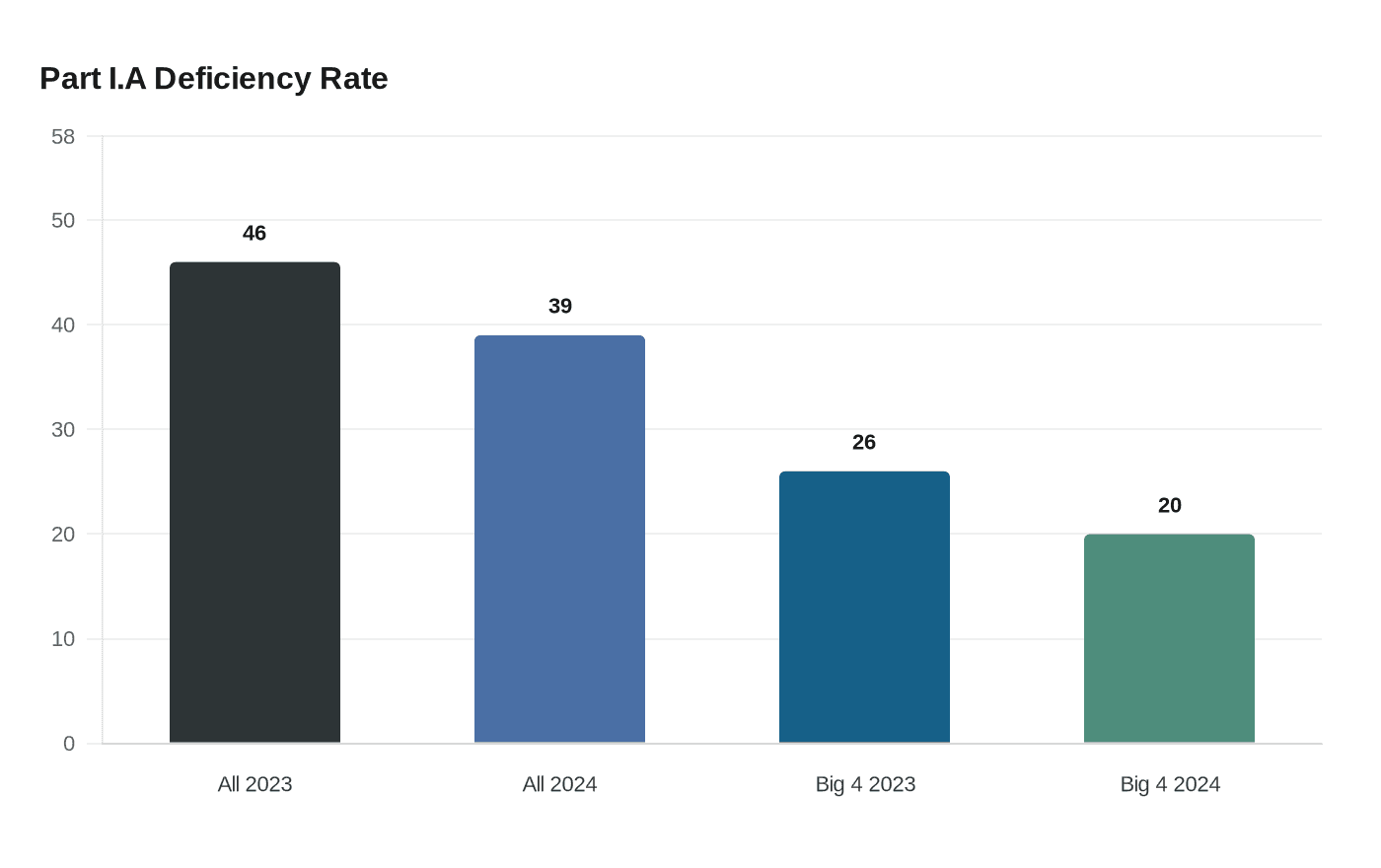
The broader market context makes the result harder to shrug off. The PCAOB said the aggregate Part I.A deficiency rate across all inspected firms fell to 39% in 2024 from 46% in 2023. Among the Big Four U.S. firms, which the board said audit about 80% of the market capitalization of public companies listed on exchanges, the aggregate Part I.A deficiency rate fell to 20% from 26%. The board tied those improvements to focused efforts after the pandemic, and it also said the six U.S. global network firm reports were posted five months sooner than the prior year, speeding up the feedback loop for firms trying to fix problems before the next busy season.
That is only one layer of judgment. The AICPA peer-review program is separate, and it tests the quality-control system itself on a periodic external cycle, not just selected audit files. Member firms must undergo peer review every three years, and the public file shows a firm’s name, address, enrollment status and last peer-review date, with results posted for some firms. The AICPA Peer Review Board approved Peer Review Standards Update No. 2 in November 2024, with some revisions effective for peer reviews starting on or after December 1, 2024, and others for years ending on or after December 31, 2025.
KPMG’s most recent peer review report was dated November 20, 2023, and the AICPA acceptance letter followed on December 7, 2023. For anyone on the audit side of the house, the message is blunt: workpapers, independence checks, consultations and issue escalation are not side tasks. They are what determine how a sample looks when inspectors or peer reviewers arrive, and they can shape how a manager’s judgment, and a team’s readiness for promotion, is read by the firm.
This article was produced by Prism’s automated news system from verified source data, official records, and press releases, then run through automated quality and moderation checks before publishing. The system is built and supervised by the people who set the standards it runs under. Read our full AI policy.
Know something we missed? Have a correction or additional information?
Submit a Tip