PCAOB to consider QC 1000 amendments, KPMG firms face tight deadline
The PCAOB will weigh new QC 1000 amendments June 9, leaving KPMG firms with a December 15 deadline and little room for delay.
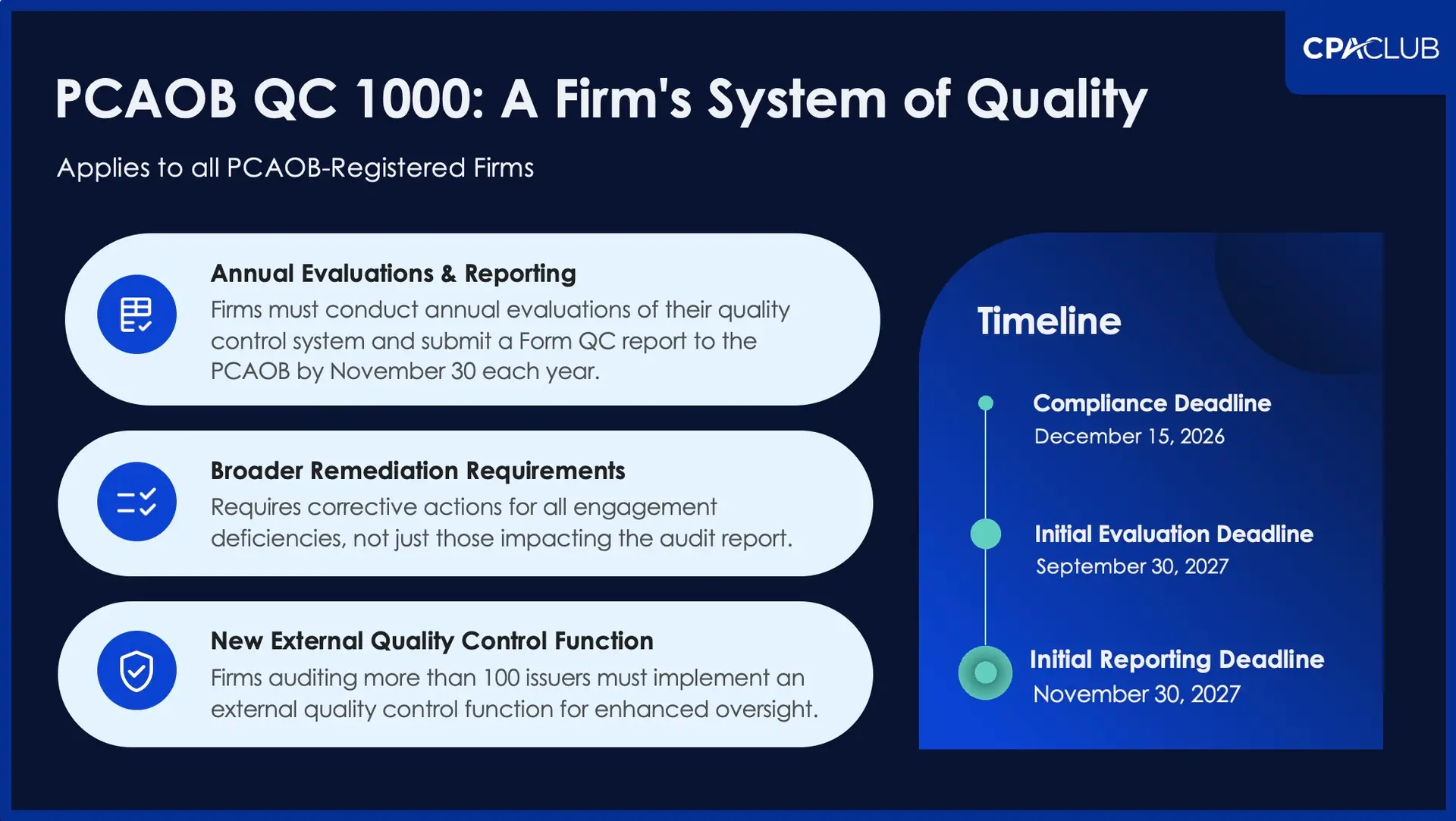
The Public Company Accounting Oversight Board will meet June 9 in Washington to consider proposing amendments to QC 1000, its new quality-control standard, for public comment. For KPMG audit teams, the issue is not abstract: the standard is still set to take effect December 15, 2026, and any added revisions will land inside a tight implementation window.
QC 1000 was adopted by the PCAOB on May 13, 2024 and approved by the U.S. Securities and Exchange Commission on September 9, 2024. The rule was originally due to take effect December 15, 2025, before the board postponed it by one year on August 28, 2025. That delay also pushed back rescission dates for certain existing PCAOB rules and standards, underscoring how much old and new quality-control systems are still overlapping inside firms.

The board describes QC 1000 as an integrated, risk-based quality control standard that requires registered public accounting firms to identify specific risks to their practice and design responses to those risks. It also says the standard will require all registered firms to design and operate a quality control system that meets the new requirements, replacing the PCAOB’s interim quality-control standards in their entirety. In practice, that means more than updating a policy manual. Engagement teams will have to show how quality objectives, risk identification, responses, monitoring and remediation connect to the work being done on the job.
That is where the pressure lands at the firm level. Every amendment to QC 1000 has the potential to change how KPMG documents governance decisions, records review steps, tracks escalation and proves that quality controls are actually operating, not just written down. For managers and partners, the question is whether engagement-level controls scale well enough to satisfy a standard built around evidence and accountability. For staff, it is another reminder that audit work now depends as much on defensible process as on completing procedures.
KPMG has already taken part in the timing debate. In a September 2025 comment letter to the SEC, KPMG LLP said it appreciated the opportunity to comment on the proposed rule change to postpone QC 1000’s effective date. The firm’s participation shows how directly the standard has become a workplace issue inside Big Four audit practices, where training, sign-off routines and documentation trails all have to be adjusted before the deadline arrives.
The June 9 meeting, which will be held in the PCAOB’s Multi-Purpose Room 301 at 1666 K Street NW and livestreamed, comes after months of transition pressure, not at the start of it. If the board moves ahead with proposed amendments, KPMG firms will have even less time to make sure their quality-control systems can stand up to the new standard on day one.
This article was produced by Prism’s automated news system from verified source data, official records, and press releases, then run through automated quality and moderation checks before publishing. The system is built and supervised by the people who set the standards it runs under. Read our full AI policy.
Did this article answer your question?


.pdf%2F_jcr_content%2Frenditions%2Fcq5dam.thumbnail.319.319.png&w=1920&q=75)