Europe’s fast-fashion crackdown may boost premium retail value messaging
Europe’s anti-fast-fashion rules could make premium prices easier to defend on the sales floor. For Lululemon teams, the pitch shifts to durability, repair, and cost per wear.

France’s Parliament passed a fast-fashion law aimed at Shein and Temu that would impose per-product fines and ban advertising, including influencer promotion. As France and the European Union move against the fastest, cheapest end of the market, store teams at Lululemon may find that the value conversation gets less awkward and more concrete, with durability, longevity, and use-per-wear carrying more weight than a simple sticker-price comparison.
What changed in Europe
Separately, the European Union introduced a €3 customs charge on small parcels, a move tied to the sharp surge in low-value parcels between 2022 and 2025. Those steps are meant to make the ultra-cheap side of fashion less frictionless, and they land at a time when competition from platforms like Shein and Temu has been hurting European retailers.
Policymakers are adding friction, cost, and reputational pressure to a model that has depended on speed, volume, and constant visibility.
Why premium brands feel the ripple effect
Lululemon is not the direct target of these rules, but premium brands often sell in the shadow of ultra-low prices, and that shadow can distort the conversation on the sales floor. If the cheapest product is less invisible, less socially polished, or less financially effortless to import, shoppers may be more willing to hear why a technical garment costs more.
That does not remove the pressure to prove value. Value-sensitive shoppers will still compare prices aggressively, especially on leggings, tops, outerwear, and accessories that can look similar from a distance. The difference for educators and key leaders is that the question may shift from “Why is this so expensive?” to “What am I getting for the price?”
For a premium brand built around performance fabrics and fit, that shift is useful only if the product story is strong. A higher price lands better when it is tied to specific reasons a garment should last longer, wear better, and hold up through repeated use.
What store teams are likely to hear
In Europe especially, customers may start asking more direct questions about sourcing, import costs, and why one garment is priced differently from another that looks similar online. Those questions do not always mean resistance. Often they signal that the shopper is trying to reconcile fast-fashion expectations with a premium product experience.
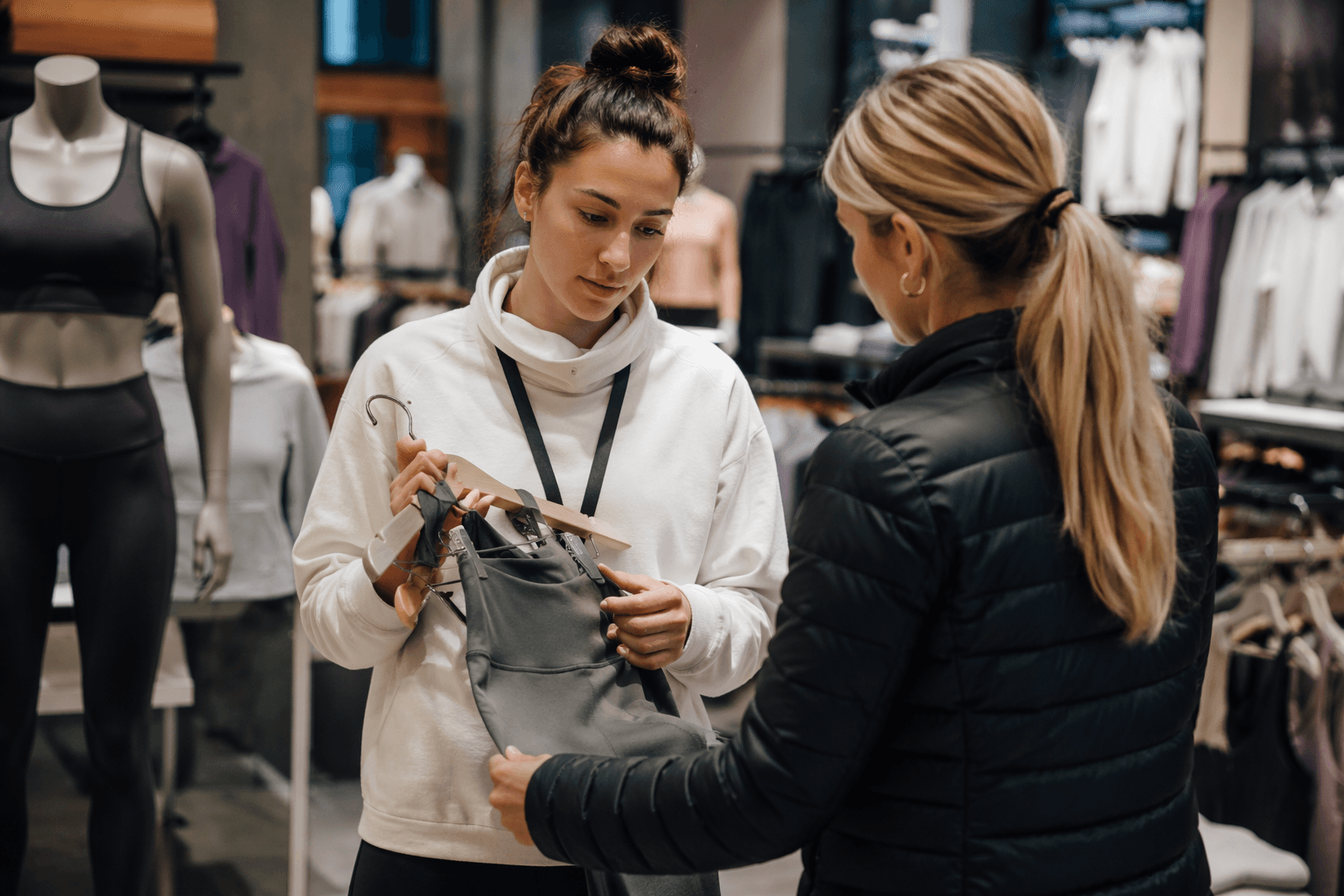
That puts pressure on associates to answer plainly and without defensiveness. A calm explanation of fabric performance, construction, and intended use can do more for trust than a polished brand slogan. If a guest is comparing a disposable trend item with a piece meant for repeated training, commuting, or all-day wear, the comparison should be framed around use case, not just cost.
- How the fabric performs after repeated wear and wash cycles
- How the fit and construction support movement over time
- Whether the product is intended for one season or many
- What repair, replacement, or care guidance exists to extend life
For Lululemon teams, that means keeping the focus on what the product is built to do:
How to talk about price without sounding defensive
The strongest response to a price challenge is not to argue with the customer. It is to anchor the conversation in durability, function, and expected wear. Teams should explain why the item was built the way it was.
That can sound as simple as describing what the garment is designed to outlast. If a jacket, pant, or training layer is meant to be worn repeatedly, its price makes more sense when compared with the number of uses, not just the checkout total.
Managers also need to recognize that policy shifts can reshape the competitive field faster than store traffic does. European governments are not changing Lululemon’s pricing model, but they are helping set the conditions under which customers think about price, waste, and quality. That means floor training should emphasize facts that hold up under questions, not phrasing that depends on hype.
What this means for leaders on the floor
For assistant store managers and key leaders, the operational takeaway is straightforward: the product story has to stay consistent across the team. When customers ask why something costs more, different educators should not deliver three different answers. The strongest teams will connect the price to concrete product traits, then stop talking and let the shopper decide.
In premium athleisure, customers are not only buying stretch and softness. They are buying a promise that the piece will work in their routine and last long enough to justify the spend.
This article was produced by Prism’s automated news system from verified source data, official records, and press releases, then run through automated quality and moderation checks before publishing. The system is built and supervised by the people who set the standards it runs under. Read our full AI policy.
Did this article answer your question?