OSHA crowd safety guidance offers lessons for Lululemon retail teams
High-energy drops and community events can turn into safety problems fast, and OSHA’s crowd guidance gives Lululemon teams a practical playbook.
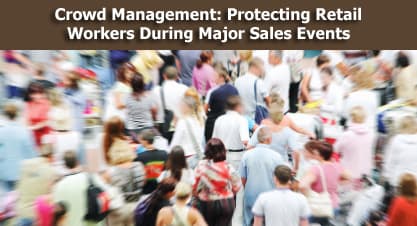
OSHA has warned that crowd-related injuries can occur during special sales and promotional events, a risk that fits Lululemon’s event-driven stores. Under the Occupational Safety and Health Act of 1970, employers are responsible for providing workers with safe and healthy workplaces, even when the floor is packed and the guest energy is high.
Why this guidance fits Lululemon’s store model
Lululemon has spent years turning stores into more than transaction points. The company presents its locations as community hubs, partners with ambassadors, and offers local fitness classes and other community experiences. Recent store-opening materials for SoHo and Gangnam describe community boards that highlight ambassadors and upcoming events, from run clubs to tailored brand activations.
The same format that builds loyalty can create pressure points for educators and key leaders. Product drops, holiday events, markdown surges, and wellness activations can push guests to line up early, cluster near the entrance, or move quickly through a small selling space.
Plan before the doors open
Prepare early, not after the line forms. OSHA recommends advance planning, visible signs, emergency procedures, and worker training before the event. For a Lululemon team, that means deciding in advance who is greeting, who is managing the queue, who is working the floor, and who is available to respond if the crowd shifts suddenly.
Barricades or rope lines should go up well in advance of customer arrival, and the customer line should not begin right at the store entrance. That instruction is especially practical for product-launch mornings, when a line at the door can create congestion before the store has even opened and make it harder for educators to control the pace of entry.
OSHA told retailers in November 2013 and again in November 2014 to watch crowd hazards during holiday sales events, sending letters to retailers and retail trade associations nationwide. The 2014 letter enclosed the crowd-management fact sheet and reminded stores to maintain appropriate access to exit routes and ensure exits are not blocked. For a Lululemon team, that means the queue should never spill into the path to a fire exit, stockroom door, or employee-only route used to bring product to the floor.
Staffing is a safety tool, not just a labor decision
Crowd management is not just about signs and ropes. OSHA recommends additional staffing when large crowds are expected and clear assignment of workers to specific locations. It also says trained crowd-management personnel may be needed in some situations.

That is where the pressure of Lululemon’s retail calendar shows up most clearly. During a major drop or markdown event, educators are often doing several jobs at once: answering product questions, managing fitting-room traffic, replenishing the floor, and absorbing guest frustration when sizes move fast. Additional staffing lets leaders separate those tasks so one person is not trying to handle the line while also covering the cash wrap or the sales floor.
Protect the exits, not just the brand moment
OSHA’s guidance draws a hard line on entrances and exits. Stores should maintain access to exit routes and keep them unobstructed, even during peak traffic. That sounds basic, but in a busy athleisure store it can become the first thing to slip when displays are moved for a launch table, when guests crowd near a featured wall, or when line control drifts toward the front doors.
For Lululemon teams, the store map is a safety document. If a line starts to wrap, leaders need to know where it can safely go, where it cannot go, and who has the authority to reset it. If a community run club or ambassador activation is drawing people into the space, the same discipline applies: keep entrances clear, keep exits visible, and do not let the event setup absorb the store’s emergency routes.
That requires coordination with local emergency responders. Store teams do not need to improvise under pressure if they have already worked through the layout, the line path, and the emergency response plan before the crowd arrives.
Community retail still needs crowd rules
Lululemon leans into events, not just product. The company’s community boards in SoHo and Gangnam point guests toward ambassadors, run clubs, and tailored activations. Its stores can host local fitness classes and other experiences alongside selling.
The store can shift quickly from normal shopping to event-driven traffic. A Thursday evening class, a weekend ambassador appearance, or a markdown-heavy holiday period may all demand the same controls: clear entrance flow, visible signage, assigned roles, and a plan for what happens if the crowd gets larger than expected.
Treat every major activation like a controlled operation. Before the event, check staffing, line placement, and exit access. During the event, keep someone responsible for the queue and someone else for floor safety. After the event, reset the space so stock, fixtures, and signage do not leave the next shift with hidden hazards.
This article was produced by Prism’s automated news system from verified source data, official records, and press releases, then run through automated quality and moderation checks before publishing. The system is built and supervised by the people who set the standards it runs under. Read our full AI policy.
Did this article answer your question?