California July 1 wage changes set new compliance tasks for McDonald's managers
July 1 wage hikes will force McDonald's operators in California to recode payroll, refresh postings, and verify each store's exact city or county rate.
McDonald's operators in California are heading into another compliance reset as a wave of local minimum wage increases takes effect July 1. The pressure is not just the new dollar figures, but the operational work behind them: payroll systems, wage notices, store postings, and manager checklists all have to match the right rate before the first shift after the change.
California already has a statewide minimum wage of $16.90 an hour effective January 1, 2026, but that floor does not control every restaurant. Fast-food locations covered by the state’s separate rule have been at $20 an hour since April 1, 2024, and the Fast Food Council can still set future increases and other minimum employment standards. For McDonald's crews, that means the posted rate can turn on whether a store falls under the fast-food rule, a city ordinance, a county ordinance, or the state floor.
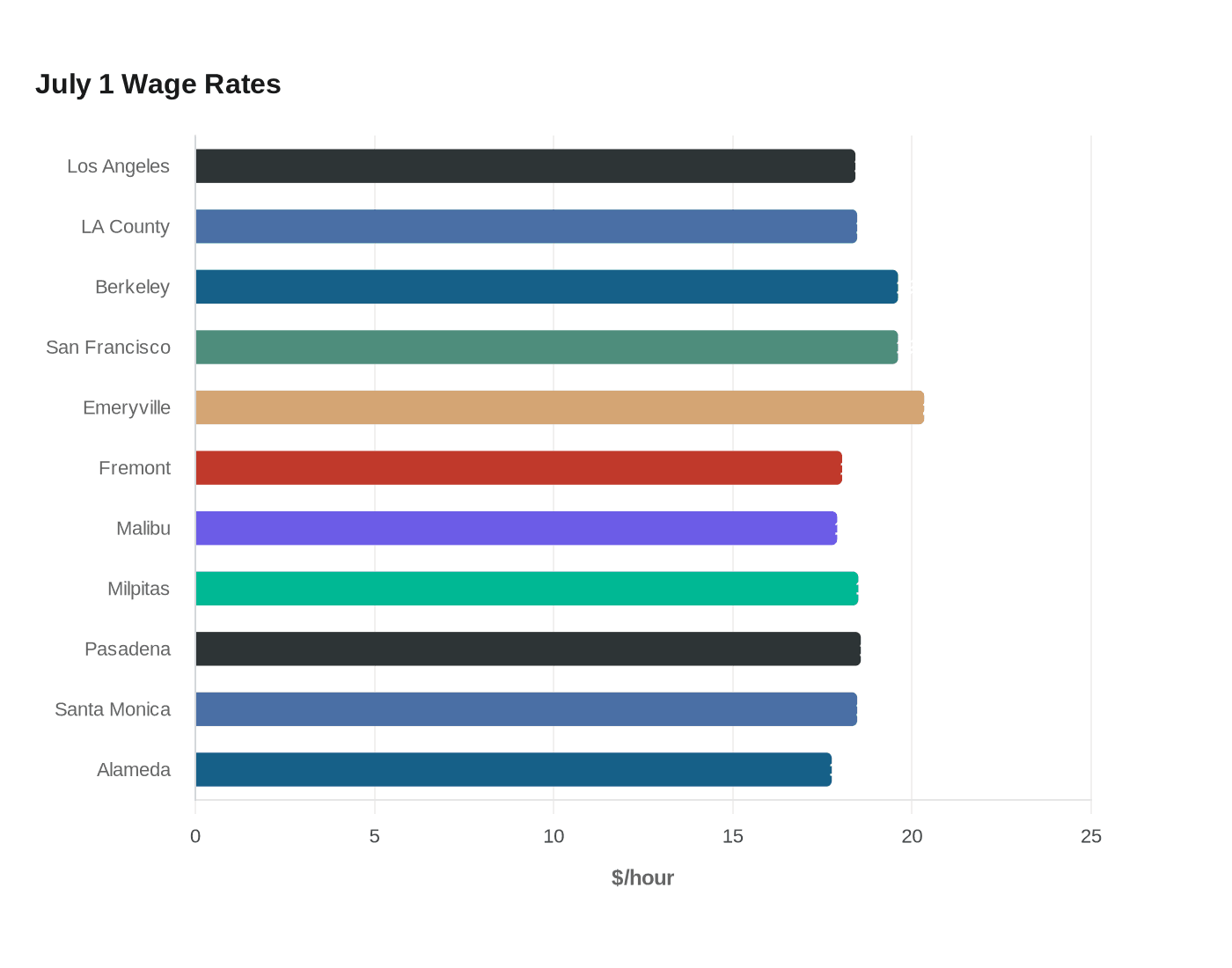
The July 1 changes are especially important because several local jurisdictions will move again at once. The City of Los Angeles rate will rise to $18.42 an hour, Los Angeles County’s unincorporated areas to $18.47, Berkeley and San Francisco to $19.61, Emeryville to $20.34, Fremont to $18.05, Malibu to $17.91, Milpitas to $18.50, Pasadena to $18.57, Santa Monica to $18.47, and Alameda to $17.76. That makes store location the deciding factor, not just the brand on the building. A McDonald's at one address in Los Angeles County can face a different legal rate than a restaurant a few miles away inside city limits.
The practical task for managers is to update wage notices, pay stubs, and workplace postings before July 1, not after a crew member spots an error on a paycheck. California officials say employers should confirm the correct rate for every work location, including employees who split time across jurisdictions. The California Labor Commissioner’s Office also says fast-food employers must post a supplement to the minimum wage order, and the state Department of Industrial Relations maintains the wage order itself. In a business where schedules turn fast and staffing is tight, one missed local rule can quickly become a payroll correction, a complaint, or a training problem for the next shift leader.
The City of Los Angeles Office of Wage Standards says its July 1 rate is tied to the Consumer Price Index for Urban Wage Earners and Clerical Workers in the Los Angeles metro area, which helps explain why the changes keep coming. For McDonald's managers, the message is blunt: verify the restaurant’s exact jurisdiction, load the right rate into payroll, and make sure the wall posting says the same thing the paycheck does.
This article was produced by Prism’s automated news system from verified source data, official records, and press releases, then run through automated quality and moderation checks before publishing. The system is built and supervised by the people who set the standards it runs under. Read our full AI policy.
Know something we missed? Have a correction or additional information?
Submit a Tip