California study says $20 fast-food wage raised prices slightly, not jobs losses
UC Berkeley's latest read on California's $20 fast-food wage found no job losses, only a slight price bump. For McDonald's crews, the fight shifted to staffing and scheduling.

California’s $20 fast-food wage did not deliver the job losses critics warned about. The latest University of California update found employment held up and menu prices rose only modestly, a reversal that lands directly in the middle of the staffing and scheduling questions McDonald’s workers and franchise managers have been living with since the law took effect.
The Berkeley findings are now on their third look at the issue, with the same research team issuing a second update of the underlying data. In the earlier 2024 analysis, researchers said they reviewed more than 11,000 Glassdoor salary reports and price data from more than 1,500 California restaurants, along with a similar number in states without recent wage increases. That report found average hourly pay rose 18%, 90% of covered workers had previously earned below $20 an hour, prices of popular menu items rose 3.7%, and a typical $4 hamburger went up about 15 cents. The revised September 2025 working paper later said average weekly wages for covered fast-food workers rose 10% to 11%, employment did not fall, prices increased 2.1% two quarters after the policy and employers passed about 63% of higher wage costs to consumers.
The wage floor came from AB 1228, signed by Gov. Gavin Newsom on Sept. 28, 2023, and effective April 1, 2024. It applies to certain fast-food workers at chains with 60 or more locations nationwide. California said it had about 500,000 fast-food workers when the law was signed, and the average hourly wage for those workers was $16.21 in 2022. The law also created a Fast Food Council inside the Department of Industrial Relations to set future wages and standards, with annual increases capped at the lesser of 3.5% or CPI-U growth.
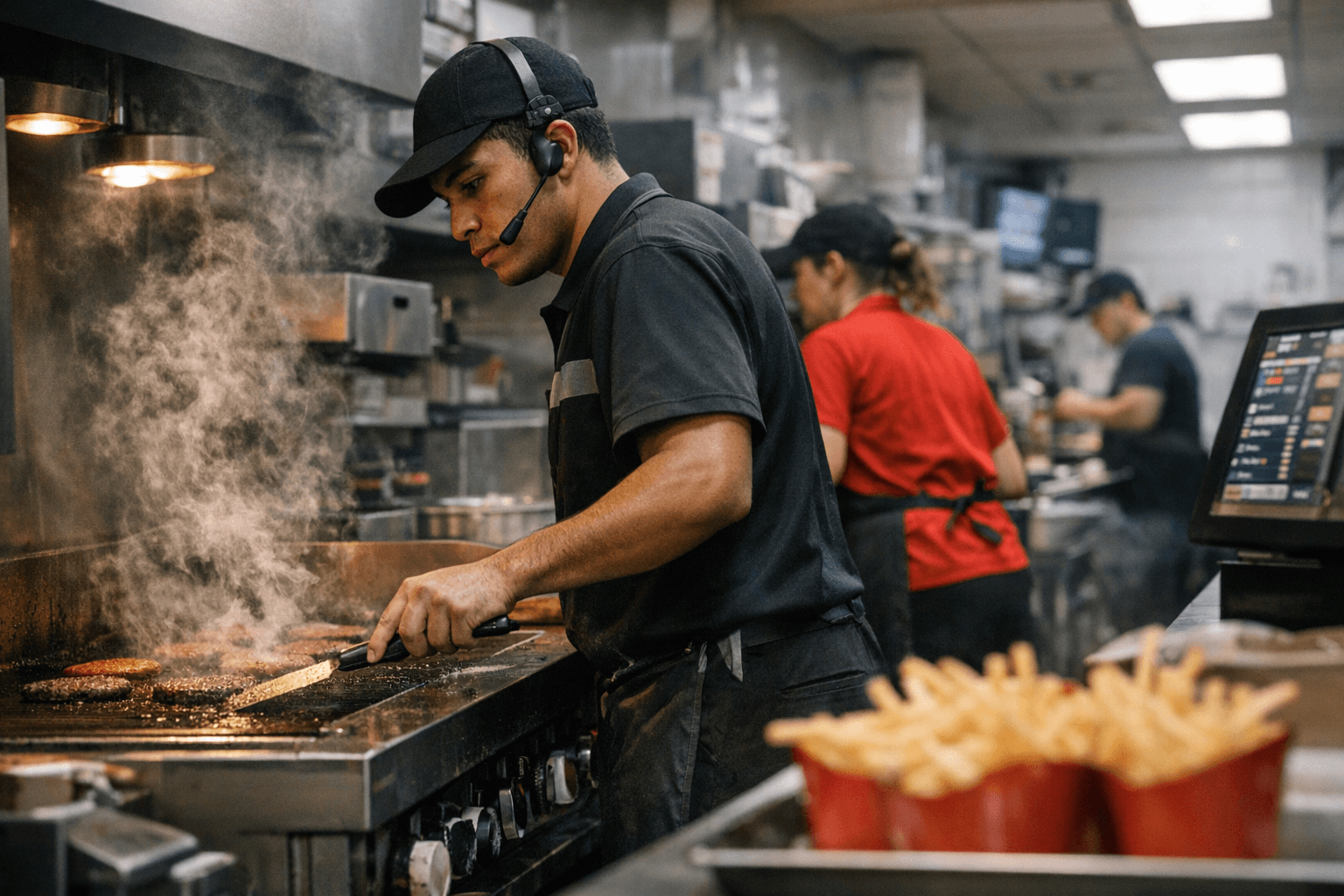
For McDonald’s employees, the deeper issue is not just whether the wage floor rose. It is whether restaurants adjusted by tightening labor, changing schedules, leaning harder on kiosks or raising prices a few cents at a time. California has become the country’s most visible test market for that question, especially as the debate over sector-specific pay rules keeps colliding with franchise economics and automation pressure.
The political fight has stayed split. In October 2024, California cited a Harvard Kennedy School and UC San Francisco study saying hourly wages rose by at least $2.50, the share of workers earning under $20 an hour fell by about 60 percentage points, weekly hours stayed about the same, understaffing eased and there was no evidence of cuts to fringe benefits. The state also said it added 7,400 fast-food jobs after the law took effect. At the same time, UC Santa Cruz researchers later reported lower labor hours in some franchise operations and more kiosk adoption, and California McDonald’s franchise owner Scott Rodrick publicly said he was weighing higher menu prices and reduced hours.
The Fast Food Council first met in March 2024, and the fight over what counts as sustainable staffing in fast food is still shaping payroll, labor planning and pricing from Sacramento to Los Angeles.
This article was produced by Prism’s automated news system from verified source data, official records, and press releases, then run through automated quality and moderation checks before publishing. The system is built and supervised by the people who set the standards it runs under. Read our full AI policy.
Did this article answer your question?