DOL fact sheet reminds McDonald's workers of wage, overtime rights
The Labor Department says McDonald’s workers may be owed time-and-a-half after 40 hours, and even a credit-card swipe can pull a crew member under federal wage law.

A federal fact sheet puts a plain message in front of McDonald’s crew members and managers: if a restaurant or fast-food business has annual gross sales from one or more establishments totaling at least $500,000, the Fair Labor Standards Act applies. Under that law, covered nonexempt workers are owed at least $7.25 an hour, a federal floor that has not changed since July 24, 2009, and overtime generally kicks in at time and one-half after 40 hours in a workweek.
That matters in the places where restaurant pay problems usually start. If a shift runs long, if prep happens before the clock starts, if closing work stretches past the schedule, or if minutes disappear from a timecard, those are wage-and-hour issues, not just scheduling errors. The Labor Department’s restaurant toolkit says employers must follow both federal and state law, and if a chain discovers past wage or leave mistakes, the department says the PAID program may help resolve them.
The department also says many restaurant workers are covered individually even when an employer does not clear the $500,000 enterprise threshold. Its example is simple and familiar to fast-food work: a waitress or cashier who handles a credit card transaction would likely be covered because the job involves goods moving in interstate commerce. For McDonald’s workers, that means coverage can reach beyond store-level sales totals and into the day-to-day work of taking orders, ringing up meals and handling payments.
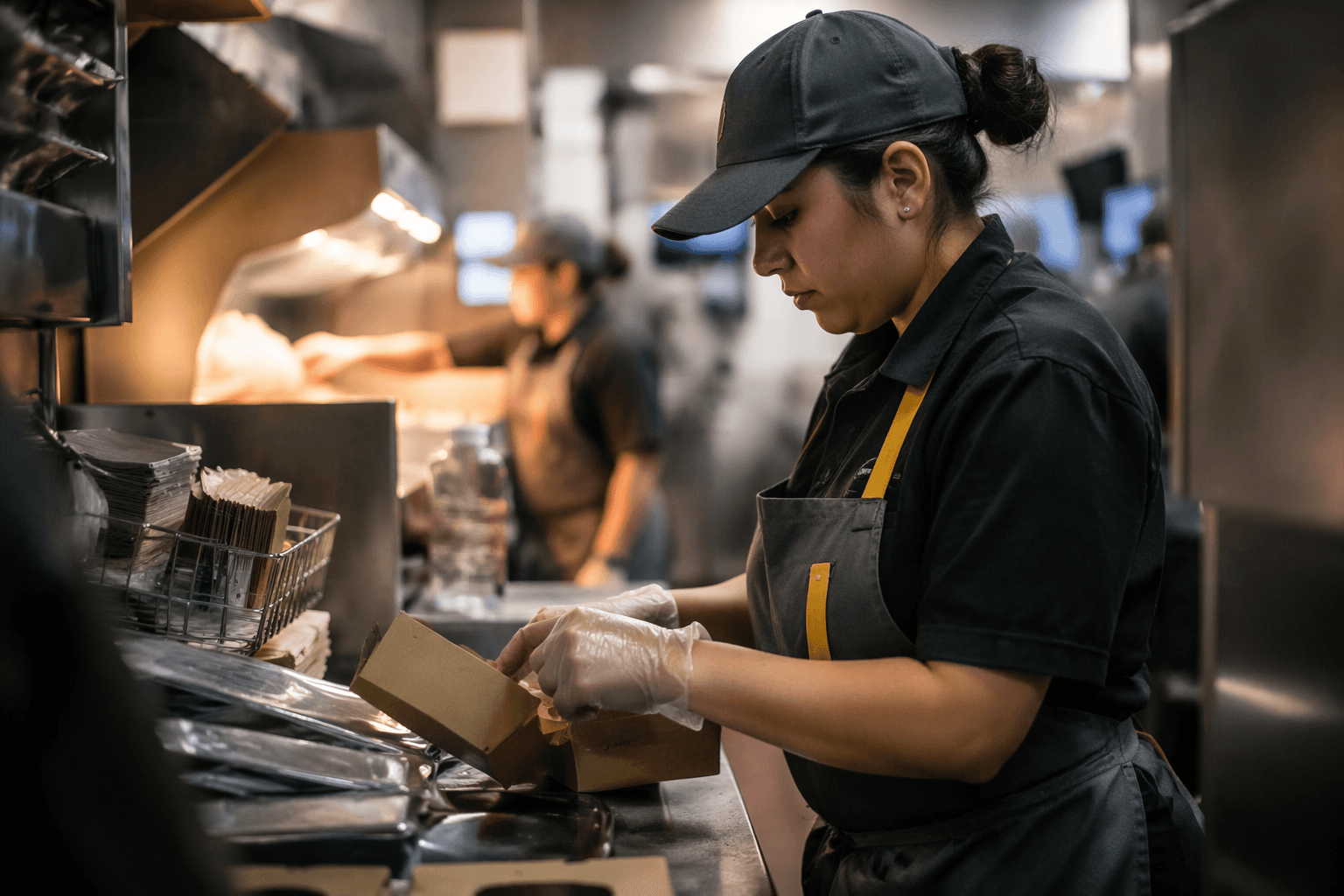
Managers and assistant managers face a separate set of rules that often causes confusion in restaurants. The Labor Department says job titles do not decide exemption status. Employers have to satisfy salary and duties tests, and a manager who supervises no one, or who falls short of the salary-level test, would not qualify as exempt. For restaurant crews, that distinction can determine whether overtime is due. For franchise operators, it is a payroll risk that can turn a busy week into a back-pay dispute.
McDonald’s has been under that pressure before. In May 2021, the company said it was raising hourly wages for more than 36,500 company-owned restaurant employees, with entry-level crew pay starting at least $11 to $17 an hour and shift managers at least $15 to $20 an hour depending on location. The company also said average hourly wages at company-owned restaurants were expected to reach $15 by 2024, underscoring how wage expectations have climbed well beyond the unchanged federal minimum.

The legal history around McDonald’s work reinforces why these rules still matter. A 2020 California settlement resolved wage-and-hour claims involving about 38,000 workers and $26 million, including allegations tied to missed meal and rest breaks, unpaid overtime on overnight shifts and reimbursement for required uniforms. In 2016, McDonald’s and a franchise owner settled a separate case that attorneys said was a significant precedent on franchise liability and joint-employer theories, with more than 800 workers set to receive monetary relief from McDonald’s itself.
The Labor Department’s 2023 enforcement action against three Kentucky McDonald’s franchisees brought the point home again. Investigators found 305 minors, including two 10-year-olds, working illegally at 62 locations across Kentucky, Indiana, Maryland and Ohio, and the franchisees were fined $212,544. At McDonald’s, wage law is not just about the size of a paycheck. It also reaches overtime, time records, break handling, uniforms and the legal limits on who can work, and for how long.
This article was produced by Prism’s automated news system from verified source data, official records, and press releases, then run through automated quality and moderation checks before publishing. The system is built and supervised by the people who set the standards it runs under. Read our full AI policy.
Know something we missed? Have a correction or additional information?
Submit a Tip