McDonald's frames first jobs as skill-building launchpads for careers
McDonald’s is selling the first shift as a career lesson, not a dead end. The pitch now comes with education aid, survey data, and resume language workers can actually use.

McDonald’s is trying to turn a common entry-level job into something sturdier than a stopgap. The chain’s “America’s Best First Job” message is built around a simple idea: crew work teaches communication, teamwork, problem-solving, customer service, pace, accountability, multitasking, and how to handle pressure, and those skills still matter after the apron comes off.
That framing matters because McDonald’s is not just talking to teenagers looking for pocket money. It is talking to crew members who want a promotion, managers coaching new hires, and employees who may eventually move into another industry altogether. In a labor market shaped by Fight for $15 organizing, minimum wage fights, and persistent questions about whether fast-food jobs are good jobs, McDonald’s is making a different argument: the role may be low on the pay scale, but it is not low on transferable skills.

The skills happen on shift, not in a slogan
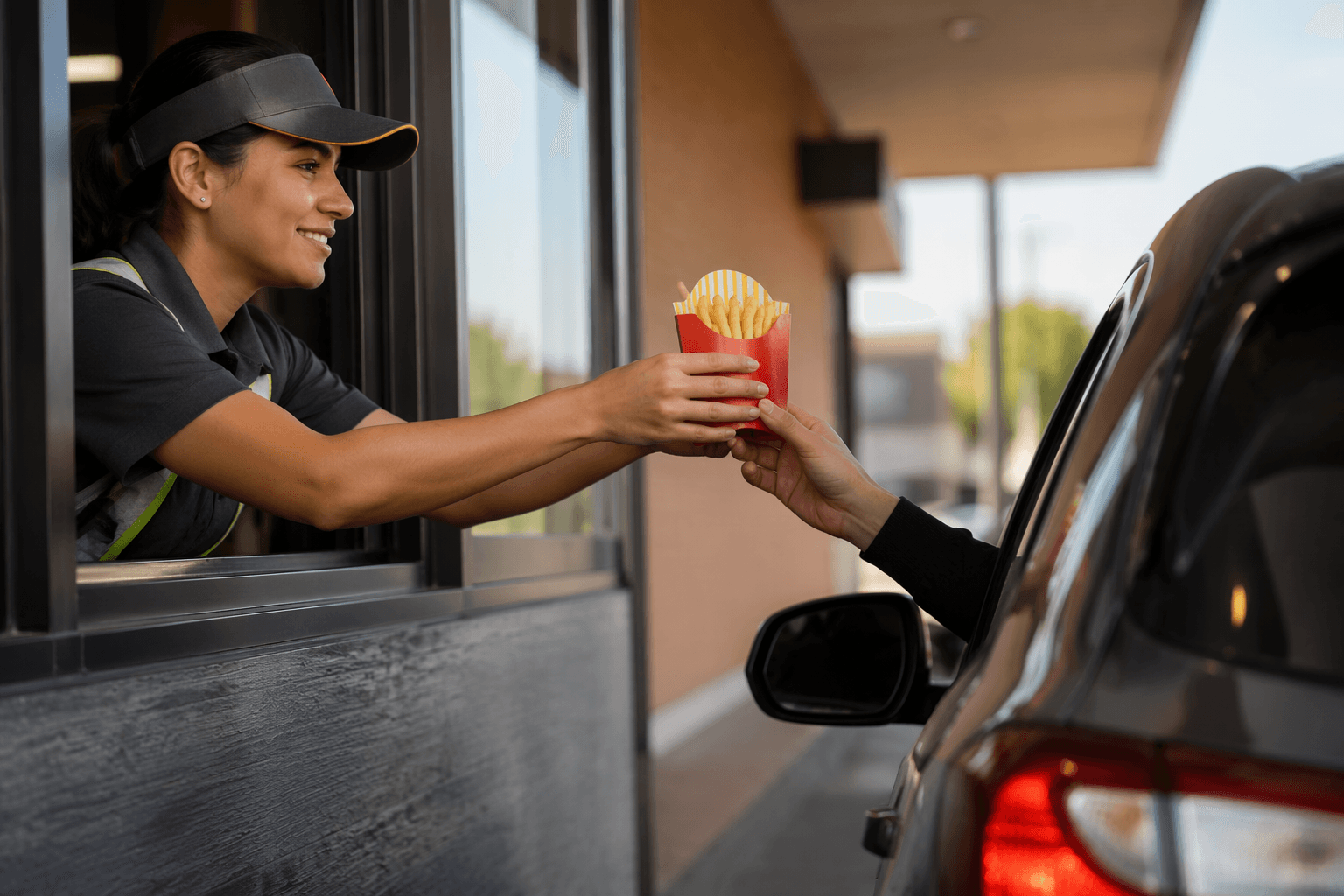
The strongest part of McDonald’s pitch is that it maps ordinary restaurant tasks to abilities employers recognize. A busy lunch rush teaches speed and prioritization. Dealing with an unhappy customer teaches recovery, calm communication, and judgment. Running the POS, learning openings and closings, or training a new hire all show responsibility in ways a resume can actually describe.
That is where the company’s message becomes practical for workers. If you have handled the register, covered a drive-thru line, restocked the floor, or stepped in when a crew member called out, those are not just chores. They are examples of reliability, multitasking, and teamwork, the same language managers use when deciding who gets a shift lead role, more hours, or a promotion.
For younger workers especially, that can change how the job feels. Instead of seeing restaurant work as a temporary stint to endure, the company wants employees to see it as a launchpad for a first resume, a first interview, and often a first real sense of work habits.
Archways gives the pitch some substance
McDonald’s has paired that message with a concrete support system: Archways to Opportunity. Since the program began in 2015, the company says it has increased access to education for more than 82,500 restaurant employees and awarded over $185 million in tuition assistance. By 2024, McDonald’s and participating franchisees said they had invested over $240 million in the program and helped more than 90,000 crew members.
Archways is described as a broad education and advising platform, not just a one-off perk. It offers English-language learning, a high school diploma at no cost, college tuition assistance, and free education and career advising. That matters in a workforce where many employees are balancing school, family, transportation, and unpredictable schedules, because the difference between a slogan and a real career ladder is whether the company helps people climb it.
The company has also leaned on its restaurant footprint to make the point feel bigger than one store. McDonald’s says it has more than 44,000 locations in over 100 countries, and about 95% of its restaurants worldwide are owned and operated by independent local business owners. That means the first-job message is being delivered across a franchise system where day-to-day experience can vary sharply from store to store, even when the brand language stays the same.
The numbers are meant to prove the story
McDonald’s has not relied on branding alone. Its Workforce Preparedness Study in 2018 surveyed 6,247 people in the U.S. general population, including 966 Gen Z respondents and 762 McDonald’s alumni. The company says the study found soft skills such as teamwork, customer service, and responsibility were viewed as especially important, which helps explain why it keeps returning to the first-job theme.
A later McDonald’s first-job survey pushed the argument further. People who learned at least one skill in each of three categories at their first job were 19% more likely to currently have a full-time job, 24% more likely to have health insurance, and 50% more likely to report job satisfaction. In that survey, 77% of respondents said they were satisfied with their first-job experience.
Those numbers do not prove that one job caused those outcomes. But they do show why the company keeps pressing the point: McDonald’s wants workers, parents, and managers to think of early restaurant work as a place where habits form, not just paychecks are earned.
How to use the job for your next step
For crew members, the most useful takeaway is not the branding. It is the record you build while you are on the clock. The best way to turn a McDonald’s job into future leverage is to document what you actually do and say it in concrete terms.
- Training new hires and showing them station routines
- Handling rush periods without missing order accuracy
- Recovering from customer complaints or wrong orders
- Learning the POS and cash handling
- Managing openings, closings, and side work
- Supporting a shift when staffing is short
A strong work history from McDonald’s can include:
Those details matter because they translate easily into resumes and interviews. A hiring manager in retail, hospitality, logistics, healthcare support, or another service job can understand what it means when you say you managed a line during peak hour, kept accuracy high, or helped onboard a new teammate.
For managers, the lesson is just as practical. Framing tasks as skills development can help retention, especially with younger workers who may not yet see themselves as future supervisors. If you are coaching a crew, naming the skill behind the task, like communication, reliability, conflict handling, or speed, can make feedback more useful and promotions more defensible.
Why McDonald’s keeps pushing the message now
The company has doubled down on this theme in public campaigns and in a 2024 “Employees Only” experience designed to spotlight the positive impact of working at McDonald’s. It also said that “1 in 8 Americans” are living proof that a job at McDonald’s is more than serving burgers and fries. The company uses that line to widen the story beyond one shift or one store and toward a national workforce identity.
That matters because McDonald’s is not just selling jobs. It is also selling a talent pipeline. In practice, the company is trying to connect crew work to education access, promotion pathways, and longer careers inside or outside the chain. The broader message is clear: a first job at McDonald’s may start with fry baskets and register counts, but the company wants workers to leave with something harder to replace, habits that travel.
This article was produced by Prism’s automated news system from verified source data, official records, and press releases, then run through automated quality and moderation checks before publishing. The system is built and supervised by the people who set the standards it runs under. Read our full AI policy.
Did this article answer your question?