McDonald’s franchisees face labor squeeze as immigration rules tighten
Immigration rules are now a staffing issue at McDonald’s: franchisees face longer vacancies, more overtime, and slower promotion when the labor pool tightens.
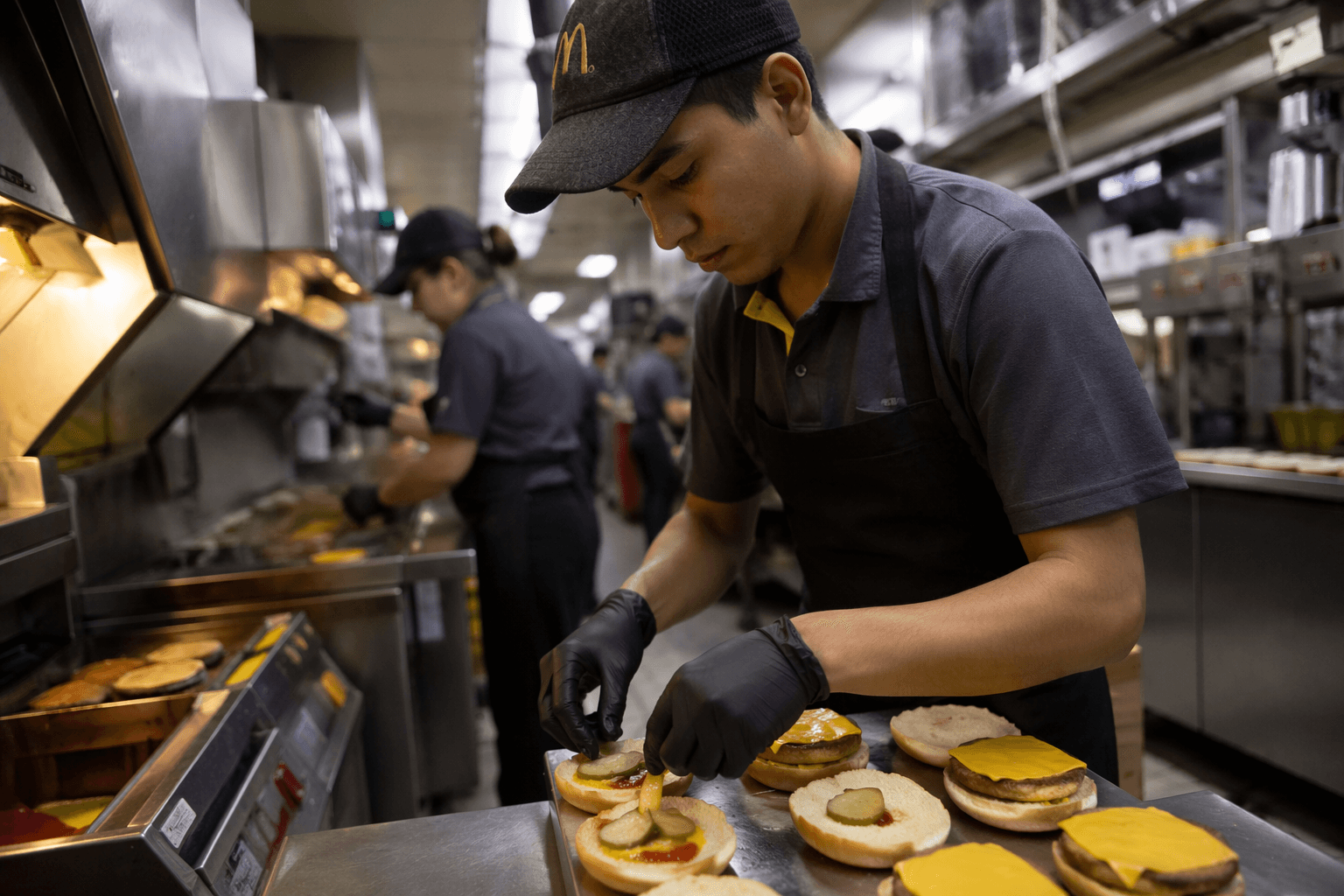
At McDonald’s, immigration policy is not an abstract debate. It can decide whether a store has enough people to cover fries, drive-thru, prep, cleaning, and closing, or whether managers keep patching shifts with overtime and burnout.
That is why the National Restaurant Association is treating immigration as an operating problem, not just a political one. Its argument is blunt: restaurants are labor-intensive businesses that need a baseline workforce to make, serve, and clean up every menu item, and after pandemic-era wage increases, many operators say labor costs have not come back down.
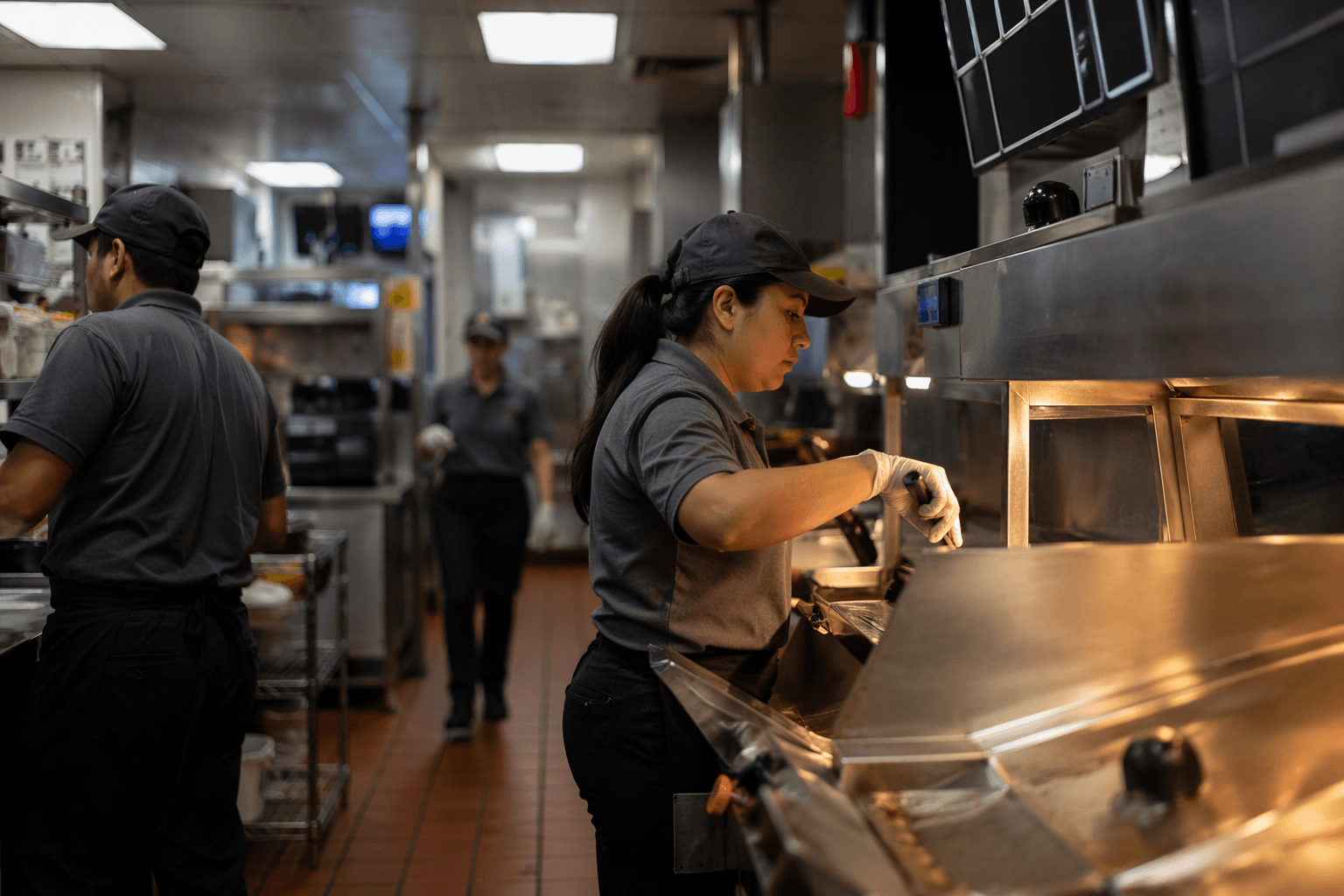
Why the staffing squeeze hits McDonald’s first
For McDonald’s franchisees, the labor problem lands at store level. McDonald’s says independent franchisees are solely responsible for employment matters in their restaurants, which means hiring, scheduling, and retention are not theoretical issues handled somewhere far away from the grill line. They are the daily responsibility of the people trying to keep the store open on time and fully staffed.
The National Restaurant Association says restaurants and foodservice provide 15.7 million jobs, or 10% of the U.S. workforce, and that more than 1 in 5 restaurant workers are immigrants. In its March 2026 demographic brief, the group said 52% of restaurant and foodservice employees are minorities, including 28% Hispanic, 12% Black or African American, and 7% Asian. That mix matters to McDonald’s because many of its franchise locations recruit from the same communities that keep the broader restaurant industry running.
The labor gap is still wide. The association says operators were challenged to fill nearly 900,000 open jobs each month in 2025, while the U.S. labor force is projected to grow by less than 4% over the next decade even as restaurants add 1.7 million jobs. In plain terms, the people available to work are not growing nearly as fast as the work itself.
What the NRA wants changed
The association’s 2026 push focuses on policies that affect the price and supply of labor: immigration enforcement, visa delays, scheduling laws, and efforts to eliminate the tipped subminimum wage. That mix tells you a lot about how operators think about staffing. They are not only worried about who can legally work, but also about how many hours they can be scheduled, how predictable those hours are, and whether they can keep a team together long enough to train it.
The NRA has said the current immigration status quo is not workable, and its own survey data suggests the pressure is already showing up in stores. At its Feb. 19, 2026 rollout, the group said nearly 1 in 4 people in today’s restaurant workforce are immigrants, operators are forecast to create more than 100,000 new jobs in 2026, and 55% of operators said their restaurant had been negatively impacted by immigration policy changes in recent months. In that same survey, 37% reported declines in sales and customer traffic.
At a May 12, 2026 policy briefing, association leaders said one in four restaurant workers are foreign born, roughly 900,000 jobs are open per month, and wage increases of 30% to 35% since 2020 still left many operators understaffed. The practical effect of that kind of squeeze is familiar to anyone who has worked a short-handed line: longer vacancy periods, reduced operating hours, and a much narrower margin for error when one person calls out.
How that changes life inside a McDonald’s restaurant
For crew members, immigration policy often shows up indirectly, but it shows up fast. When a franchisee cannot fill open positions quickly, the remaining staff absorbs the pressure through tighter schedules, more split coverage, and less room for training new hires properly. That can slow internal promotion too, because a shift manager who is constantly covering empty slots has less time to coach the next person up.
It also affects retention. In a restaurant that is always short, every mistake becomes more expensive, every missed shift more disruptive, and every training cycle longer. That is one reason the NRA’s framing matters to McDonald’s workers: it links immigration rules to the stability of the crew, not just to hiring paperwork.
The association’s case is also tied to consumer traffic. At the National Restaurant Association Show in May 2026, Texas Restaurant Association president and CEO Emily Williams Knight and NRA public policy vice president Aaron Frazier argued that immigration reform is an economic issue, not a partisan one, and warned that enforcement is raising food costs, reducing traffic in some Hispanic communities, and worsening shortages. For a McDonald’s franchisee, fewer customers and fewer available workers can become the same problem at once.
Why some franchisees already rely on immigration pathways
This is not a new conversation for McDonald’s operators. A 2023 QSR Magazine report said 72 U.S. McDonald’s franchisees, representing 250 store locations, were using the EB-3 unskilled visa program to help nearly 3,200 foreign nationals get green cards. That is a strong signal that some franchisees have already turned to immigration pathways to solve chronic crew shortages rather than waiting for the domestic labor market to magically loosen.
The National Restaurant Association is now lobbying for the bipartisan Dignity Act, which would create a legal path for Dreamers and TPS holders and a workable work visa system. For McDonald’s franchisees, the appeal is straightforward: a more predictable legal channel means fewer staffing whiplashes, fewer open requisitions that stay open for months, and less money spent constantly recruiting and retraining.
What this means as automation and wage fights continue
The labor squeeze is happening alongside two other pressures that McDonald’s crews know well: higher wages and more automation. Fight for $15 helped push restaurant pay higher in many markets, and minimum wage legislation has lifted wage floors in ways that operators still absorb unevenly. At the same time, chains keep testing kiosks, app ordering, and other automation that trims some crew tasks but does not eliminate the need for people to cook, clean, assemble, and recover when the rush hits.
That is why immigration policy is so consequential at the store level. If the labor pool tightens, automation may take on a bigger share of ordering and front-counter work, but it does not solve the whole staffing problem inside a McDonald’s kitchen. A restaurant still needs enough people to keep shifts stable, train new hires, and move strong workers into better jobs without burning out the team around them.
For McDonald’s franchisees, the message from the NRA’s 2026 push is clear: immigration policy is now part of the labor math. For crew members, it can determine whether a store runs with a steady team or limps through the week with empty slots, overtime, and a promotion ladder that moves too slowly.
This article was produced by Prism’s automated news system from verified source data, official records, and press releases, then run through automated quality and moderation checks before publishing. The system is built and supervised by the people who set the standards it runs under. Read our full AI policy.
Know something we missed? Have a correction or additional information?
Submit a Tip