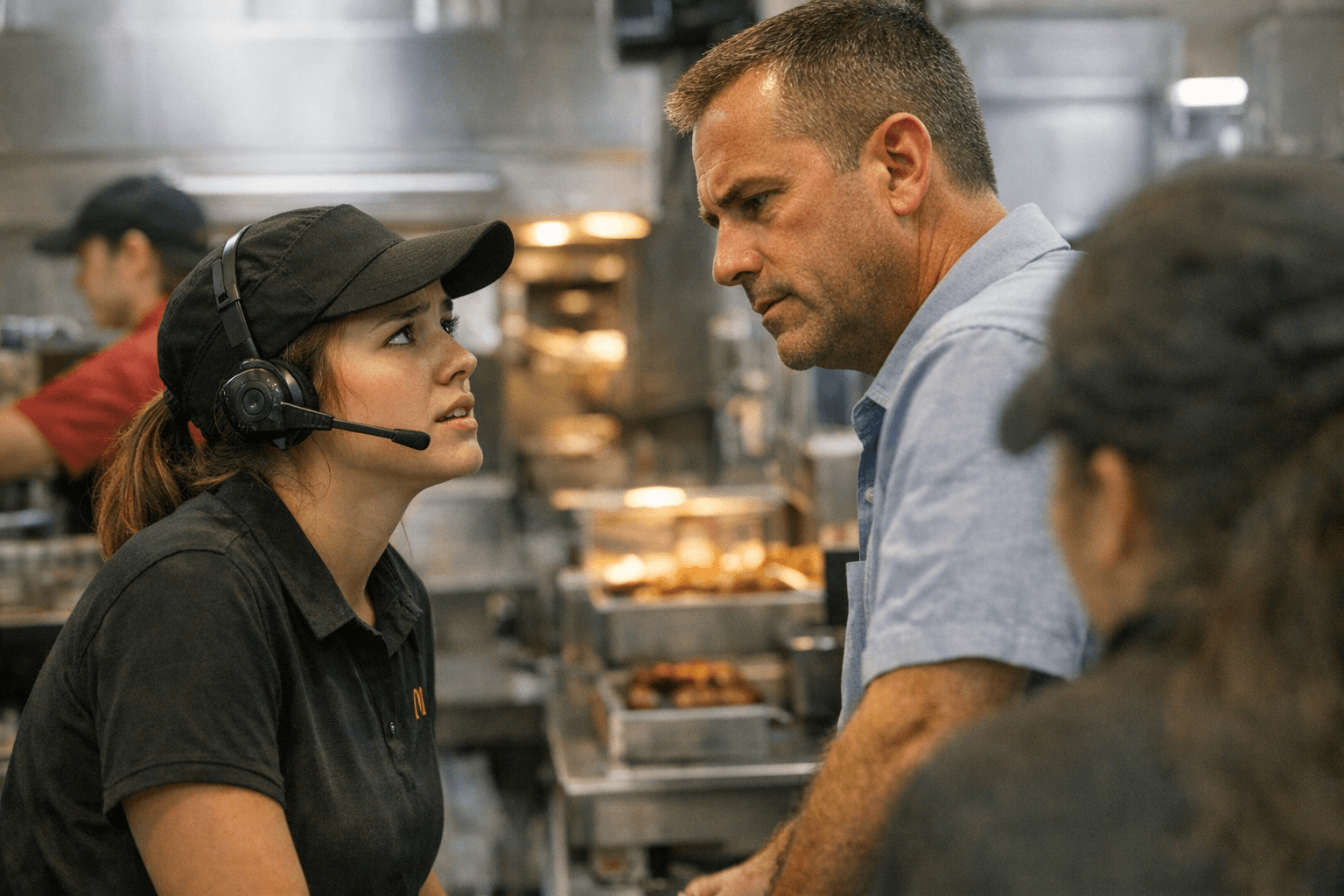
McDonald's Healthy Menu Options Failed Because Customers Chose Burgers Anyway
McDonald's spent years adding salads and apple dippers to menus, then watched customers order burgers anyway. A psychologist has a blunt explanation for why.
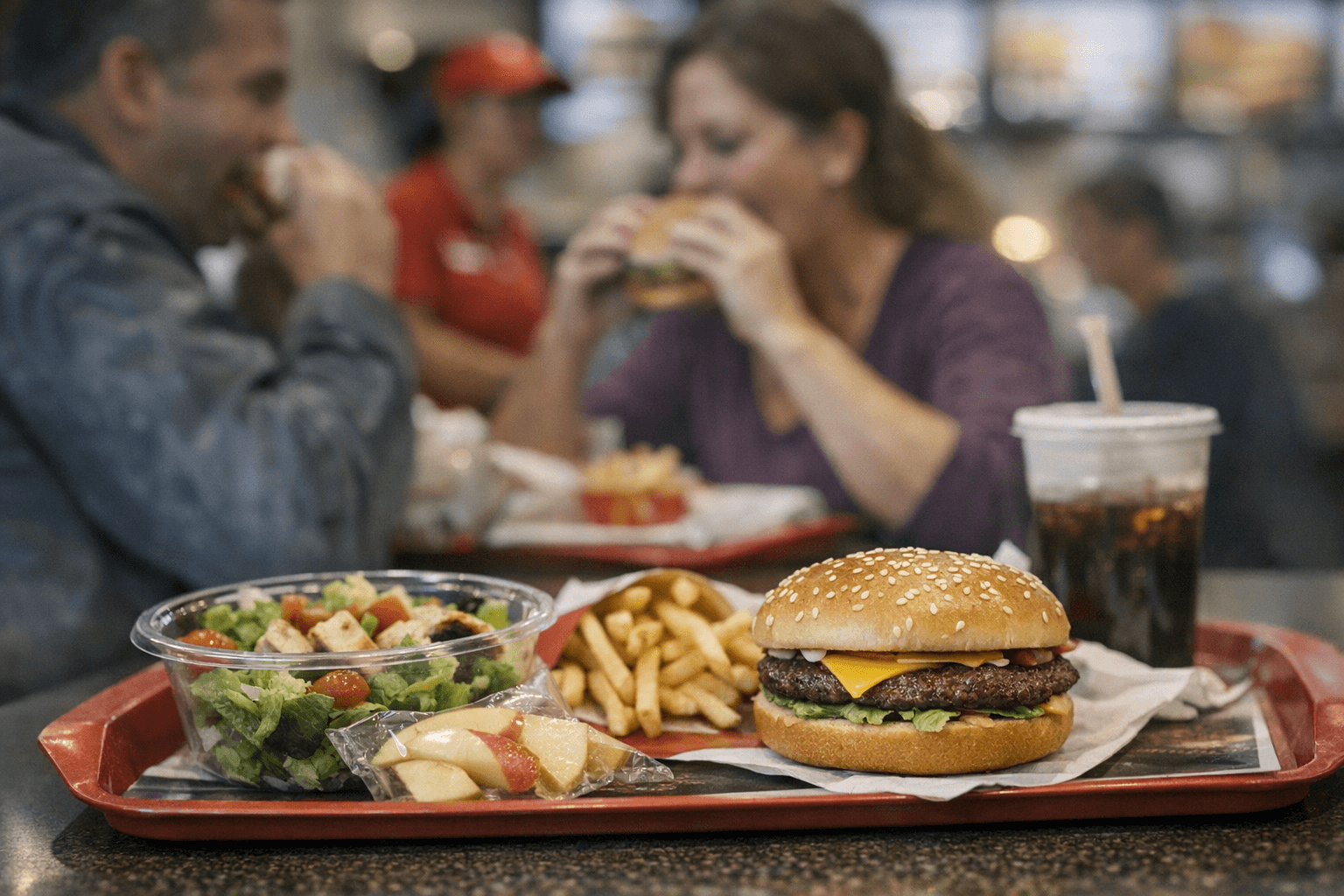
McDonald's ran one of the most revealing natural experiments in modern consumer behavior, and the results were embarrassing, not for the company, but for the public that demanded the changes in the first place. For years, customers complained loudly about the chain's unhealthy menu. McDonald's listened, added salads and apple dippers, and watched almost nobody buy them. The gap between what people say they want and what they actually order turned out to be enormous.
The salad nobody bought
In the 2000s, bowing to public outrage over rising obesity, McDonald's started offering healthier options like salads and apple dippers. The move was a direct response to sustained cultural pressure: critics, health advocates, and documentary filmmakers had spent years arguing the chain was poisoning its customers. McDonald's made the investment, redesigned menu boards, and waited.
The result was predictable. After all the fuss, almost nobody bought them.
The healthy options didn't quietly fade. They were kept on the menu for years before being killed off entirely during COVID-19, ostensibly to speed up drive-through operations. They were never brought back. What's notable is that the pandemic simply gave the company a clean operational justification for removing items that had already proven themselves commercial failures. The market had already rendered its verdict long before the menus were simplified.
Why people say one thing and order another
Psychologist Christopher Ferguson offers a direct explanation for the disconnect. Consumers publicly virtue-signal health but privately choose burgers for taste and value. The pattern isn't unique to fast food, but McDonald's scale makes it unusually visible. When a choice is social or public, people gravitate toward what signals the values they want to project. When a choice is private, made at a counter or a drive-through window, the calculus shifts entirely to what actually satisfies.
This dynamic, Ferguson argues, highlights hypocrisy in food policy debates more broadly. The public backlash against McDonald's was real and loud, but it was never really a purchasing signal. It was a social signal. People wanted McDonald's to offer a salad the same way they wanted a gym membership in January: the intention was sincere, but the behavior never followed.
The Supersize Me factor
No discussion of McDonald's and public health pressure is complete without accounting for Morgan Spurlock's 2004 documentary Supersize Me, which became a cultural flashpoint. After the film's release, McDonald's dropped its Supersize options. The chain took the reputational hit seriously enough to act on it.
But the film's credibility has since come under significant scrutiny. Spurlock never released his eating logs. Other experimenters have reportedly lost weight eating McDonald's exclusively for extended periods. And revelations about Spurlock's history of abusing alcohol have, as one analysis put it, largely torpedoed any causal claims in the film. If Spurlock's physical deterioration during the experiment was influenced by factors beyond McDonald's food, the documentary's central premise becomes far harder to defend.
McDonald's, for its part, is doing just fine financially despite all the criticism. That's not to say the public relations issues haven't sometimes stung, but the company is now riding high while Supersize Me has become the source of doubt rather than settled indictment.
The price reality nobody wants to discuss
There's a harder argument buried beneath the virtue-signaling explanation, one that doesn't flatter either side of the debate. People who call for McDonald's to default to healthier options tend to overlook what that would cost the people who actually depend on the chain.
Healthier fast food already exists. Cava, Sweetgreen, and Panera all offer menus with more nutritional value than a Big Mac. They're also a lot more expensive than McDonald's. The economic gap isn't marginal. For a significant percentage of the population, the price difference between a McDonald's meal and a Sweetgreen bowl isn't a lifestyle choice; it's a budget constraint. Fixing the problem by making McDonald's food more nutritious by default would likely price out the very customers who rely on it most.
This is the uncomfortable math that tends to get lost in food policy debates. The loudest voices calling for change are often not the customers most affected by the status quo. And the customers who are most affected have already voted with their wallets, consistently and overwhelmingly, for the burger.
What the failure actually means
The collapse of McDonald's healthy menu experiment tells a more honest story about consumer behavior than any survey or focus group could. When given a genuine choice, with the healthier options right there on the menu at comparable prices, customers chose differently than they said they would. Not occasionally. Consistently enough that the chain eventually stopped offering the alternatives entirely.
That outcome should inform how food policy is discussed going forward. Stated preferences and purchasing behavior are not the same data set. The public outrage that drove McDonald's to add salads was genuine, but it reflected what people wished they wanted, not what they were willing to pay for and eat. Until that gap closes, the burger will keep winning.
Know something we missed? Have a correction or additional information?
Submit a Tip