McDonald’s jobs split across corporate and franchise systems for employees
At McDonald’s, the hiring portal often tells you who really employs you. The split between corporate and franchise systems shapes everything from applications to accommodations to HR help.
One brand, several employers
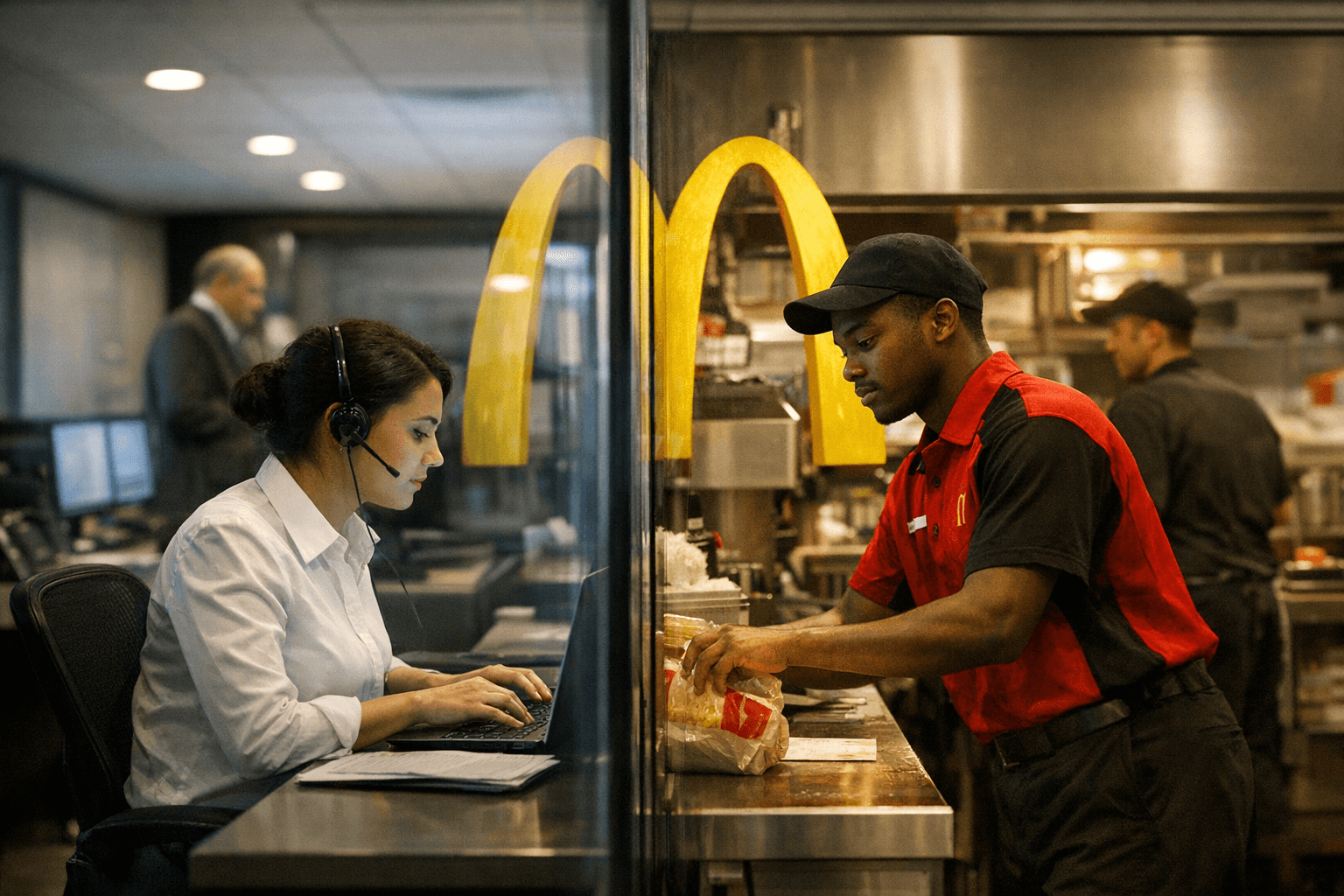
At McDonald’s, the first question is not just whether there is a job. It is which McDonald’s is hiring, and which system will actually handle your paperwork, pay questions, and workplace problems. That split matters because the company says about 95% of its restaurants worldwide are owned and operated by independent local business owners, while more than 150,000 company employees work in corporate offices and company-owned restaurants.
That is why two people in the same city can run into completely different internal systems. A crew member at a franchised store may be dealing with a franchisee’s process, while someone in a company-owned restaurant or corporate office is moving through McDonald’s own channels. For workers trying to apply, ask for an accommodation, or figure out where an HR issue belongs, the brand name is often the least important part of the equation.
The application path depends on who owns the restaurant
McDonald’s public careers pages make the split plain. The company invites applicants to look for work in restaurants or in global corporate offices, and its global jobs site includes a profile login area, a “View My Profile” function, and a country selector. That structure is a clue that there is no single universal hiring lane across the system.
For U.S. restaurant applicants, McDonald’s says candidates should apply through the McDonald’s Careers website. Current employees are also directed there for answers. But if the job is in a corporate-owned restaurant, the support path can be different again: the company provides a specific accommodation contact, mcdhrbenefits@us.mcd.com, which shows how closely support is tied to ownership type.
That distinction can become especially important when a worker needs help fast. An applicant may assume a restaurant manager can fix a login problem, or a crew member may think corporate HR can step in at a franchised location. In practice, the right answer depends on who owns the store, what kind of employee you are, and which portal your job was routed through.
Franchise workers are tied to local business decisions
McDonald’s franchise model is built around a simple message: franchisees are “in business for yourself, but not by yourself.” The company says it supports that model with training, guidance, and systemwide tools, but the actual hiring and workplace decisions in many places sit closer to the restaurant than to the brand headquarters.
That is especially true in international markets. McDonald’s says franchise selection decisions in many countries are made locally by management in that country, which means a candidate’s experience can vary sharply by market. The same golden arches may look identical from the parking lot, but the legal and operational chain of command can be very different once you start applying or asking for help.
For workers, that means the path to a job offer can also shape the path to advancement, discipline, scheduling, and HR support. A franchise employee may not use the same portal as a company employee, and a manager in one system may have no authority in another. That is not a minor administrative detail. It is the difference between knowing who can fix a problem and losing days chasing the wrong office.
Why the split creates confusion on the ground
The company’s own scale helps explain the mess. McDonald’s says it operates more than 44,000 locations in more than 100 countries, with more than 2 million people working in franchised restaurants and over 150,000 company employees in corporate offices and company-owned restaurants. A labor system that large cannot function like one employer, even if the logo is the same above the door.
That reality shows up in everyday workplace issues. A crew member may need help with hiring paperwork, an accommodation request, a login reset, or a question about benefits and not know whether to ask the restaurant manager, the franchise office, or McDonald’s corporate support. Managers also sit in the middle of that split, often navigating separate portals for their own use while trying to help hourly workers who may not even be on the same system.
The result is a familiar kind of workplace confusion: employees are told they work for McDonald’s, but the support channels may belong to a franchisee, a corporate restaurant, or a corporate office depending on the location and role. For workers, that can delay onboarding and make it harder to get answers. For managers, it can create a paper trail that is hard to unwind when someone falls through the cracks.
Standards are centralized, but enforcement is not
McDonald’s has tried to impose systemwide expectations on top of this decentralized structure. In 2021, the company announced global standards for safe, respectful workplaces covering both company-owned and franchised restaurants, with implementation beginning in January 2022. In other words, McDonald’s recognizes that the brand’s public reputation depends on more than menu consistency.
But centralized standards do not erase the reality of local ownership. McDonald’s says it prioritizes safety for corporate staff, employees in corporate-owned restaurants, and customers, while also supporting franchisees in fostering similar environments for their employees. That wording matters because it signals where corporate influence ends and franchise responsibility begins.
For workers, the practical takeaway is that a standard on paper is not the same as a reliable route to relief. If the store is franchised, the first line of response may still sit with the owner-operator. If the store is corporate-owned, the support chain may go through company channels. The system can promise consistency while still leaving employees with different paths to use when something goes wrong.
Career tools exist, but they also reflect the divide
McDonald’s has tried to make the system feel more navigable with career tools. The company launched an app to help restaurant employees explore careers, pairing education benefits with real-time career advising through InsideTrack advisors and support from the Council for Adult and Experiential Learning, or CAEL. That is more than a recruiting feature. It is a signal that McDonald’s knows many restaurant workers want a path upward, not just a shift schedule.
The corporate careers pages also feature Sam, a virtual recruiting assistant that helps job seekers search for openings and answer questions along the way. Those tools can make the process easier, but they also underline how fragmented the system is. Workers are not entering a single company-wide pipeline. They are entering a map of separate routes, each with its own logic.
That matters in a workforce where McDonald’s said it and its franchisees expected to hire up to 375,000 employees in U.S. restaurants over the summer, and where the company says 1 in 8 Americans have worked at a McDonald’s restaurant. This is not a niche hiring system. It is one of the largest entry-level labor gateways in the country, which makes clarity about ownership and support more than an internal housekeeping issue.
What workers should take from the split
The biggest lesson is simple: if you are applying, asking for help, or trying to solve an HR issue at McDonald’s, identify the ownership structure first. A company-owned restaurant, a franchised location, and a corporate office job do not all use the same people, portals, or support routes. The brand may be unified; the employment relationship is not.
That gap between logo and employer is the real story. McDonald’s reported more than $139 billion in systemwide sales for full-year 2025, which shows how much labor and franchise coordination sits behind the company’s public image. For workers, the important question is not just who serves the fries. It is who answers when the login fails, the application stalls, or the workplace problem needs a human response.
This article was produced by Prism’s automated news system from verified source data, official records, and press releases, then run through automated quality and moderation checks before publishing. The system is built and supervised by the people who set the standards it runs under. Read our full AI policy.
Did this article answer your question?