McDonald’s labor challenges vary widely by metro market, BLS says
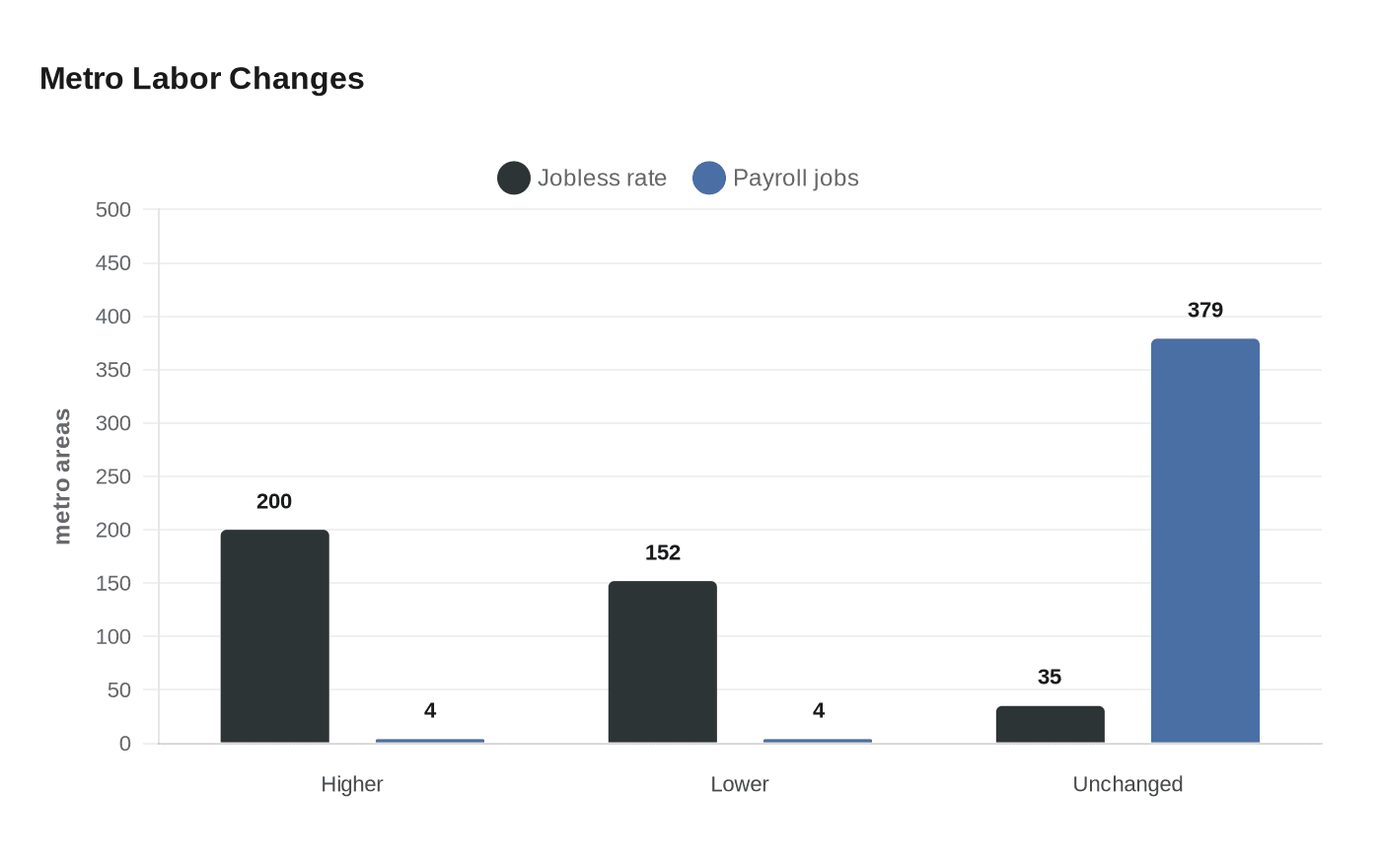
The BLS found jobless rates rose in 200 metro areas, a split that can make McDonald’s staffing tight in one city and easier in another.

McDonald’s does not hire in one labor market. It hires in 387 of them, and the Bureau of Labor Statistics’ latest metro release showed just how differently those markets are moving.
In April, jobless rates were higher than a year earlier in 200 of the 387 metropolitan areas, lower in 152 and unchanged in 35. Nonfarm payroll employment increased over the year in only 4 metro areas, decreased in 4 and was essentially unchanged in 379. The national unemployment rate was 4.0%, not seasonally adjusted, little changed from a year earlier, but that national figure masked a far messier local picture.
That matters for a brand like McDonald’s, where about 95% of U.S. restaurants are independently owned and operated by local business owners. A franchisee trying to staff a dining room, keep a drive-thru moving and cover a call-off on a Saturday night feels labor conditions city by city, not through a national average. In a tighter metro, managers may have to work harder to keep crew members from leaving for another employer. In a softer market, the applicant pool may be larger, but so is competition from other restaurants, retailers and warehouses chasing the same workers.
The BLS metro release is built on the Local Area Unemployment Statistics program and covers 387 metropolitan statistical areas, with unemployment data for where people live and payroll counts from the Current Employment Statistics survey. That mix is useful for operators because it shows whether a market is adding jobs, flat or cooling enough to change the way a restaurant builds shifts and pays to keep people.
McDonald’s has been talking about that reality in its own investor messaging. In its 2025 annual letter, the company said it was operating amid “tighter labor markets.” It also said in May 2025 that it and its franchisees expected to hire up to 375,000 restaurant employees across the U.S. that summer, while expanding the U.S. footprint by 900 restaurants by 2027. By year-end 2025, McDonald’s had 45,356 systemwide restaurants globally, including 13,706 in the United States.
The company has tried to soften those pressures with Archways to Opportunity, saying it had invested more than $240 million since 2015 and helped more than 90,000 crew members earn diplomas, get tuition assistance, learn English or access education and career advising. For managers and crew alike, the BLS data is the reminder that the same McDonald’s playbook can look very different depending on whether the local labor market is tight, loose or somewhere in between.
This article was produced by Prism’s automated news system from verified source data, official records, and press releases, then run through automated quality and moderation checks before publishing. The system is built and supervised by the people who set the standards it runs under. Read our full AI policy.
Know something we missed? Have a correction or additional information?
Submit a Tip