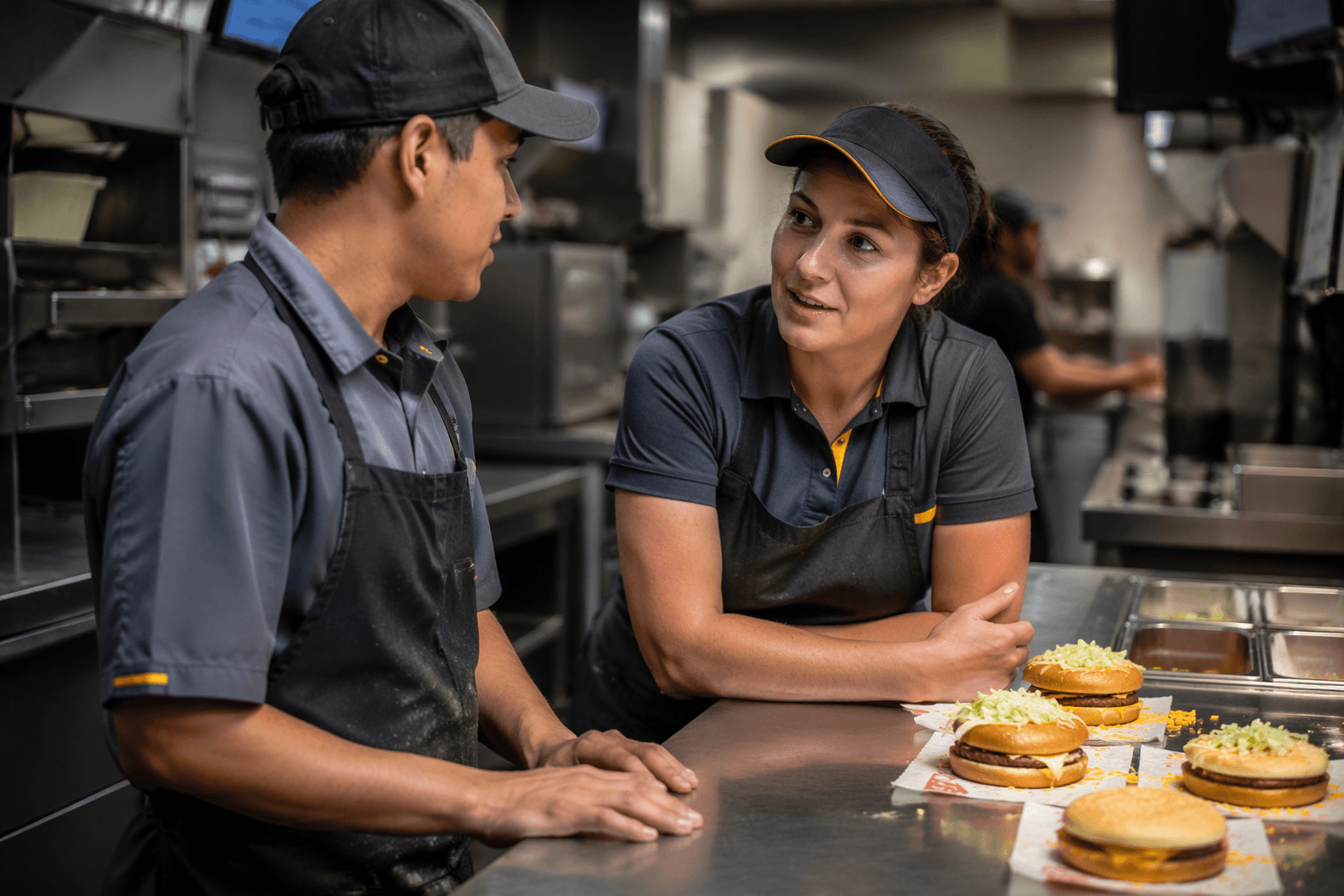
McDonald’s ties inclusion to training, benefits and better restaurant performance
McDonald’s says inclusion should change how crews are trained, coached and promoted. The floor test is simple: do workers feel respect in schedules, feedback and conflict handling?
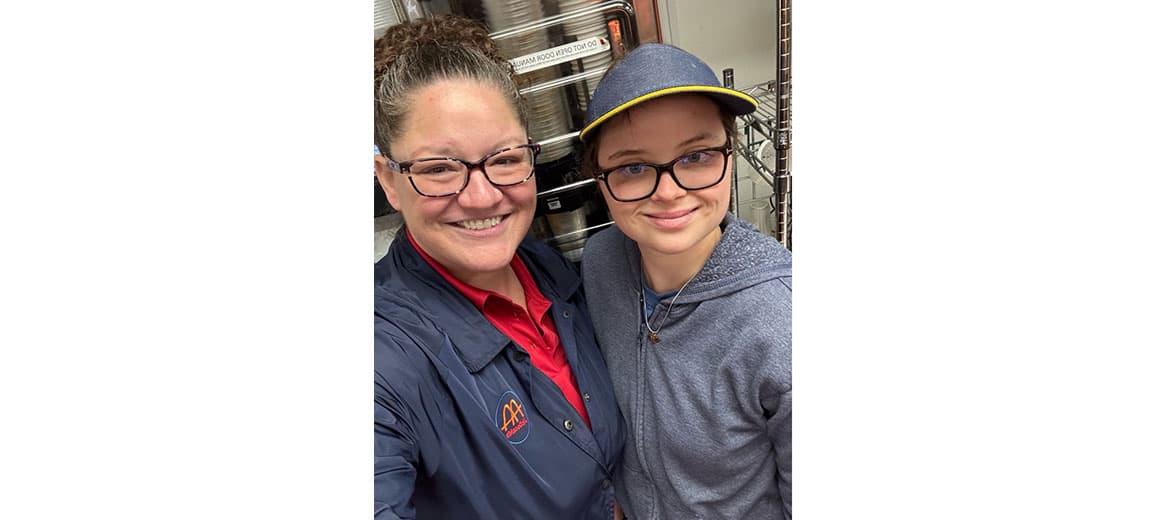
McDonald’s is trying to turn inclusion from a slogan into a restaurant-level standard, and the real test is whether crews feel it in training, scheduling and the way managers handle conflict. The company says its Golden Rule, treating everyone with dignity, fairness and respect, should shape everything from job descriptions to workplace safety. For workers, that makes inclusion a question of daily behavior, not corporate language.
What McDonald’s says inclusion is supposed to do
At the center of McDonald’s message is a simple claim: inclusion is not just about who gets hired, but about how the business runs. The company says its approach is grounded in the Golden Rule and applies to customers, employees, Franchisees and suppliers. It also says inclusion is a key driver of business success, which is the clearest sign that this is meant to be an operating principle, not a side program.
That matters because the company links inclusion to the way restaurants are managed. McDonald’s says its People Brand Standards are designed to promote safe, respectful and inclusive workplaces that protect the physical and psychological safety of all restaurant employees. In practice, that means the company is setting an expectation that managers should do more than keep the line moving. They are supposed to create a store culture where people can learn, speak up and work without being worn down by humiliation or favoritism.
How workers would recognize it on the floor
The most useful way to read McDonald’s inclusion language is to ask what a crew member would actually notice on a busy shift. If the policy is working, it should show up in how a manager trains a new hire, how a shift leader explains a station, how feedback is delivered after a mistake and how a disagreement is handled before it spreads across the crew. The company says managers should adapt to team members’ needs and learning styles, which is a direct challenge to the one-size-fits-all style that often leaves newer workers behind.
That is especially important in a chain where many employees are new to the labor force or are balancing school, family obligations or multiple jobs. A restaurant that takes inclusion seriously should be easier to learn in, safer to work in and more predictable under pressure. Workers would recognize that in small things: a trainer who gives a second explanation without sarcasm, a supervisor who handles conflict without picking sides based on seniority, and a schedule that does not punish people for asking basic questions or needing clarity.
The accountability gap between the message and the restaurant
The hard part is that culture promises can sound strong on a corporate page and weak on the floor. McDonald’s says its Global Brand Standards for safe, respectful and inclusive workplaces were implemented on April 14, 2021, and that all 39,000 restaurants were to undergo assessments by January 2022. That kind of system suggests the company knows culture has to be measured, not just announced.
Still, the gap between policy and practice is where workers usually judge a company. Inclusion language is easy to claim, but crew members feel the truth in scheduling fairness, who gets the worst stations, whether complaints are taken seriously and whether managers correct bad behavior from favorites or from high performers. For franchise employees in particular, the question is whether a brand standard has real force inside a store, or whether local habits still decide how people are treated.
That is why McDonald’s inclusion pitch is more than a brand statement. It becomes a workplace benchmark. If the Golden Rule is real, a crew member should be able to point to concrete changes, not just better phrasing. If the store still runs on intimidation, arbitrary scheduling or disrespect from supervisors, then the culture promise is failing where it matters most.
Why the company says inclusion is tied to performance
McDonald’s does not present inclusion as a moral add-on. It says inclusion is part of a broader Jobs, Inclusion & Empowerment framework, and it explicitly ties that framework to business results. The company’s logic is that teams perform better when workers feel respected and can learn in ways that work for them. That is a useful frame for restaurants, where turnover is high, training time is short and a bad manager can make a shift much harder than it needs to be.
The company’s own metrics are meant to support that argument. McDonald’s says its Inclusion Index measures whether employees feel free to offer opinions and have opportunities to advance. In the most recent employee Pulse Survey, McDonald’s said 84% of employees felt it is an environment that allows them to be themselves, and 78% scored the company positively on the Inclusion Index overall. Those numbers do not settle the question for workers on the floor, but they show that the company is trying to quantify whether culture reaches beyond compliance.
The scale of what is at stake
This is not a small employer with a narrow footprint. McDonald’s said it had over two million employees and crew in 2024, and global systemwide sales exceeded $130 billion. It also said company employees totaled over 150,000 as of year-end 2024, with about 70% based outside the U.S. That scale makes any inclusion policy more consequential, because a small change in training or supervision touches an enormous workforce.
The company says it has already posted some concrete gains. McDonald’s said it achieved gender pay equity at all levels and in every market, and it met its U.S. supplier diversity goal of 25% diverse-owned supplier spend three years ahead of schedule. It also says it is using AI tools to create gender-neutral, inclusive job descriptions and reduce bias in hiring. For workers, that matters because hiring language shapes who applies, who feels welcome and who gets through the door with fewer barriers.
Why the 2025 shift matters to workers and franchisees
There is also a more complicated backdrop. In January 2025, McDonald’s said it would retire aspirational representation goals and end some supplier-diversity-related efforts, even after saying it had reached its U.S. supplier spending target ahead of schedule. That created a sharp contrast: the company kept its inclusion language, but trimmed some of the measurable diversity commitments that had helped define it.
For workers and franchise operators, that shift raises a practical question. Is inclusion still being pushed through the business in the same way, or is it becoming more of a broad principle than a set of visible goals? That tension matters because restaurant culture is built from what managers are measured on. If the company wants inclusion to shape daily behavior, it has to show up in hiring, training, feedback and advancement, not just in corporate messaging.
In the end, McDonald’s is asking workers to judge inclusion by what happens in the restaurant, not on the website. The strongest version of the Golden Rule will be the one crews can feel on a rough shift: clearer training, fairer treatment, better conflict handling and more respect from supervisors when the pressure is on.
This article was produced by Prism’s automated news system from verified source data, official records, and press releases, then run through automated quality and moderation checks before publishing. The system is built and supervised by the people who set the standards it runs under. Read our full AI policy.
Know something we missed? Have a correction or additional information?
Submit a Tip