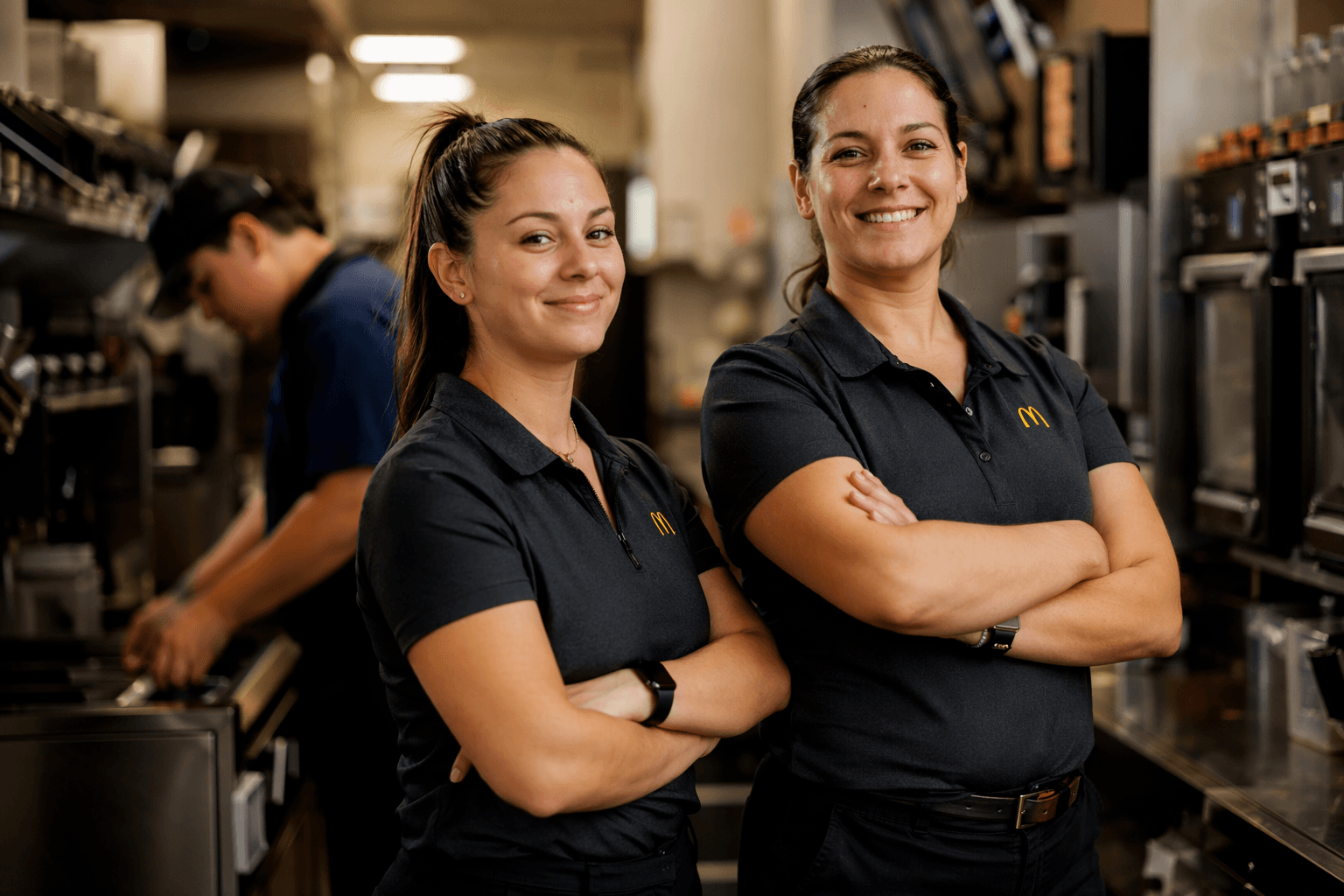
McDonald's values page puts employees, franchisees and suppliers first
McDonald’s says its values are about feel-good service, but the real test is whether store staffing, training and franchise relations make that promise real.
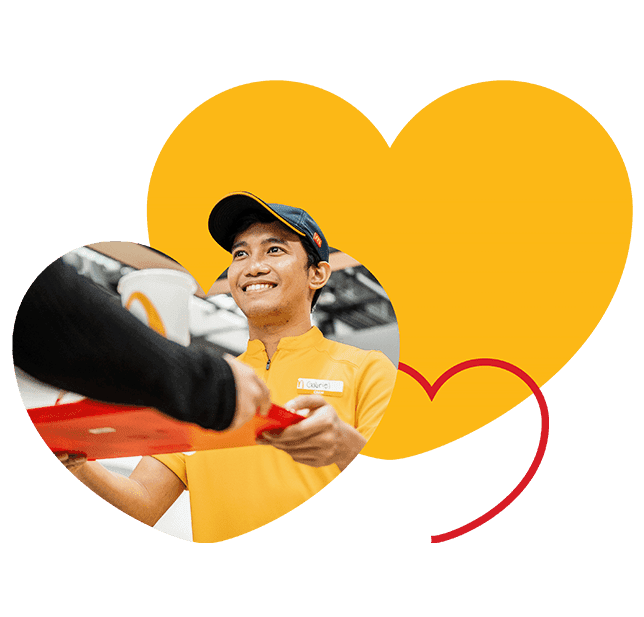
McDonald’s values page is not just brand polish. It is a window into how the company wants restaurants to feel on the floor: welcoming, dependable, lighthearted, and built to turn a quick meal into a small “moment of feel-good.” For crew members, shift leaders, franchisees, and managers, that language matters because it sets the standard for what a busy restaurant is supposed to deliver even when the line is long, the lobby is full, and every second counts.
What the values page is really saying
The company’s current framing puts five core values at the center of the business: Community, Inclusion, Family, Service and Integrity. It also says it wants employees to feel “welcomed, valued, and part of the McDonald’s community,” and that its broader purpose is “to feed and foster communities.” That is more than a mission statement. It is McDonald’s own explanation for why a restaurant should feel fair, steady, and human even in a high-speed system.
For workers, the practical meaning is simple: the brand is promising that service speed should not come at the expense of respect. When a restaurant is living up to the values page, that shows up in how managers schedule, how training is handled, how new hires are coached, and how people are treated during rushes. In the real world of fast food, where minimum wage fights, staffing shortages, and burnout have pushed labor conditions into the spotlight, that gap between promise and practice is exactly what employees notice first.
Why the three-legged stool matters on the shift
McDonald’s says the company, franchisees, and suppliers are part of a “three-legged stool,” and that the model is meant to create a mutually beneficial relationship. The company also says the wider “System” includes company employees, franchisees and their employees, suppliers, and customers. That structure is more than corporate language. It shapes daily work in the kitchen, at the drive thru, and in back-of-house coordination.
If the stool is balanced, store operations tend to be steadier. Franchise owners can plan with more confidence, general managers face fewer surprises, and supply chain issues are less likely to hit the floor without warning. If it is not balanced, the people closest to customers usually feel the strain first: missing product, uneven staffing, late deliveries, or a mismatch between labor expectations and the volume walking through the door. That is why McDonald’s emphasis on partnership is important to employees who have lived through the reality of thin staffing and nonstop speed.
The tension is especially familiar in a franchise system. Corporate may talk about values and consistency, but local operators carry the day-to-day pressure of labor costs, scheduling, and execution. That is where the brand’s ideals meet the grind of restaurant math.
Comfort, speed and choice, all at once
McDonald’s says it wants to make “delicious feel-good moments easy for everyone” through convenient locations, extended hours, affordable prices, speed, choice, and personalization. That promise explains a lot about the chain’s culture. A McDonald’s restaurant is expected to be quick, predictable, and familiar, yet still flexible enough to feel personal to the customer.
For workers, that can be a double-edged sword. Convenience sells the concept, but it also drives the pace. Extended hours mean more split shifts, late closings, and tighter coverage. Affordable prices matter to customers in an inflationary economy, but they can also sharpen pressure on labor and staffing inside the restaurant. Choice and personalization sound customer-friendly, yet they can add complexity for the crew member trying to keep orders moving at the register, counter, or drive thru.
This is where the company’s “lighthearted, unpretentious, welcoming, dependable” personality comes into contact with labor reality. A pleasant atmosphere is a lot easier to maintain when the staffing level matches the rush. When it does not, managers are left asking the same workers to deliver speed, warmth, and accuracy all at once.
The workplace promise behind the branding
McDonald’s says its People Brand Standards are meant to promote safe, respectful and inclusive workplaces across all McDonald’s restaurants. That matters because the brand is not merely selling a meal. It is also defining what a job at McDonald’s should be. For crew members, that can mean clearer expectations around treatment, coaching, and dignity on the clock. For managers, it means the restaurant is supposed to be more than a production line.
That ideal has real resonance in a labor market shaped by Fight for $15, minimum wage campaigns, and continuing debates over whether fast-food jobs can be good jobs. McDonald’s has long sat at the center of those debates, and the company’s values language now tries to answer them with a promise of respect, inclusion, and quality jobs. The test is whether that promise survives the busiest part of the day, when customer demand is high and patience is low.
The arrival of AI tools and automation has only raised the stakes. As restaurants adopt more self-service, digital ordering, and automated support, the company’s values page becomes a reminder that efficiency should not erase the people who still make the experience work. Crew members increasingly have to manage a restaurant where technology handles some tasks, but human labor still absorbs the pressure when systems falter or demand spikes.
Community pride is part of the job
McDonald’s ties its values directly to Ronald McDonald House Charities, which it says it has supported since 1974. RMHC says its mission is to support family housing and resources while a child receives treatment. McDonald’s says donations, volunteering, and advocacy helped RMHC receive over $220 million last year alone, with support from franchisees and customers as well as the company itself.
For many employees, that community work is a source of pride because it gives the brand a purpose beyond burgers and fries. It also turns the “three-legged stool” into something tangible. When company staff, operators, suppliers, crew members, and customers all contribute to the same cause, the values page starts to look less like corporate language and more like a system-wide expectation that McDonald’s should give something back locally.
McDonald’s has also used formal recognition to reinforce that message. In 2021, the company publicized a Three-legged Stool Award honoring employees, franchisees and suppliers who supported RMHC locally, regionally, or nationally. That matters because it shows the values language is not just decorative. It is tied to awards, philanthropy, and the behaviors the company says it wants repeated across the chain.
How the company got here
The values page also sits inside a longer company story. McDonald’s says Ray Kroc opened the first McDonald’s restaurant for McDonald’s System, Inc. in Des Plaines, Illinois, on April 15, 1955, and that the company acquired the rights to the brothers’ business in 1961 for $2.7 million. It says the first Drive Thru was pioneered in the early 1970s, which helps explain why convenience has been so central to the brand for decades.
That history matters because it shows the company has always been built around scale, speed, and repeatability. The modern language of community and inclusion is layered on top of an older operating model that still rewards efficiency and consistency above almost everything else. The challenge for today’s restaurants is to make those values visible in the actual labor experience, not just the customer promise.
McDonald’s latest annual report puts the pressure in context. The company says persistent inflation, tighter labor markets, and broader economic uncertainty, especially for lower-income households, shaped the business and reinforced the importance of value, familiarity, and trust. That is the real backdrop to the values page. The company is not only asking customers to trust the brand, but asking workers and franchisees to make that trust believable every shift.
This article was produced by Prism’s automated news system from verified source data, official records, and press releases, then run through automated quality and moderation checks before publishing. The system is built and supervised by the people who set the standards it runs under. Read our full AI policy.
Know something we missed? Have a correction or additional information?
Submit a Tip