monday.com blog frames CRM as a customer-system discipline
monday.com is treating CRM as a system design problem, not a software checkbox, and the real warning is that dirty data can quietly wreck forecasting and pipeline health.
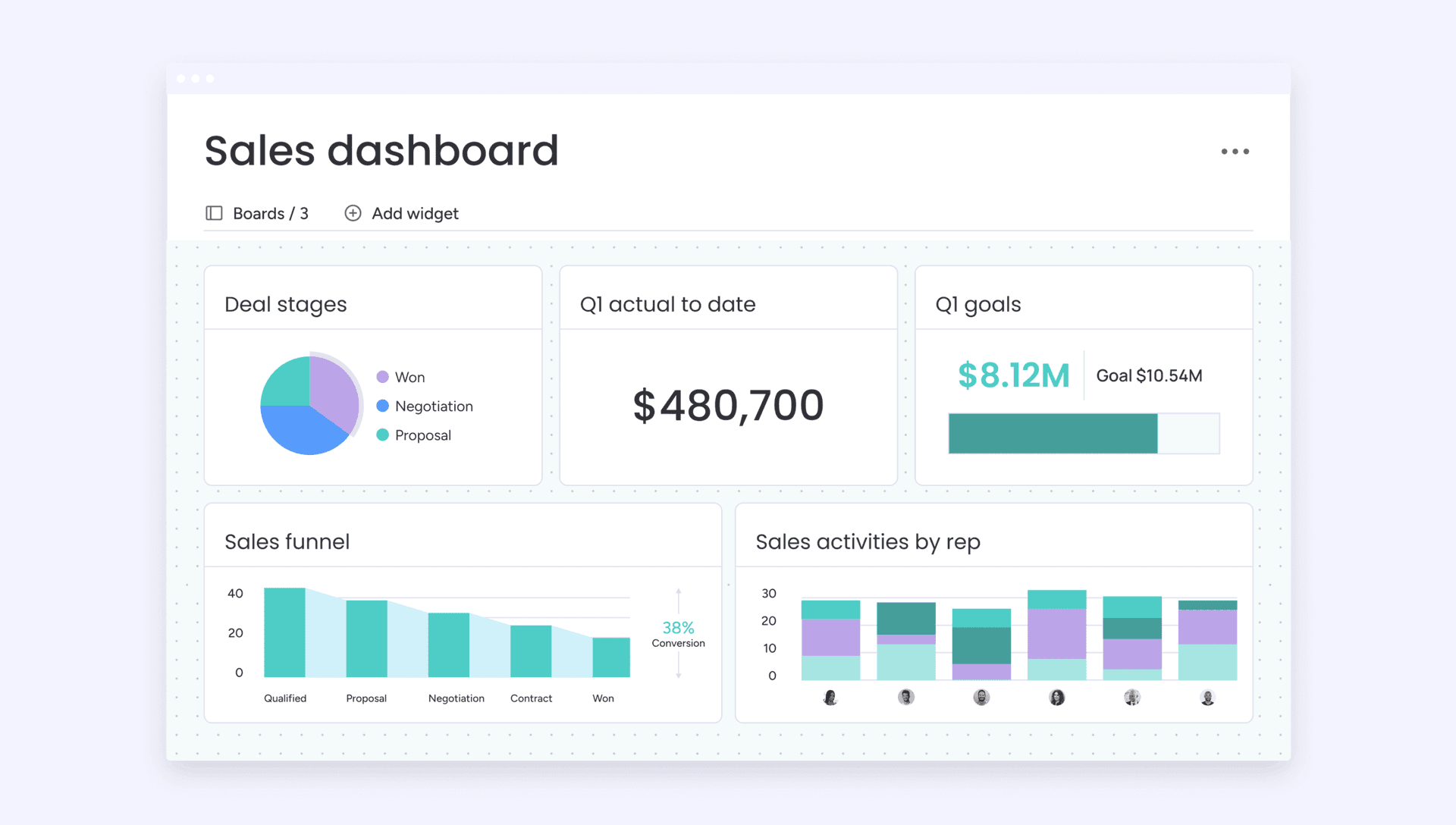
monday.com’s CRM blog makes a simple but useful argument: revenue teams do not lose deals because they lack fields and tabs, they lose deals because customer information, follow-up, and workflow are fragmented. That framing matters inside monday.com because it shifts CRM from back-office administration to a discipline that touches pipeline, forecasting, product design, and the daily work of sales, success, and engineering teams.
CRM as an operating system, not a database
The company says its CRM and sales content is built around CRM best practices, latest trends, and effective strategies to help teams improve every stage of the customer journey. That language is doing more work than it first appears to. It treats CRM as the connective tissue between account management, retention, deal tracking, and AI-assisted churn reduction, rather than as a place to log contacts after the fact.
For sales teams, that means CRM quality is not an abstract admin issue. If a field is wrong, incomplete, or stale, the team does not just have a messy record, it has a weaker forecast, a less reliable renewal motion, and a harder time seeing where opportunities are stalling. For product managers and engineers, the implication is just as sharp: features like automations, integrations, and permissions matter because they make the system trustworthy enough for real operating decisions.
Why data quality is the real revenue issue
monday.com’s CRM data management guidance is blunt about the risk: outdated contact details and missing opportunity amounts can make forecasting impossible. That is the kind of line that should get attention from anyone working on revenue operations, because it reframes dirty data from a hygiene problem into a pipeline problem.
The deeper point is that bad data is rarely isolated. A fragmented data foundation means the sales team sees one version of the customer, marketing sees another, and customer success is chasing a third. In that environment, even strong reps lose time reconciling records, managers lose confidence in pipeline calls, and leadership starts making decisions from partial truth. The blog’s emphasis on messy spreadsheets versus a high-performing revenue engine captures the practical divide: one creates friction, the other creates visibility.
A simple test for the week is worth running: pick one live deal, one renewal, and one expansion account, then trace whether the opportunity amount, key contacts, last meaningful touch, and next step are all current in the CRM. If any of those pieces live in Slack, email, or a rep’s memory instead of the system, that gap is already costing speed and confidence.
What good CRM practice is supposed to unlock
monday.com argues that CRM value depends less on the software itself than on how well teams set up, maintain, and integrate it into daily workflows. That distinction matters because plenty of companies buy systems they never fully operationalize. The result is usually the same: adoption lags, teams work around the tool, and the customer journey fractures.
When CRM is implemented well, monday.com says it can break down silos, streamline operations, and create more personalized customer experiences. Those are not just feel-good outcomes. They connect directly to higher conversion rates, shorter sales cycles, and stronger customer retention, which is the chain every revenue team cares about. In practice, that means the system has to support the handoffs between sales, marketing, and customer success instead of forcing each group to maintain its own version of the truth.
For monday.com employees, this is also a product signal. The features revenue teams ask for often point to workflow problems beneath the surface, such as lead routing, customer health scoring, or cross-functional follow-up. If the CRM cannot represent those workflows cleanly, the company is not just losing usability points, it is weakening the business case for the platform.
Why monday.com is pushing CRM inside a broader work platform story
The company now says monday.com is an AI work platform that helps manage and orchestrate work, and in some cases does the work itself through AI agents. More than 250,000 customers worldwide use the platform to bring people, workflows, and AI agents together on one flexible system. That matters because monday CRM is not being positioned as a standalone sales tool sitting off to the side of the core product.
Instead, monday.com is tying CRM to a larger platform story where customer data, internal work, and AI-assisted action live together. That is strategically important in a market where buyers increasingly want fewer handoffs and more connected systems. A CRM that can talk to the rest of work management is easier to defend than a point solution that only captures records after the fact.
The company’s own performance helps explain why this framing is becoming more explicit. In February 2026, monday.com reported full-year 2025 revenue growth of 27%, fourth-quarter 2025 revenue of $333.9 million, and said customers with more than $50,000 in ARR represented 41% of total ARR. It also said it set a record for net adds of customers with more than $100,000 in ARR. Those are the kinds of numbers that show the platform is increasingly relevant to larger, more operationally complex customers.
What monday CRM’s growth says about the product
monday.com said in August 2025 that monday CRM had crossed $100 million in annual recurring revenue, less than three years after launch. It also said monday CRM was recognized for the first time in Gartner’s 2025 Magic Quadrant for Sales Force Automation. Those two facts point in the same direction: the product is no longer just an adjacent module, but a meaningful part of the company’s revenue story.
That momentum matters for employees inside the company because it changes the pressure on product, engineering, and go-to-market teams. Rapid CRM growth usually means more demand for integrations, stronger governance, better automation, and tighter AI assistance, especially when the customer base is expanding beyond early adopters into bigger revenue organizations. If monday CRM is going to keep growing, it will need to prove it can handle both flexibility and discipline.
That is where the September 2025 expansion becomes important. monday.com introduced monday campaigns inside monday CRM, an AI-powered product for creating, launching, and optimizing revenue-connected marketing campaigns. It also expanded its AI suite with monday agents, monday magic, monday vibe, and monday sidekick. Taken together, those launches show the company trying to fuse CRM, marketing, and AI into the same revenue workflow instead of letting each function operate in its own lane.
The practical takeaway for monday.com teams
The most useful thing about monday.com’s CRM framing is that it forces a blunt question: where is dirty data already slowing revenue? The answer is often not in some dramatic systems failure. It is in small, repeated gaps, like stale contacts, vague next steps, missing opportunity values, or handoffs that never made it back into the system.
For sales teams, that means the CRM is only as good as the habits around it. For product teams, it means every feature decision should be tested against whether it improves trust in the system. For engineers, it is a reminder that integrations, automation, and consistency are not cosmetic details. They are what let a customer system stay coherent as it scales.
monday.com’s own blog is making the case that CRM should be measured by how well it supports the business, not by how clean the interface looks. That is the right standard. If the system cannot support forecasting, retention, and follow-through, it is not a revenue engine yet.
This article was produced by Prism’s automated news system from verified source data, official records, and press releases, then run through automated quality and moderation checks before publishing. The system is built and supervised by the people who set the standards it runs under. Read our full AI policy.
Know something we missed? Have a correction or additional information?
Submit a Tip