Why monday.com employees should read the 10-K like operators
monday.com’s annual report is where product bets, risk, and discipline show up in plain view. The smartest read starts with business, then risk factors, then the numbers.
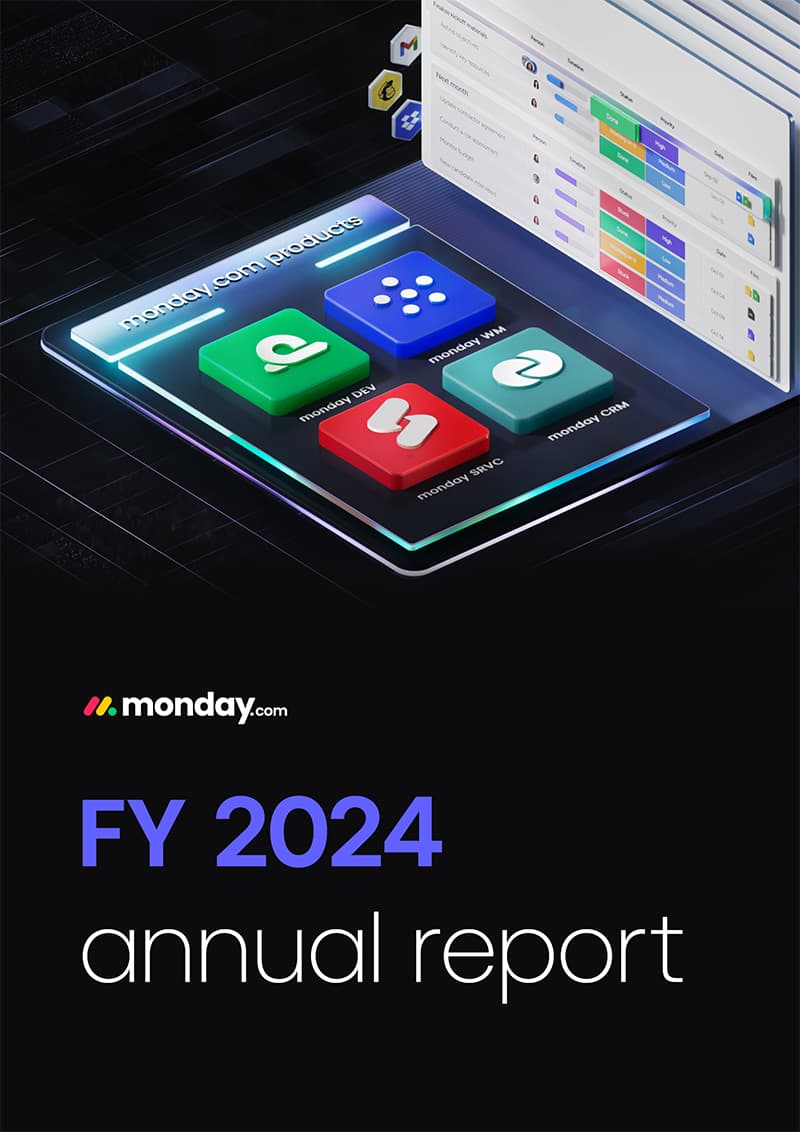
monday.com hit $1 billion in annual recurring revenue in 2024, a decade after launching Work OS and eight years after reaching $1 million in ARR. That kind of scale changes how employees should read the company’s annual filing: not as investor homework, but as an operator’s map of where the business is headed, where it is exposed, and what trade-offs are shaping product and hiring decisions.
Read the filing like a working document, not a compliance artifact
monday.com is a foreign private issuer, so it files Form 20-F rather than the domestic-company Form 10-K, but the logic is the same. The annual report the company filed with the U.S. Securities and Exchange Commission on March 17, 2025 includes audited financial statements for the year ended December 31, 2024, which makes it one of the clearest places to see how leadership describes the business under public scrutiny.
The basic habit is simple: start with the business section, move to risk factors, then read the financial statements and management discussion. That sequence tells you far more about monday.com’s operating reality than a single earnings headline. For employees, that matters because the same metrics that interest analysts often shape roadmap pressure, comp decisions, hiring priorities, and how aggressively teams can spend.
The business section shows what management thinks monday.com really is
The business section is where the company explains its main products, services, markets, subsidiaries, and the shape of its customer base. For a platform like monday.com, that is the section that reveals whether the company is thinking of itself mainly as a work management tool, a broader work operating system, or a multi-product orchestration layer. That distinction matters inside the company because product managers and engineers can see which bets are getting the strongest formal backing.
This is also the first place to watch for how monday.com describes AI, work orchestration, and multi-product expansion. Its 2024 annual-report materials emphasize all three, which tells employees the company is not just adding features on top of a mature product. It is trying to redefine the platform around how work gets coordinated, automated, and extended across teams.
The customer count is part of that story too. monday.com says more than 250,000 customers worldwide use its platform, which means product choices are no longer being made for a narrow set of power users. At that scale, small changes to permissions, administration, integrations, and workflows can affect how sales positions the product and how customer success explains value to increasingly varied accounts.
Risk factors are where the real operating anxiety lives
If the business section explains the pitch, risk factors explain the fear. This is the part of the filing that tends to tell the truth about what keeps management up at night, even when the language is polished. For monday.com employees, it is the best place to see recurring concerns around security, scalability, international expansion, customer concentration, and competitive pressure.
That is especially useful in a SaaS company where growth can hide fragility. A business serving more than 250,000 customers worldwide still has to worry about concentration in key accounts, the cost of serving global users, and the operational burden of keeping the platform reliable as usage expands. When the risk section repeatedly highlights the same themes, that usually signals where engineering, infrastructure, legal, and go-to-market teams are likely to feel the most pressure.
This is also where geographic risk becomes visible. monday.com was founded in Tel Aviv, Israel, and operates globally, with major business presence tied to Tel Aviv and New York. In a filing, that kind of footprint is not just a geographic note. It can surface exposure to regional instability, regulatory complexity, hiring constraints, and the practical difficulty of coordinating teams across time zones and markets.
Financial statements show what gets protected when growth slows
The audited financial statements are where strategy meets discipline. They show what the company is actually willing to spend to keep growth moving, and what it is trying to protect as it scales. For employees, this is where cloud spend, AI investments, and hiring trade-offs become visible in the broad shape of the numbers, even when the details are spread across notes and management discussion.
monday.com’s fourth-quarter and full-year 2024 results make the point clearly. The company reported fourth-quarter revenue of $268.0 million, up 32% year over year, and net dollar retention of 112%. It also said it achieved record non-GAAP operating income. Those figures suggest a business that is still expanding quickly, but with more pressure to show efficient growth rather than growth at any cost.
That mix matters for the day-to-day inside the company. A strong retention rate and rising operating income can support investment in product and platform work, but they also raise the bar for every new initiative. Engineers may see tighter scrutiny on infrastructure and cloud costs. Product teams may feel more pressure to show that AI features and new product lines can deepen usage rather than just add novelty. Sales teams may need to frame expansion in terms of durable customer value, not just land-and-expand momentum.
The numbers tell you how much runway the company thinks it has
The milestone of $1 billion in ARR is important not because it is a trophy, but because it changes the scale of the decisions around it. monday.com said it reached that level roughly a decade after launching Work OS and eight years after reaching $1 million in ARR. That pace says the company has moved from early breakout to a much more demanding phase, where every percentage point of retention, every cloud bill, and every product bet compounds.
For employees, that is the real reason to read the annual report like operators. It shows how a company that once sold a simpler product now has to balance growth, profitability, and platform complexity all at once. The annual report is where that balancing act becomes legible: what the business is, what it fears, what it spends on, and what it thinks can still be built.
At monday.com, the public filing is not just a document for Wall Street. It is a window into the operating system of the company itself, and the teams that read it carefully will understand the business faster than the teams that wait for the next earnings call.
This article was produced by Prism’s automated news system from verified source data, official records, and press releases, then run through automated quality and moderation checks before publishing. The system is built and supervised by the people who set the standards it runs under. Read our full AI policy.
Know something we missed? Have a correction or additional information?
Submit a Tip