Apple’s Xcode 27 brings AI coding agents, raising developer expectations
Apple is folding AI agents into Xcode 27, turning coding assistance into a default workflow and tightening pressure on review, trust and developer skills.
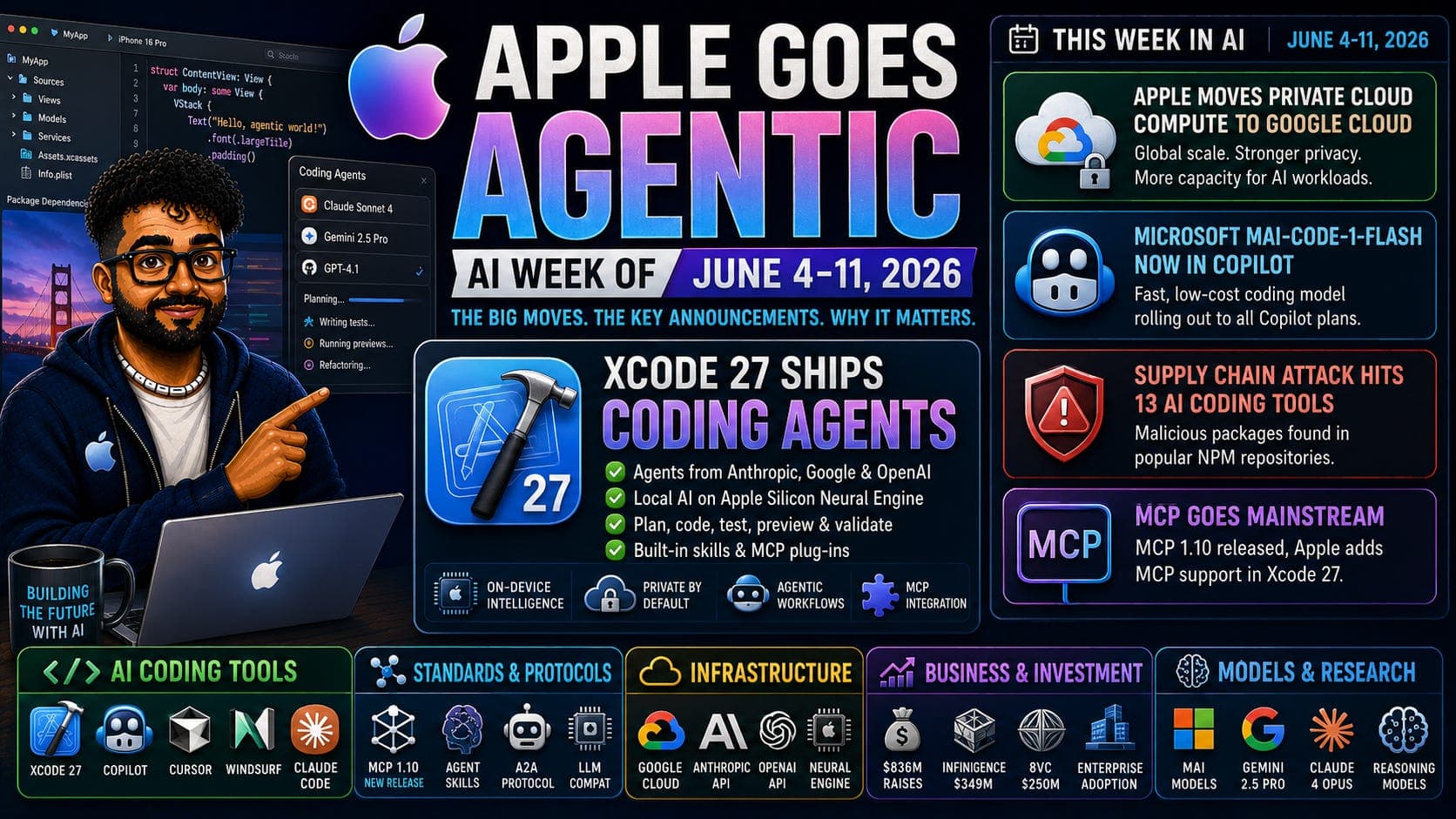
Apple is moving AI from a side tool to part of the editor itself. With Xcode 27, the company added new APIs for integrating AI models and extended agentic coding features, a shift that lets developers start conversations with an agent or model to generate code, explore unfamiliar codebases, and fix or refactor existing work.
The change matters well beyond Cupertino. Apple said Xcode 27 brings the power of models and agents directly into a developer’s workflow, and its WWDC26 materials described the update as a package of customization, coding agents, Device Hub, and improvements to localization, performance and testing. WWDC26 ran June 8-12, placing the announcement inside a broader push to make AI assistance feel like a standard part of software development rather than an optional experiment.

For Nintendo, that is a familiar kind of pressure dressed in new tooling. The company has already said its development software and environments for Switch had significantly evolved, and Shuntaro Furukawa said last November that software development costs are higher and development periods are longer. Against that backdrop, agentic coding tools look less like a novelty than another way studios will be expected to keep large codebases moving while preserving quality, predictability and control.
That is where the workplace implications sharpen. AI help can speed up boilerplate, suggest tests and reduce the amount of time senior engineers spend on repetitive fixes, which can be useful for internal tools, build systems, mobile services and prototype work. But the same systems can also amplify bad assumptions if teams treat generated code as finished code. In a company culture built around polish, that raises the value of code review, security checks and clear human ownership, especially when output is coming from a model rather than a teammate.
Apple’s own documentation points to where this is headed. Xcode now supports coding agents powered by the model of the user’s choice, and the company says developers can turn on coding intelligence in Xcode’s Intelligence settings. Its Foundation Models framework also gives developers access to models designed for Apple Intelligence, including on-device and Private Cloud Compute options, which pushes AI deeper into the platform stack and closer to daily engineering work.
Nintendo’s own recent comments suggest the company is not likely to chase AI for its own sake. Doug Bowser said in April that there will always be a human touch in how Nintendo makes its games. That stance fits a studio environment where franchise legacy, QA discipline and creative judgment still define the final product, even as the toolchain around it changes. Apple’s Xcode 27 update is another sign that the baseline for developer productivity is rising fast, and the teams that adapt will be expected to do more, faster, with the same human accountability at the end of the line.
This article was produced by Prism’s automated news system from verified source data, official records, and press releases, then run through automated quality and moderation checks before publishing. The system is built and supervised by the people who set the standards it runs under. Read our full AI policy.
Did this article answer your question?
