ESA warns No Fakes Act could threaten video game development in US
ESA says the No Fakes Act could turn voice, likeness and tool licensing into a legal gray zone for game studios, risking existing titles and future releases.
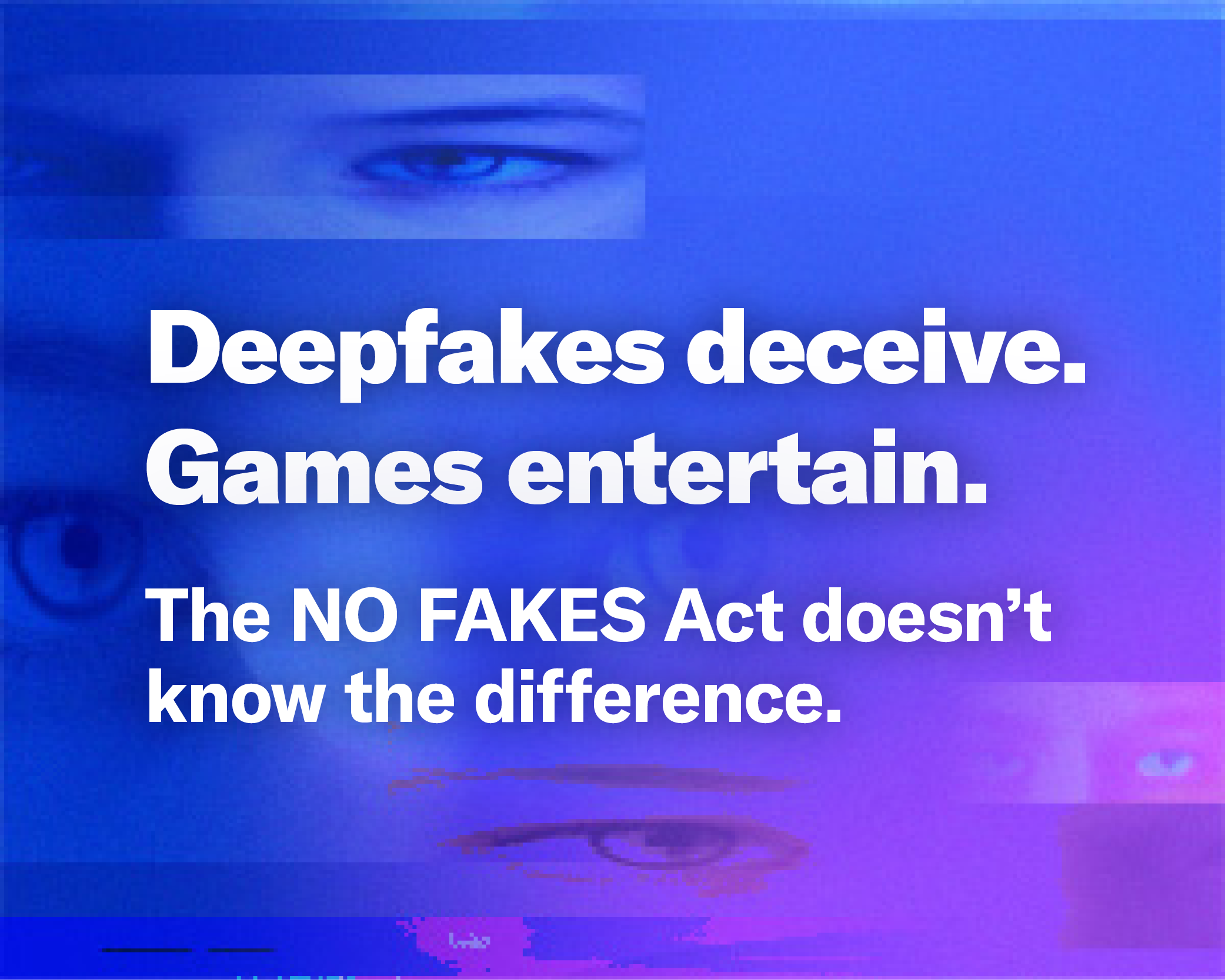
The Entertainment Software Association told the U.S. Senate Judiciary Committee that the No Fakes Act, if left as drafted, could create serious uncertainty for video game development. The group said the bill is not just about stopping harmful deepfakes, but about how broadly it defines digital replicas, a line that could pull legitimate game uses into costly disputes.
ESA president and CEO Stanley Pierre-Louis warned that the definition of digital replica could invite lawsuits and expensive litigation. In a June 9 letter, the association said the bill “creates a level of uncertainty” and “poses a real threat to existing games and to the future of video game development in the United States,” while also arguing that its language could sweep in legitimate game characters and multi-purpose tools. ESA also said it was worried about third-party abuse of innovative tools that can generate replicas.
For Nintendo employees, that warning lands far beyond a policy fight in Washington. Modern production touches voice actors, motion capture, marketing talent, localization, security and increasingly AI-assisted content pipelines. If every use of a voice or likeness becomes a legal gray area, teams that clear trailers, promo materials, character performances and internal toolchains could spend more time on approvals, rights checks and vendor contract revisions before work ever reaches QA or release.
The timing adds pressure. The 2026 version of the No Fakes Act was reintroduced on May 20 as S. 4591 and H.R. 8915 by Senators Marsha Blackburn, Chris Coons, Thom Tillis and Amy Klobuchar, along with Representatives María Salazar, Madeleine Dean, Nathaniel Moran and Becca Balint. The Senate Judiciary Committee scheduled a June 11 markup, making the bill one of the most advanced federal AI identity measures moving through Congress.

Supporters say the bill would create a federal, licensable property right in a person’s voice and visual likeness, with new enforcement tools, counter-notification procedures and stronger First Amendment safeguards in the 2026 draft. SAG-AFTRA was publicly promoting the measure in early June, while every state broadcasters association, plus Washington, D.C. and Puerto Rico, adopted a resolution urging Congress to pass it.
That split captures the production risk for studios like Nintendo: creators want protection from unauthorized imitation, but broad drafting could make routine work harder to ship. In a business built on careful character stewardship and global brand consistency, the next bottleneck may be less about what can be made and more about who must sign off on every digital human asset before it leaves the studio.
This article was produced by Prism’s automated news system from verified source data, official records, and press releases, then run through automated quality and moderation checks before publishing. The system is built and supervised by the people who set the standards it runs under. Read our full AI policy.
Did this article answer your question?
