Ex-Nintendo Sales Lead Warns Switch 2 Hardware Price Hikes Are Inevitable
Former Nintendo sales lead Sean Velasco calls a Switch 2 price hike "inevitable," pointing to tariffs, AI memory costs, and soaring oil prices as forces Nintendo can't outrun.
The day Sony's PS5 Pro hit $900, a $150 increase that took effect April 2, the pressure on Nintendo to follow became the obvious next question. On episode 216 of the Kit and Krysta Podcast, hosted by former Nintendo of America employees Kit Ellis and Krysta Yang, former Nintendo sales lead Sean Velasco supplied a candid answer. "Unfortunately, I think eventually the hardware price is going to have to go up," he said.
The Switch 2 has held its $449 launch price since June 2025, with bundles pairing the console with Mario Kart World or Pokémon Legends: Z-A starting at $499. That discipline has made Nintendo look steady while Sony and Microsoft have repeatedly raised their floors, but Velasco sees the underlying math eroding.
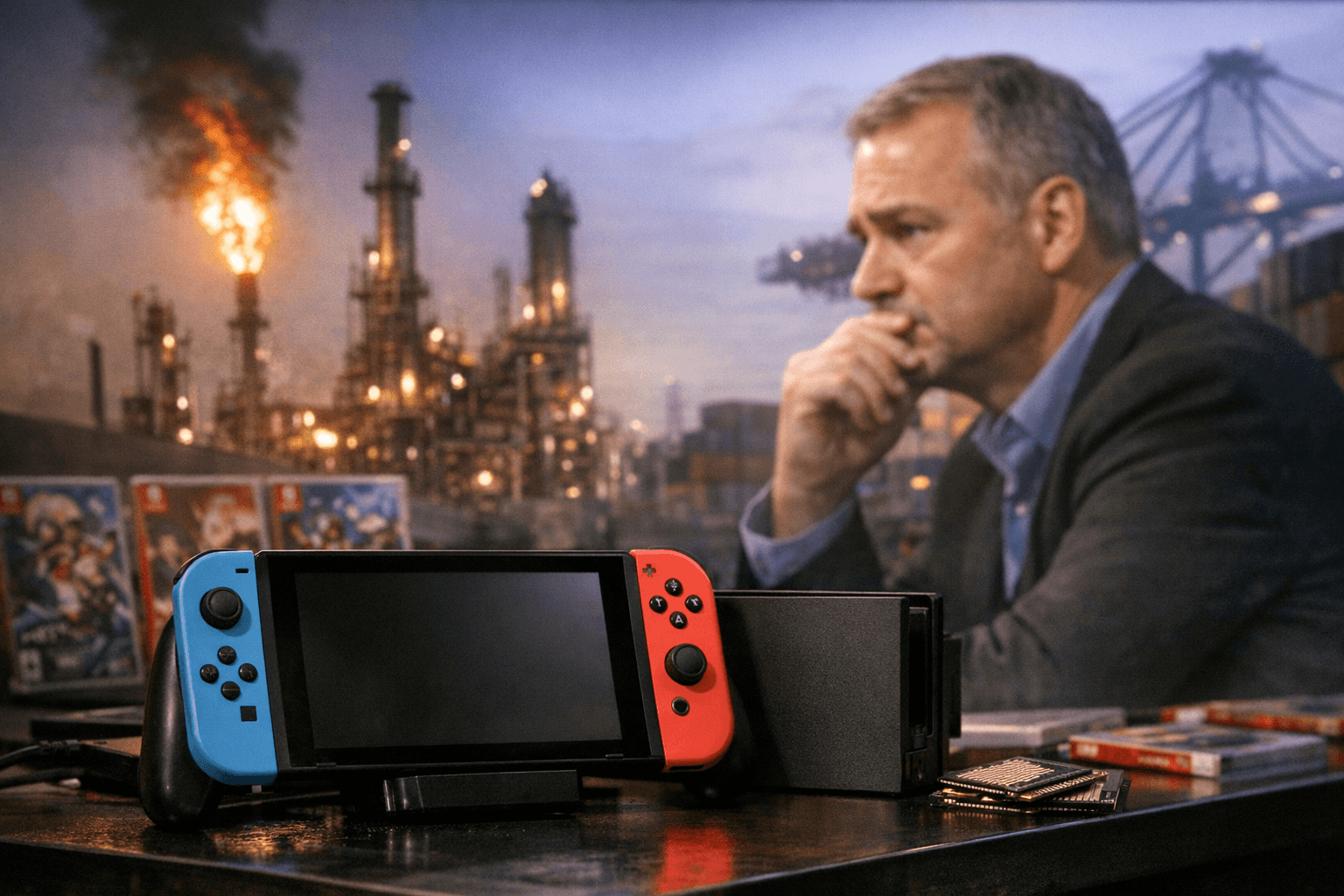
He outlined four stacking pressures. Inflation has been compressing margins for some time. U.S. tariffs, which he labeled "a more recent nuisance" that shows no sign of easing, add another layer. AI demand for chips has pushed memory and RAM prices higher across the industry. And then the least obvious force: oil. "When oil goes through the roof, that's not just shipping costs that go up," Velasco said. Helium, an irreplaceable byproduct of oil production, is essential to manufacturing semiconductors and silicon wafers. For Nintendo, that means both the console hardware and every game cartridge it produces become more expensive to make as oil prices climb. "There's just so many outside forces that are kind of forcing their hand," he added.
Velasco read Nintendo's upcoming digital pricing adjustment as a deliberate pre-emptive cushion. Starting May 21, with the launch of Yoshi and the Mysterious Book, all first-party Switch 2 titles will carry a lower recommended retail price in digital format than in physical. Velasco called it a "pro-consumer move," but was direct about what else it signals: "I also look at this move on software as, if I'm reading it correctly, a way to make a hardware price increase a little bit more palatable."
Nintendo will attempt to absorb some margin pressure through non-hardware revenue, including merchandising, Velasco noted. The company has historically held price as long as structurally possible, a lesson partly learned from the 3DS era when an $80 launch-year price cut damaged hardware profitability across multiple quarters. The Switch 2 enters this period with more runway: four major titles are still scheduled to launch in April, and the software cadence provides attach rate momentum that buys negotiating room on the hardware side. But Velasco put a ceiling on how long any combination of offsets and goodwill holds. "So even if they are able to make concessions in some areas, hardware prices are going to go up, I think, eventually. They may be able to put off raising hardware prices for a moment, but I think it's inevitable that they're going to go up."
For Nintendo teams managing retail and channel relationships, that inevitability shapes planning now. A higher MSRP compresses attach rates in a console's early window, squeezing first-year software targets at exactly the moment the pipeline is at its fullest. Bundle configurations become the primary tool for retail partners to justify shelf space, and marketing shifts from selling momentum to selling value. Velasco's framing of the digital price split as a bridge to make the hardware hike "palatable" suggests the internal conversations about timing have already begun in earnest.
Know something we missed? Have a correction or additional information?
Submit a Tip