Former Nintendo Sales Lead Says Switch 2 Price Increase Is Inevitable
A former Nintendo sales lead named Sean called a Switch 2 price hike "inevitable," warning that RAM shortages, tariffs, and AI-driven costs are forcing Nintendo's hand.
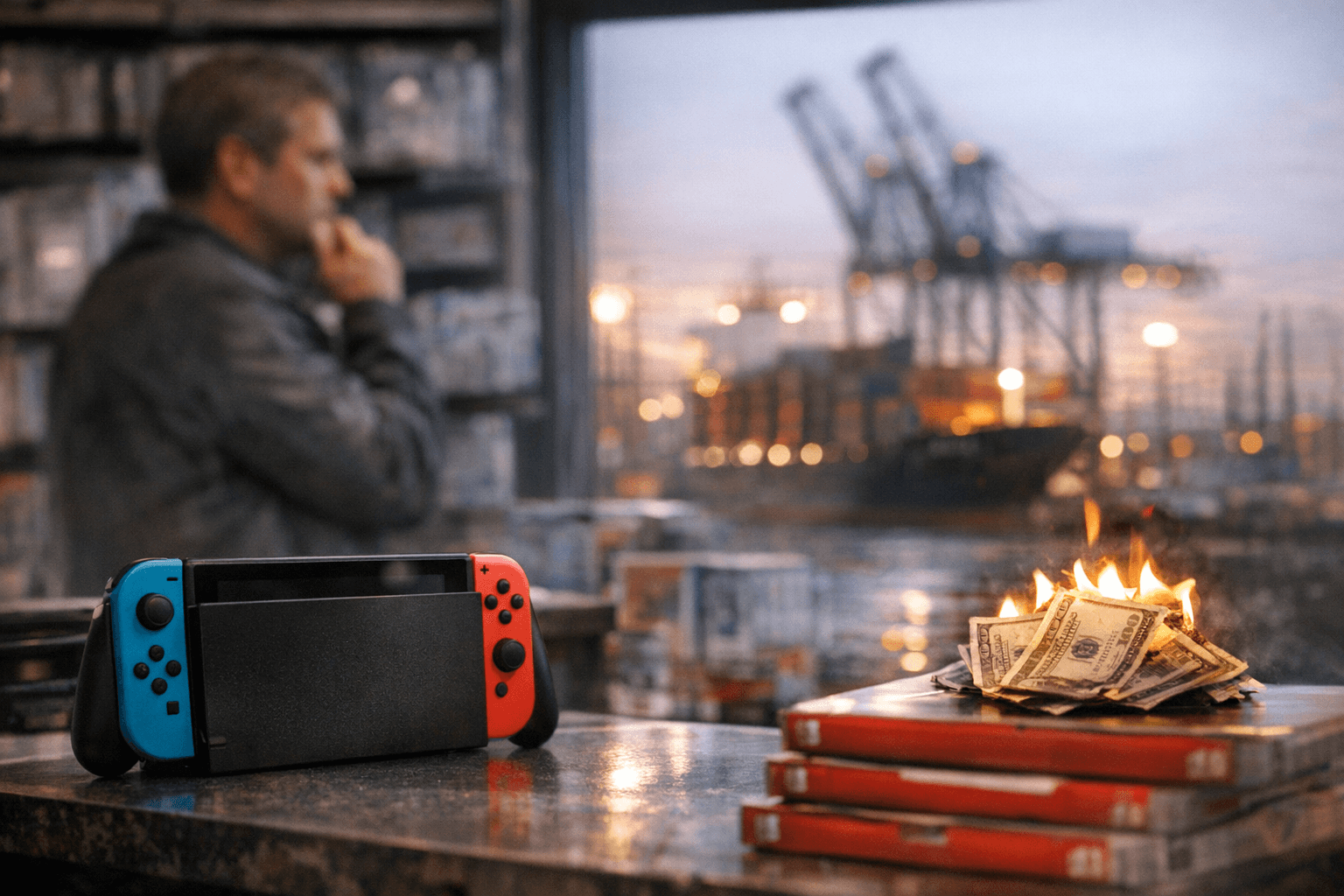
The question isn't whether Switch 2's $449 price tag holds; it's which internal team absorbs the pressure first when it doesn't.
That's the subtext running through a recent Kit and Krysta Podcast episode, where a former Nintendo sales lead identified only as Sean told hosts Kit Ellis and Krysta Yang that a hardware price increase is "inevitable." "Unfortunately, I think eventually the hardware price is going to have to go up," Sean said, describing tariffs as "a more recent nuisance" and pointing to AI-driven memory demand as a compounding force with "so many outside forces that are kind of forcing their hand."
The timing of Sean's remarks is deliberate. Nintendo's new fiscal year began April 1, and the company will issue annual earnings guidance in May, when investors and internal planners will learn whether Shuntaro Furukawa's February warning has materialized. The Nintendo president said at the time that macro pressures, including the memory shortage, carried no immediate impact on FY2026 earnings but could "put pressure" in the fiscal year now underway.
The component picture Sean describes is traceable to two cost lines that procurement and finance teams watch simultaneously: DRAM prices, which surged during the AI boom and have only slowly begun easing, and U.S. import tariffs on electronics, which add a structural manufacturing cost that cannot be hedged away. Every unit shipped carries both. The math eventually surfaces in retailer margin negotiations, promotional allowance calendars, and the unit-sales velocity targets that sales teams carry into quarterly reviews.
Nintendo has navigated this math before, though never with Switch 2 hardware on the table. In August 2025, citing "market conditions," the company raised prices across the entire original Switch family: the base model moved from $299.99 to $339.99, the OLED from $349.99 to $399.99, the Lite from $199.99 to $229.99. That announcement also carried an explicit reservation: Switch 2 price adjustments "may be necessary in the future." Legal and finance had already stress-tested the scenario; the language was precise.
What separates a Switch 2 price increase from that August 2025 precedent is retail complexity. Raising the price on a mid-generation flagship, rather than a legacy SKU being phased toward end-of-life, triggers renegotiations across promotional allowances, inventory cadence commitments, and distributor agreements in every regional market. For first-party software teams, the installed-base implications are direct: attach-rate targets for Nintendo's marquee franchises depend on hardware remaining accessible at a price point consumers accept without friction.
Research firm Niko Partners has outlined the internal alternative: Nintendo may opt to discontinue the base $449 SKU entirely and replace it with a $499 or higher bundle configuration, preserving the headline hardware margin without a visible sticker-price change. That path shifts revenue weight onto accessories and software, reordering the planning assumptions that marketing and sales teams are currently building for the fiscal year.
Sean's read on Nintendo's institutional posture is that the company will resist a price increase for as long as commercially feasible. But resistance carries its own operational cost. Procurement teams absorbing margin compression, finance teams modeling tariff scenarios, and sales staffs managing retailer expectations are already doing that work, whether or not a price announcement follows in May.
Know something we missed? Have a correction or additional information?
Submit a Tip