GameSpot highlights Switch 2 bundles, Mario promos, Best Buy Sega sale
Best Buy auto-added a Mario 40th collectible case with two-game purchases, while Target’s $100 eShop card promo pushed near-instant digital redemptions through April 11.
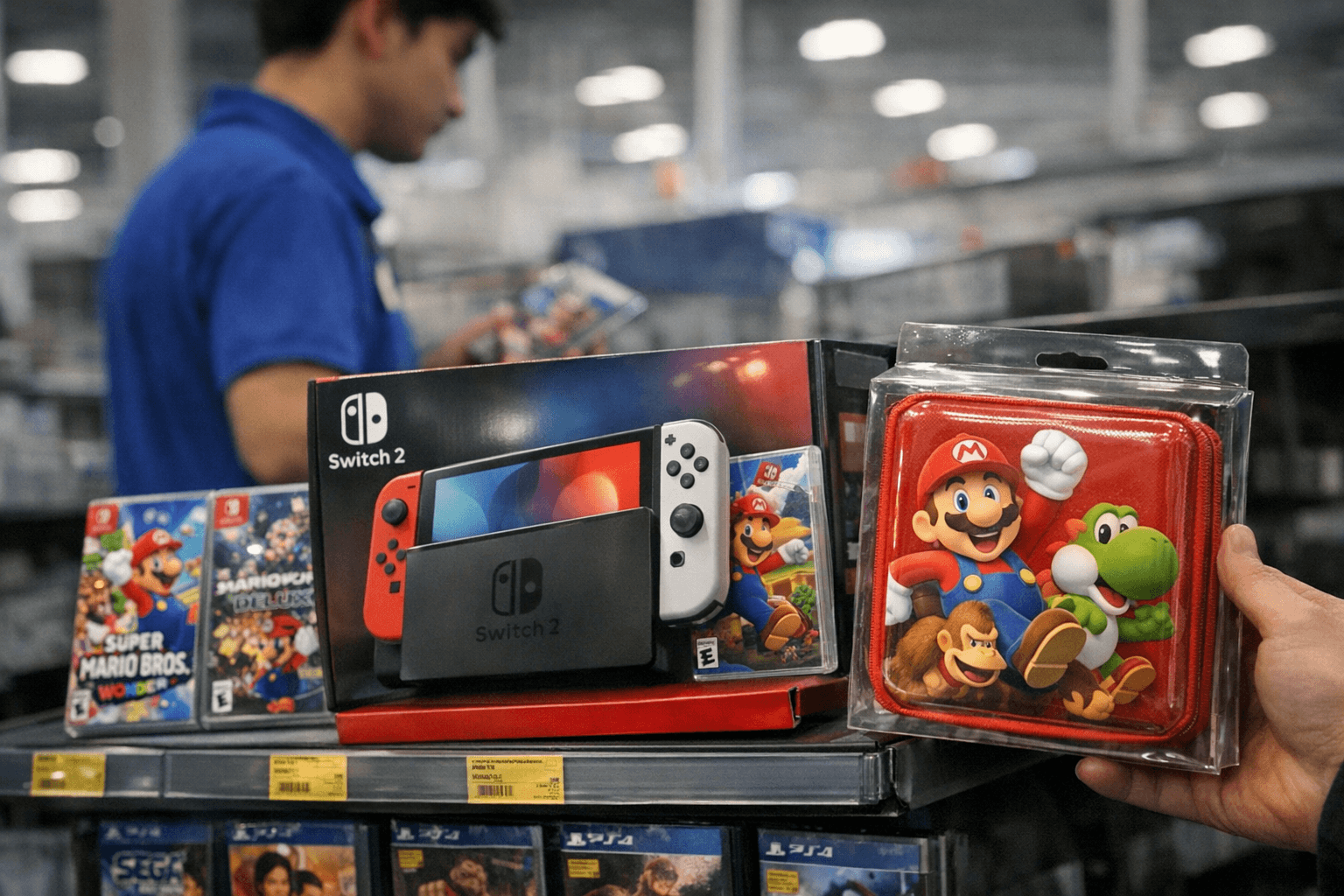
The tell was in the cart: buy two eligible Mario games at Best Buy and a “Super Mario Bros. 40th Anniversary Collectible Game Case” appeared automatically, turning a routine checkout into a physical-pack-in promotion that can move units without a single new SKU on a Nintendo shipment.
The week’s deal noise mattered inside Nintendo for the same reason it always does: it changes when players buy, which version they buy, and which partner gets the sale. That ripples into forecast conversations, channel scorecards, accessory demand, and the unglamorous work of keeping customer support and fraud monitoring staffed when promotions spike redemption and returns.
On the Switch 2 software side, Best Buy ran a Sega Sale that GameSpot described as one that “doesn’t have an end date,” a detail with real implications for demand modeling because an open-ended discount can keep biasing sell-through long after a normal weekly ad would have reset. Example discounted titles called out included Persona entries, Yakuza 0: Director's Cut, and Sonic X Shadow Generations.
Best Buy’s Mario 40th mechanic layered on top of that: the collectible case was triggered by buying two eligible Mario titles, with examples including Super Mario Bros. Wonder, Mario Tennis Fever, and Mario Kart World. For teams tracking physical vs. digital mix, that kind of pack-in incentive can pull shoppers toward boxed copies, especially when it is frictionless and applied automatically at checkout.
Target’s most concrete Nintendo-facing lever was digital: a free $15 Target Gift Card with the purchase of a $100 Nintendo eShop Card. The mechanics tied to Target Circle membership and applied to email-delivered eGift cards, with the bonus card auto-added to cart, a structure that compresses demand into minutes, not days, because there is no shelf inventory to constrain activation. Separate deal tracking pegged the window as running until April 11, 2026, a short runway that can still produce a sharp redemption curve and a predictable uptick in payment disputes, account lockouts, and code-related support contacts.
Target also surfaced execution risk. A free Mario poster and a $100 Super Mario Bros. 40th Anniversary gift card bundle appeared in Target’s Weekly Ad, but GameSpot noted it did not see them on Target’s online storefront at the time, raising the likelihood of in-store-only behavior or inconsistent store-level setup that tends to generate escalations.
The Mario merchandising wave extended into movie-adjacent items. Target’s listing for a “Super Mario Popcorn Tin with Lid” priced it at $9.99, specified a 7" x 7" x 7" tin, and flagged “6k+ bought in last month,” a velocity signal that can foreshadow sellouts and customer confusion when similar collectibles also exist at theaters. Regal’s promotion hub positioned The Super Mario Galaxy Movie as arriving April 1, 2026 and advertised limited-time tie-ins including a themed collectible combo with a square popcorn tin and cup, plus loyalty credit and badge offers with at least one window listed as 3/31–4/30.
Taken together, the promotions showed how quickly Nintendo’s IP moments can fragment across retail and theatrical partners, with different mechanics, different fulfillment paths, and different failure modes that end up landing on the same internal teams to explain, support, and reconcile after the spike.
Know something we missed? Have a correction or additional information?
Submit a Tip