GDC report highlights layoffs, AI, and staffing risks for Nintendo teams
GDC’s latest survey says 28% of game workers were laid off in the past two years, while only 7% saw generative AI as a positive. For Nintendo teams, that is now a production risk, not background noise.
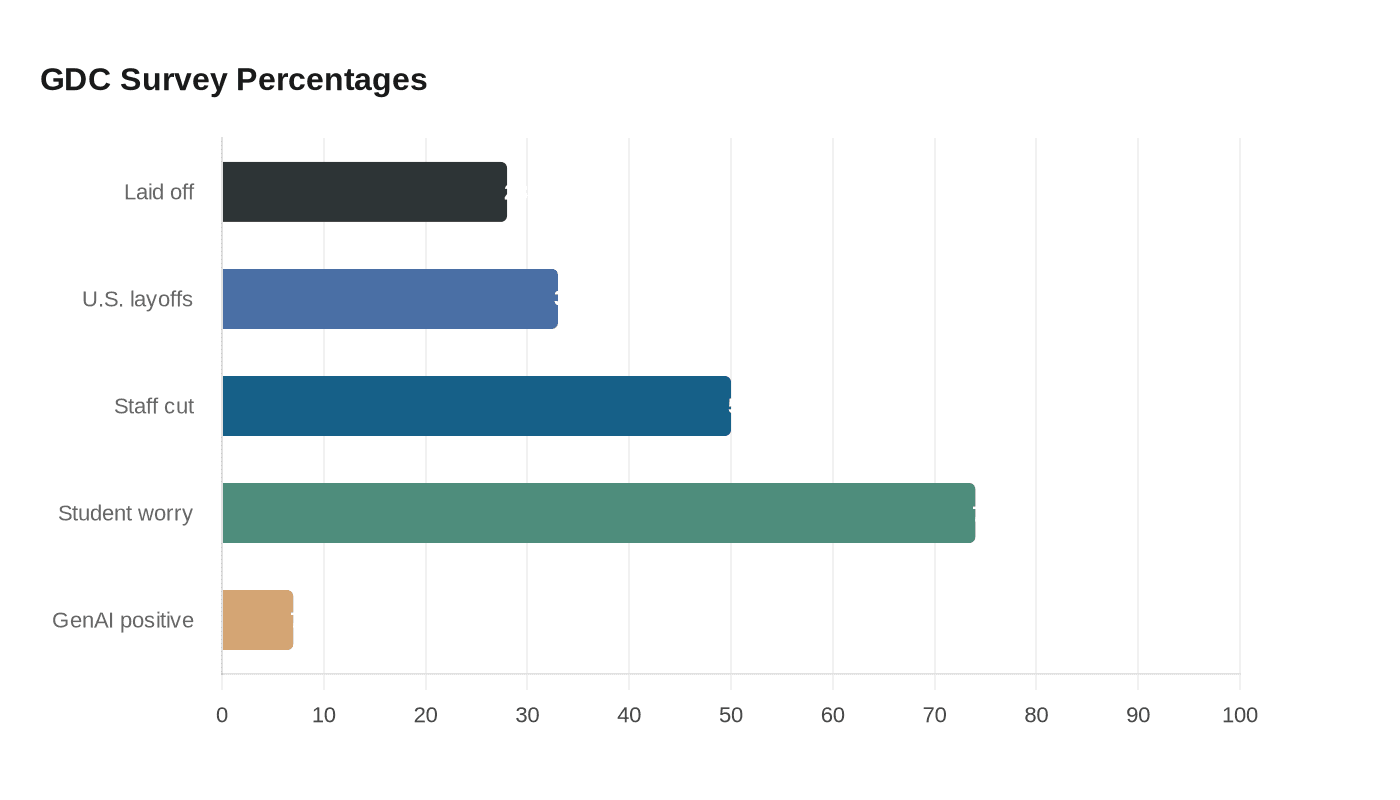
Layoffs are no longer a side note in game development. In GDC’s 2026 State of the Game Industry report, 28% of more than 2,300 respondents said they had been laid off in the past two years, and half said their current or most recent employer had cut staff in the past 12 months. The pressure was even sharper in the U.S., where 33% of respondents reported layoffs, and at AAA studios, two-thirds said their companies had laid people off.
The survey was built to capture more than one corner of the business. GDC said it customized questions for developers, marketers, executives, investors, educators and students, which makes the results less like a mood check and more like a planning dashboard. That matters for Nintendo, where long-cycle development and quality standards mean staffing swings can ripple through art, QA, localization and release timing long before a game ships.
Students in the survey were especially uneasy. Seventy-four percent said they were worried about their future job prospects, citing fewer entry-level openings, more competition from laid-off workers and the fear of AI-led displacement. For Nintendo and its partners, that makes the apprenticeship pipeline more fragile. If new graduates cannot get in, the burden falls harder on experienced staff, managers and outsourcers to carry work that once helped train the next generation.
The report’s AI findings cut against the hype cycle. Only 7% of respondents said generative AI had a positive impact on games, down from 13% in the 2025 report, even as adoption continues to spread. That is a warning for teams that want AI to trim costs in QA, localization or design review without risking quality. At Nintendo, where polish is part of the brand identity, the question is not whether to use new tools, but where human judgment still has to sit in the loop.
The same report also widened its lens to unionization and tariffs, reminding studios that labor and trade pressures now sit alongside creative and technical decisions. That has direct implications for a company like Nintendo Co., Ltd., which said in its FY2025 annual report that it had 8,205 employees and that labor unions do not exist at the reporting company itself, although some consolidated subsidiaries do have them. For Nintendo teams in Japan and abroad, staffing, outsourcing and tool adoption are no longer separate conversations. They are the same conversation, and they now shape how much can be built, by whom and on what schedule.
This article was produced by Prism’s automated news system from verified source data, official records, and press releases, then run through automated quality and moderation checks before publishing. The system is built and supervised by the people who set the standards it runs under. Read our full AI policy.
Did this article answer your question?
