GTA VI looms, Nintendo weighs launch timing and marketing windows
GTA VI is already shifting Nintendo’s planning horizon. Summer marketing, a November release, and a crowded 2026 calendar could reshape launch windows and spend.
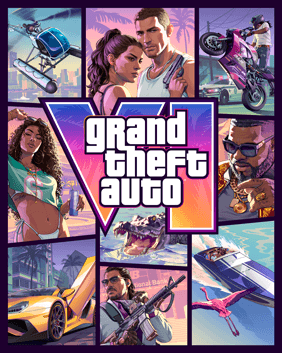
GTA VI is no longer just a Rockstar milestone. It is turning into a market-wide scheduling event, and that is exactly the kind of pressure Nintendo’s launch, marketing, and partner teams have to plan around.
GTA VI is becoming a calendar event
Take-Two now says Grand Theft Auto VI could help drive $8 billion in fiscal 2027, while Grand Theft Auto V is nearing 230 million lifetime sales. Those numbers tell Nintendo employees something bigger than one rival’s success: a single release can dominate attention, retail conversation, streaming chatter, and media coverage for months at a time.
Take-Two has also kept the release window concrete. The company is still targeting November 19, 2026 for GTA VI, expects marketing to begin this summer, and has not yet announced pricing or preorders. That mix of fixed timing and still-open commercial details is the kind of uncertainty that forces every other platform holder to watch the calendar more carefully.
Why Nintendo feels the pressure
For Nintendo, the issue is not whether GTA VI is a direct substitute for a first-party game. It is that blockbusters reshape the attention economy around them. When a release of that scale approaches, third-party publishers tend to get more selective about their own launch windows, live-service updates, and cross-platform messages, because no one wants to be buried under a flood of Rockstar coverage.
That has practical consequences inside Nintendo. Publishing teams have to think harder about which announcements deserve a prime window, marketing teams have to decide when paid spend will actually cut through, and partner managers have to anticipate whether outside publishers will hold software, patch cadence, or promotional beats to avoid getting lost in the noise. The lesson is not simply to avoid GTA VI’s date, but to understand that a giant launch can distort behavior well before it arrives.
Take-Two’s own prior comments underline how much a single title can reset planning. In May 2025, the company said the delay of GTA VI into calendar 2026 left a major hole in its slate and described fiscal 2026 as “the new baseline.” By May 2026, the same game was again being positioned as the key driver of a much larger fiscal 2027 step-up. That is a useful reminder for Nintendo’s teams that major launches are not isolated content drops, they are schedule anchors that can move the rest of the market around them.
What this means for launch windows and marketing spend
For Nintendo, the most immediate takeaway is timing discipline. If GTA VI marketing starts in summer 2026 and ramps into a November release, then fall advertising, retailer support, creator campaigns, and social attention will all tighten around that window. A Nintendo launch that needs maximum visibility may work better before the summer surge, or after the holiday noise settles, depending on the product’s audience and platform goals.
This is where marketing spend becomes a planning tool, not just a budget line. When attention is concentrated around one tentpole, broad awareness campaigns can become inefficient, while targeted campaigns tied to a clear audience may perform better. Nintendo’s challenge is to decide which releases need to fight for mindshare and which can be sequenced to avoid a direct collision with a game that is likely to dominate mainstream conversation.
The same logic applies to partner behavior. If external publishers believe GTA VI will absorb most of the industry’s oxygen, they may shift their own announcements, trailers, or update schedules to different weeks, which can affect Nintendo’s platform cadence as well. That means the company’s business teams need to think like ecosystem managers, not just product schedulers, because the actions of one giant publisher can ripple across the rest of the release calendar.
Nintendo’s own 2026 calendar is already crowded
Nintendo is not approaching this from a blank slate. On May 8, 2026, the company held its fiscal-year earnings release and briefing, updated sales and historical figures, and announced price revisions for Nintendo products and services. In that same materials cycle, Nintendo said Switch 2 had sold 19.86 million units worldwide by March 31, 2026, while lifetime original Switch sales reached 155.92 million units.
That matters because Switch 2 is still in a critical growth phase. Nintendo launched the console in the United States on June 5, 2025 at a suggested retail price of $449.99, which makes 2026 a pivotal year for platform momentum, software cadence, and consumer awareness. A year this important cannot afford avoidable visibility problems, especially when a competing blockbuster is poised to swallow entertainment coverage for weeks at a time.
The tension is not that Nintendo needs to retreat. It is that a platform scaling this quickly has to be more strategic about when it speaks, what it highlights, and how it sequences support for hardware, software, and services. Even a strong slate can lose force if its beats arrive too close to a dominant industry event.
The practical lesson for Nintendo teams
For developers, designers, QA testers, localization staff, and business teams, the takeaway is simple: release planning is now ecosystem planning. A game’s quality still matters, but so does the week it enters the market, the volume of competing promotions around it, and the amount of attention left for a trailer, a storefront feature, or a creator campaign.
That means three things inside Nintendo:
- Treat major competitor launches as shared calendar risks, not just external headlines.
- Build flexible marketing plans that can shift spend between early, middle, and late-year windows.
- Expect third-party partners to change their own pacing when a tentpole like GTA VI moves closer.
Nintendo has long built its reputation on quality-first execution and durable franchises. But in a year when Take-Two is pointing to a November 19 launch, summer marketing, and an $8 billion fiscal 2027 lift, the company’s real challenge is not just making great games. It is making sure those games are seen, heard, and supported in a market that is about to get very loud.
This article was produced by Prism’s automated news system from verified source data, official records, and press releases, then run through automated quality and moderation checks before publishing. The system is built and supervised by the people who set the standards it runs under. Read our full AI policy.
Did this article answer your question?
