IGDA guide explains localization testing, a fit for Nintendo's quality-first culture
LQA is where translation meets player reality, and Nintendo’s scale makes that rigor nonnegotiable. One late text change can ripple across millions of Switch users and break the polish players expect.
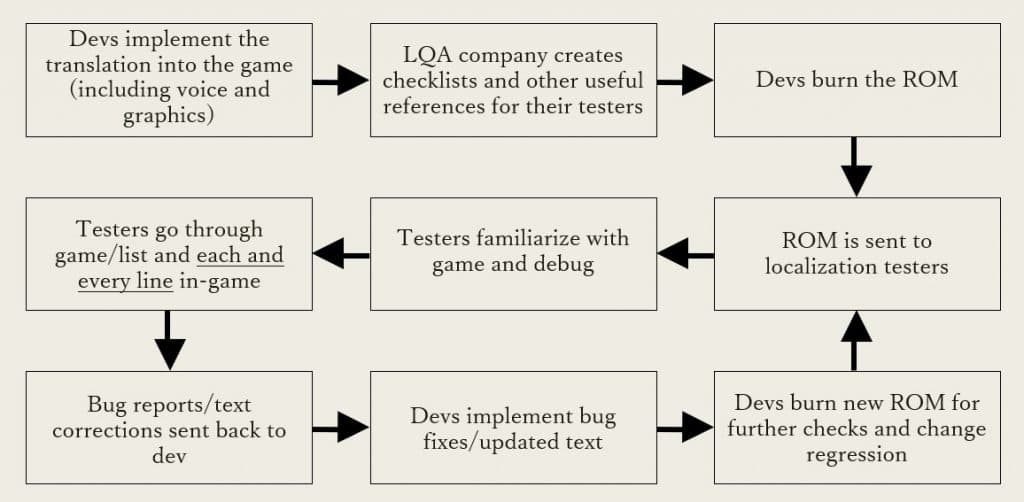
Localization testing is a quality gate, not a cleanup pass
The easiest way to misunderstand localization quality assurance is to treat it like a final typo sweep. IGDA’s localization guide draws a much sharper line: LQA happens after translation, editing, and proofreading, and it is its own workflow with its own skill set. That matters because the job is not just spotting misspellings in a build. It is checking whether language, layout, audio, visuals, and game logic still work together once the text is inside the game.
In practice, that means LQA testers are looking at the player experience in context. Does a line fit in the UI box? Does a joke still land in the target market? Do grammar, terminology, and flow stay consistent from screen to screen? Do images, gestures, sounds, or other assets create cultural problems that only show up once the game is in front of a local audience? Those are product-quality questions, not clerical ones.
Why source-text freezes matter
The guide’s most useful production lesson is also one of the most overlooked: stop changing source text while LQA is underway unless you are ready to re-check everything. When writers, designers, or producers keep moving the source, the localization team gets pulled into version-control headaches, repeated verification, and schedule creep. A small wording change in English can force a new pass in every supported language and trigger knock-on effects in UI, flow, and asset reviews.
The cleaner workflow is straightforward. QA the source-language content first, freeze the source text while localization testing is happening, then allow only tightly controlled changes with clear re-checking steps. That is not bureaucracy for its own sake. It is how teams protect schedule, budget, and the final player experience when multiple languages and regions are involved.
Nintendo’s process makes this a natural fit
Nintendo’s culture is built around polish, and its localization jobs reflect that. Nintendo of America says it works closely with Nintendo Co., Ltd. to bring franchises such as Mario, Donkey Kong, The Legend of Zelda, Metroid, Animal Crossing, Pikmin, and Splatoon across the Americas. The company’s localization roles explicitly emphasize quality, confidentiality, timeliness, and brand integrity, which is exactly the mix LQA requires when a game is expected to feel native in more than one market.
That same discipline shows up in the tooling and documentation Nintendo expects. One localization role says staff create, maintain, communicate, and train on style guides, terminology lists, software version-control updates, and documentation revision history. Another planning role says localization staff partner with global teams, track scope and schedule, maintain a cultural and asset review database, monitor budgets, and consult stakeholders when schedule or budget changes are needed. In other words, Nintendo is not describing localization as a loose proofreading layer. It is describing a managed quality system.
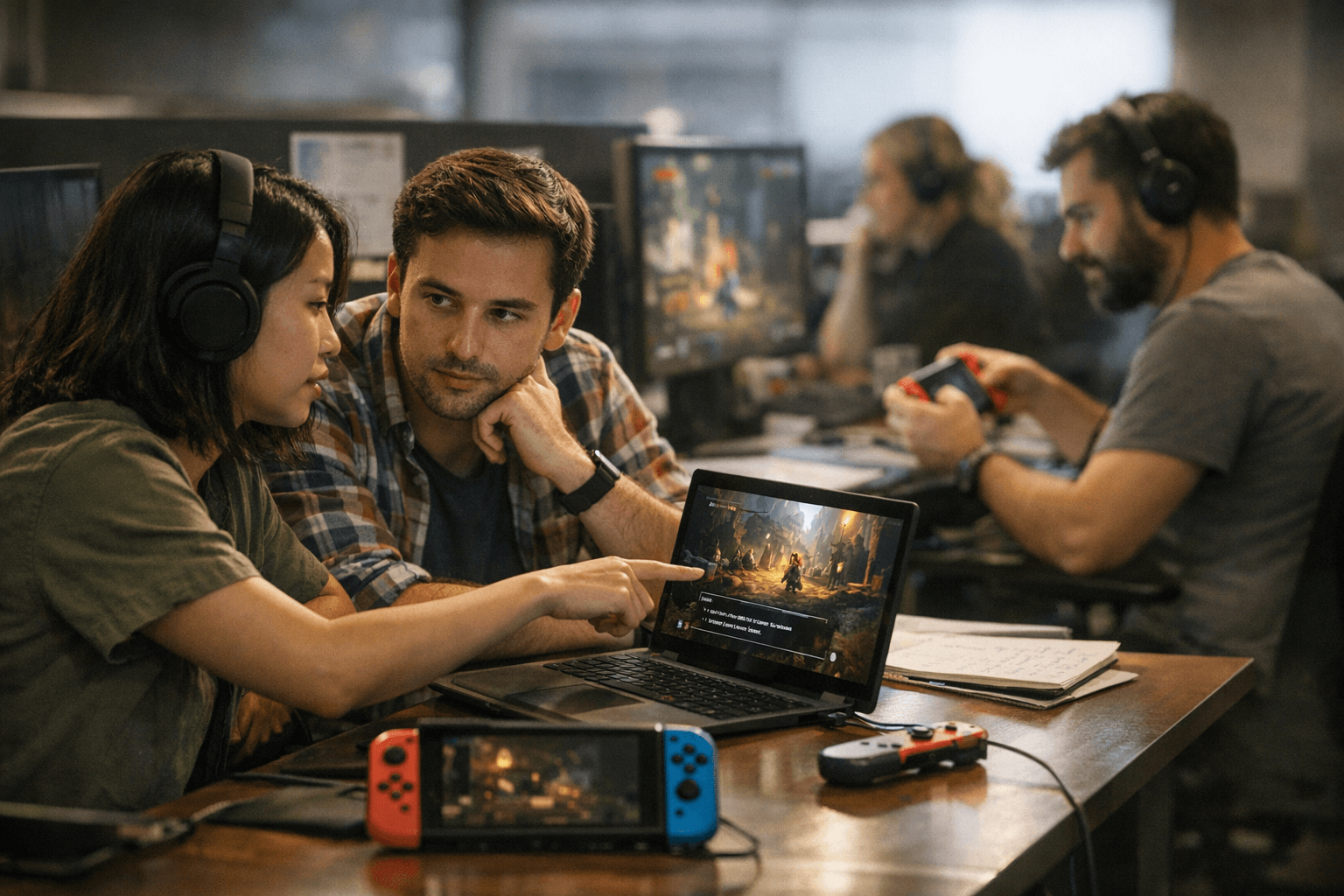
What LQA looks like on the Nintendo floor
For Nintendo teams, LQA is the point where game content meets release reality. A job listing says localization teams may test and evaluate games and products and provide feedback on design and content for NOA territories. That is an important signal for developers and producers: if a line, icon, or menu flow does not survive localized play, the feedback loop should reach back into design, not just into translation.
The practical checklist is broader than language alone:
- text display and spacing in UI
- consistency in terminology and tone
- logic and flow that make sense to local players
- images, sounds, gestures, and other assets that may cause cultural friction
- version-control discipline so fixes do not overwrite one another
That kind of testing is what keeps a polished game from turning clunky at the moment players actually touch it.
The player does not see the workflow, only the failure
Localization mistakes are visible in the harshest way possible because they appear in the same places players already notice friction. A clipped line can make a menu hard to read. A mistranslated item name can confuse progression. An awkward joke can flatten character personality. A cultural mismatch in an image or gesture can turn a charming scene into an embarrassing one. The player does not think about the queue of revisions behind the problem. They just feel that something is off.
Nintendo’s own scale makes that risk impossible to dismiss. Its investor materials list lifetime Nintendo Switch sales at 155.37 million hardware units and 1,500.16 million software units as of December 31, 2025. At that scale, a localization error is not a small-market nuisance. It is a mass-market quality issue that can hit millions of players at once.
Global scale raises the stakes further
Nintendo’s support documentation shows how many language choices can sit behind one launch. For The Legend of Zelda: Tears of the Kingdom, players can switch voice language among Japanese, English, French, French Canada, German, Spanish Spain, Spanish Latin America, Italian, and Russian. That kind of coverage only works if localization is tested with the same seriousness as performance and gameplay.
It also explains why Nintendo’s Japan-side communication culture matters. In a company feature, Sasaki-san, who joined in 2016, described coordinating communication tied to Nintendo Switch promotion and development between headquarters and overseas offices, with repeated rehearsals to make sure a developer’s intent reached staff and customers correctly. That is the same underlying lesson as LQA: translation is not complete until meaning survives contact with the receiving audience.
IGDA’s role and the wider professional standard
IGDA’s Localization SIG, founded in 2007, exists to share resources and best practices as the discipline evolves. That timeline matters because it shows LQA is not an improvised convenience for one project or one publisher. It is part of a mature professional practice that recognizes localization as a craft, a technical process, and a quality gate all at once.
IGDA’s own best-practice guidance reinforces that point with concrete production habits: hold kickoff and regular meetings, provide ROMs and string lists, include supplementary documents, and give testers a useful debug command list. Those are the kinds of details that separate organized localization from after-the-fact cleanup. They also fit the way Nintendo already talks about its own localization work, through controlled documentation, global coordination, and brand integrity.
The larger lesson is simple. If Nintendo wants the same level of trust overseas that it has earned at home, localization has to be tested like a core feature, not treated like a final-language chore. The polish players remember is often the polish that never calls attention to itself, and LQA is where that invisible standard gets enforced.
This article was produced by Prism’s automated news system from verified source data, official records, and press releases, then run through automated quality and moderation checks before publishing. The system is built and supervised by the people who set the standards it runs under. Read our full AI policy.
Did this article answer your question?
